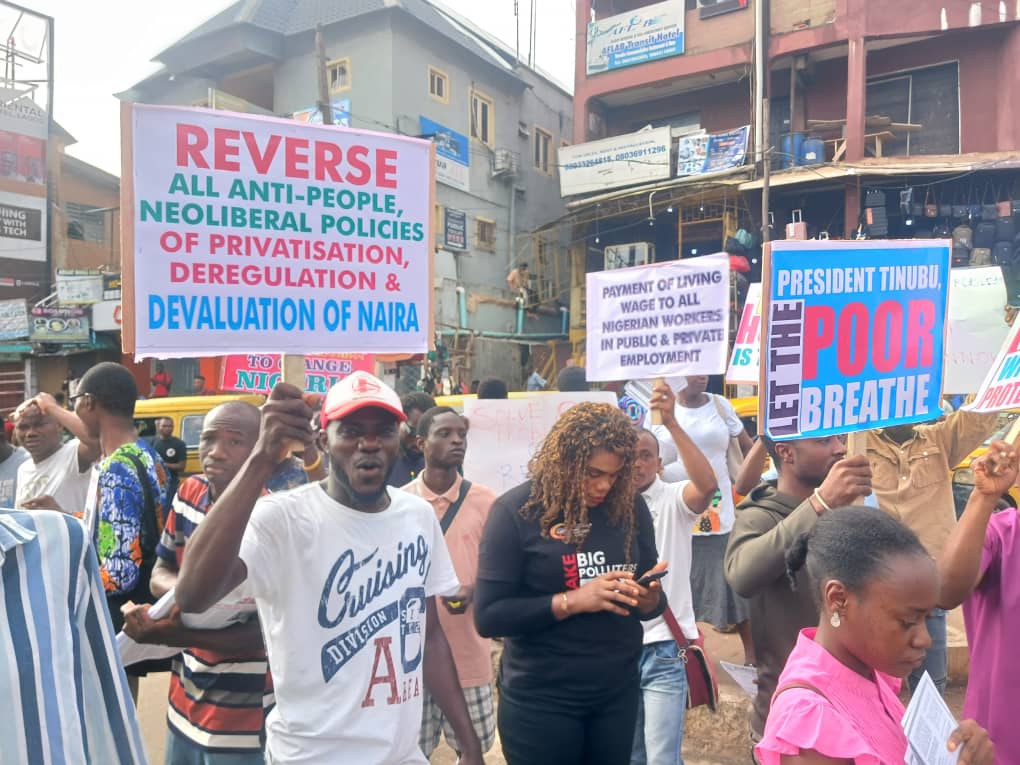




Public universities across Nigeria have remained under lock and key as members of the Academic Staff Union of Universities (ASUU) continue their nationwide strike, rejecting the Federal Government’s “no-work, no-pay” directive.
The government, through the Ministry of Education, had instructed vice-chancellors of federal universities to enforce the policy, directing that salaries of lecturers who fail to resume work during the strike be withheld.
The circular, issued on October 13, 2025, also mandated university administrators to conduct physical roll calls and submit compliance reports to the ministry within seven days.
The directive, however, exempts members of the Congress of University Academics (CONUA) and the National Association of Medical and Dental Academics (NAMDA)—two unions not participating in the industrial action.
In a swift response, ASUU rejected the policy, describing it as intimidation. The union’s president, Chris Piwuna, speaking on Politics Today on Channels Television, insisted that the government’s approach would not end the crisis.
“We don’t respond to threats, and nobody can threaten us. What we are asking for are fulfilled agreements and respect for university autonomy,” Piwuna said.
He accused the Federal Government of attempting to divide academics by selectively paying members of splinter unions.
- Bournemouth Humiliate Manchester United 3-0 at Old Trafford as Carrick Faces Mounting Pressure
 Bournemouth delivered another painful blow to Manchester United on Sunday,…
- Tragedy in Kogi: Police Corporal Allegedly Kills Female Colleague, Takes Own Life After Reported Relationship Crisis
 A tragic shooting incident involving two serving police officers has…
A check across major campuses showed total compliance with the strike directive. At the University of Jos, Ahmadu Bello University (ABU), Obafemi Awolowo University (OAU), University of Nigeria Nsukka (UNN), and University of Ilorin, classrooms were deserted while ongoing examinations and research projects were suspended.
At some universities like the University of Abuja, limited activities were observed, mostly by lecturers under CONUA who refused to join the strike.
The strike, declared last week, followed government inaction on issues contained in the renegotiated 2009 ASUU-FG agreement, including improved welfare, university funding, payment of withheld salaries, and autonomy for public institutions.
Meanwhile, in solidarity, the Nigeria Labour Congress (NLC) has warned that it may mobilize its members to join the university lecturers if the Federal Government fails to reverse the “no-work, no-pay” directive and begin sincere negotiations.
The NLC president, Joe Ajaero, in a statement on Monday, said the government’s hardline position was provocative and counterproductive.
“This is not just ASUU’s struggle; it is a fight for the soul of public education in Nigeria. The government should engage in genuine dialogue rather than intimidation,” Ajaero said.
He urged the administration to use the two-week warning strike to address long-standing issues affecting university workers and restore stability to the education sector.
The prolonged face-off between ASUU and the government has once again left thousands of students stranded across campuses. Many fear that an extended shutdown could delay graduations, affect academic calendars, and worsen the already fragile state of tertiary education in the country.
Education analysts warn that the continued disregard for collective bargaining agreements and the politicization of university funding may further erode confidence in public education.
For now, Nigeria’s public universities remain silent classrooms empty, laboratories locked, and the future of millions of students hanging in uncertainty as the two sides dig deeper into their standoff.