






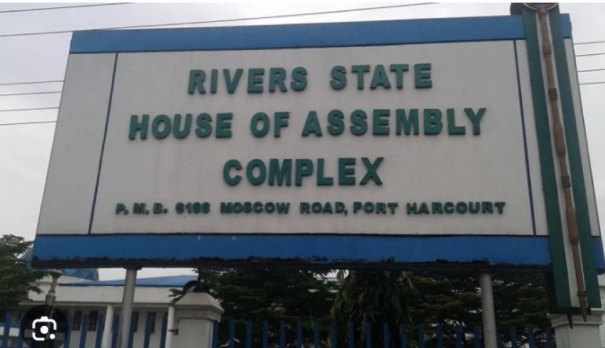
The Rivers State House of Assembly has formally resolved to continue impeachment proceedings against Governor Siminalayi Fubara and his deputy, Professor Ngozi Odu, escalating the process to the next constitutional phase involving judicial investigation. The decision was reached during plenary in Port Harcourt, marking a major turning point in the protracted political standoff between the legislative and executive arms of government in the state.
Lawmakers agreed that the allegations of gross misconduct earlier raised against the governor and his deputy should no longer remain at the preliminary legislative stage but be subjected to deeper scrutiny as provided for under the 1999 Constitution of the Federal Republic of Nigeria, as amended. The resolution reflects the Assembly’s insistence that due process must be followed to its logical conclusion.
Following the resolution, the Speaker of the House, Martins Chike Amaewhule, confirmed that a formal communication has been sent to the Chief Judge of Rivers State. The letter requests the constitution of a seven-member judicial panel to investigate the allegations, in line with Section 188 of the Constitution, which governs impeachment proceedings against a sitting governor.
During the session, lawmakers maintained that their action was not driven by political vendetta or ethnic considerations but by what they described as constitutional responsibility. They argued that the legislature has a duty to act whenever allegations of serious misconduct are formally brought before it and supported by the required number of members.
The Assembly’s decision comes amid renewed unity within the House, following the return of some lawmakers who had previously distanced themselves from the impeachment move. Their renewed support strengthened the numerical backing for the process and reinforced the Assembly’s resolve to proceed without delay.
Legislators also accused the executive arm of failing to adequately engage the House on key governance and constitutional issues, a development they said contributed to the deepening crisis. According to them, continued inaction would amount to neglect of their oversight role and undermine the principles of separation of powers.
- Nigeria’s First Ebola Patient Identified as Wife of Swiss Diplomat as Authorities Probe Source of Infection
 Nigeria’s latest Ebola case has been traced to a 42-year-old…
- MURIC Seeks Police Probe into Alleged Killing of Man Inside Oyo Mosque
 The Muslim Rights Concern (MURIC) has petitioned the police over…
Read More “MURIC Seeks Police Probe into Alleged Killing of Man Inside Oyo Mosque” »
With the matter now before the judiciary, attention shifts to the Chief Judge, who is constitutionally empowered to constitute the investigative panel. Once inaugurated, the panel is expected to examine the allegations, hear from all parties involved, and submit its findings to the House of Assembly within the stipulated timeframe.
The outcome of the panel’s investigation will determine the next steps in the impeachment process. If the allegations are upheld, the House may proceed to consider a motion for removal. If not, the process could be terminated at that stage, effectively clearing the governor and his deputy.
Political observers note that the development has heightened tensions in Rivers State, with implications for governance, stability, and investor confidence. Calls for dialogue and restraint have continued from various quarters, even as the constitutional process unfolds.
As events progress, Rivers State now stands at a critical political juncture, with the impeachment proceedings entering their most decisive phase. All eyes remain on the judiciary and the eventual findings of the investigative panel, which will shape the immediate political future of the state.