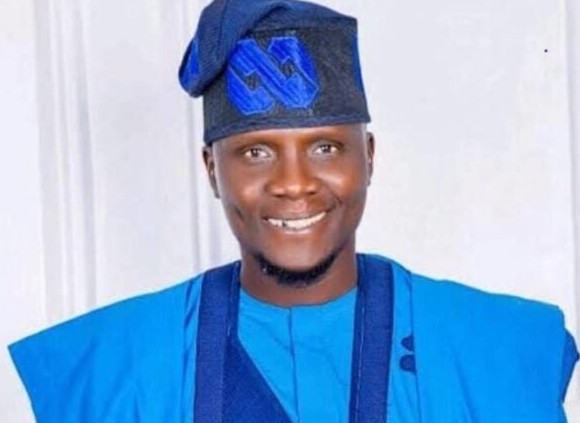




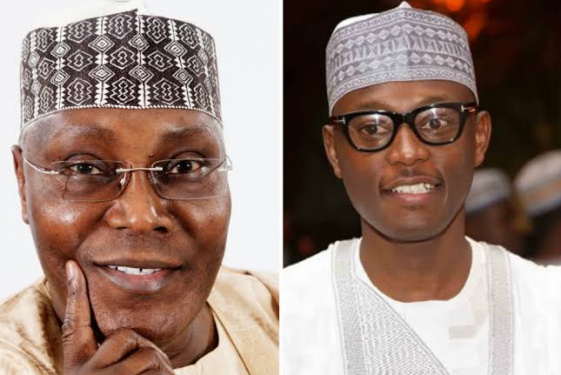
Abba Abubakar, son of former Vice President and 2023 presidential candidate Atiku Abubakar, has officially defected from the Peoples Democratic Party (PDP) to the ruling All Progressives Congress (APC), pledging his support for President Bola Ahmed Tinubu’s re-election in 2027.
The announcement, made on January 15, 2026, has attracted widespread attention across Nigeria’s political landscape, raising questions about the dynamics within one of the country’s most prominent political families.
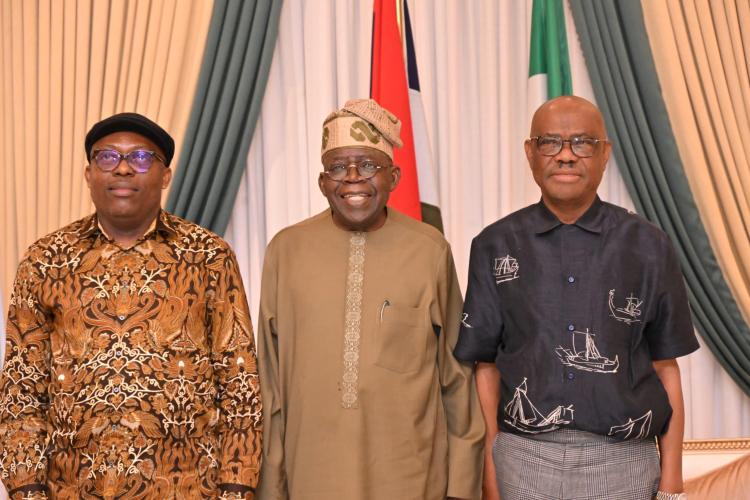
At the National Assembly in Abuja, Abba was formally welcomed into the APC by top party figures, including Senator Barau Jibrin, Deputy Senate President, and Mustapha Salihu, APC National Vice Chairman (North-East). His defection comes nearly three years after he first established the Haske Atiku Organisation in 2022, a grassroots political platform aligned with his father’s PDP campaign.
During the event, Abba cited ideological reasons for joining the APC, stating that his decision was motivated by the policy direction and leadership style of President Tinubu. He highlighted the role of APC leaders in inspiring his political realignment and emphasized that he seeks to contribute meaningfully to Tinubu’s “Renewed Hope Agenda” ahead of the 2027 general elections.
In a symbolic move to mark his new political path, Abba renamed his political group to the Haske Bola Tinubu Organisation, signaling a full realignment of his grassroots network. The rebranding underscores his intention to actively mobilize support for Tinubu while maintaining an independent political identity distinct from his father’s legacy within the PDP.
Responding to his son’s high-profile defection, Atiku Abubakar stated that Abba’s decision was “entirely personal” and not indicative of any rift or political strategy. The former vice president emphasized that personal political choices within a family are natural and should not be viewed as alarming, particularly in a democratic society where freedom of conscience is respected.
- Nigeria’s First Ebola Patient Identified as Wife of Swiss Diplomat as Authorities Probe Source of Infection
 Nigeria’s latest Ebola case has been traced to a 42-year-old…
- MURIC Seeks Police Probe into Alleged Killing of Man Inside Oyo Mosque
 The Muslim Rights Concern (MURIC) has petitioned the police over…
Read More “MURIC Seeks Police Probe into Alleged Killing of Man Inside Oyo Mosque” »
Atiku further clarified that, as a staunch democrat, he does not coerce his children in political matters, underlining that individuals have the right to make decisions based on personal beliefs. His comments sought to quell speculation about any familial or political tensions arising from Abba’s move to the ruling party.
While Abba’s defection has been welcomed by APC leaders as a strategic boost, some political analysts note that it also raises questions about party loyalty and the optics of a prominent political family with members on opposing sides of Nigeria’s political spectrum. For the APC, his entry is framed as an opportunity to strengthen grassroots mobilization in preparation for the next general elections.
The PDP, meanwhile, has maintained a cautious stance, acknowledging the defection without issuing strong public condemnation. Observers suggest that the party may focus on reinforcing internal cohesion and clarifying its political messaging to counter narratives of weakening support.
Abba’s move also highlights the increasingly fluid nature of political allegiances in Nigeria, where personal convictions and strategic considerations often drive realignments. As grassroots networks and individual actors shift loyalties, party structures and campaign strategies are being tested ahead of the 2027 polls.
Ultimately, Abba Abubakar’s defection and Atiku’s measured response underline the balance between personal choice and political identity in Nigerian democracy. With his grassroots network now fully aligned with the APC and his father leading an opposition coalition, the coming months will provide a clear view of how these personal decisions could influence voter behavior and shape the broader political landscape.