




The Academic Staff Union of Universities (ASUU) has clarified why several federal universities across Nigeria were unable to pay their lecturers full salaries for January 2026, attributing the development mainly to delays linked to the implementation of a newly negotiated salary agreement with the federal government.
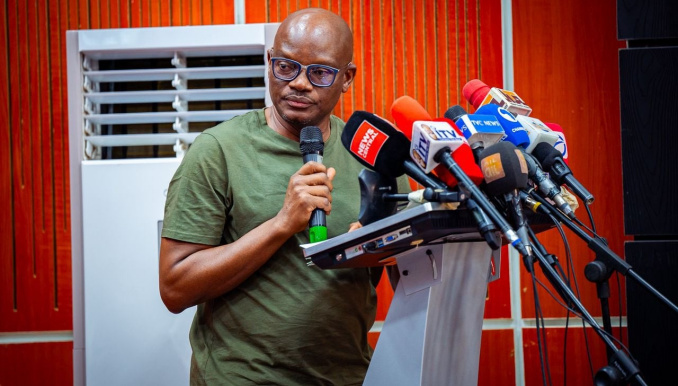
The explanation was provided by ASUU national president, Christopher Piwuna, who said the payment discrepancies arose as institutions struggled to operationalise the new remuneration structure agreed upon between the union and the federal government earlier this year.
The federal government and ASUU had on January 14, 2026, signed a renegotiated agreement aimed at resolving longstanding disputes that had fuelled frequent strikes in Nigeria’s public universities. The agreement came after negotiations concluded in December 2025 and was designed to improve the welfare of academic staff and stabilise the tertiary education system.
However, the transition to the new salary framework has not been seamless. According to Piwuna, one major constraint is that the 2026 federal budget — which contains provisions needed to implement the revised salary structure, had not yet been passed into law at the time payments were being processed.
He noted that although the government has expressed commitment to implementing the agreement fully, universities cannot completely effect the new salary structure until the budget is approved and funding flows to the institutions.
In the interim, some university managements attempted to meet the new salary obligations using available resources. Piwuna explained that vice-chancellors in certain institutions made efforts to pay the updated salaries in full, while others lacked sufficient funds to do so.
- Nigeria’s First Ebola Patient Identified as Wife of Swiss Diplomat as Authorities Probe Source of Infection
 Nigeria’s latest Ebola case has been traced to a 42-year-old…
- MURIC Seeks Police Probe into Alleged Killing of Man Inside Oyo Mosque
 The Muslim Rights Concern (MURIC) has petitioned the police over…
Read More “MURIC Seeks Police Probe into Alleged Killing of Man Inside Oyo Mosque” »
Reports within the academic community also indicate that the federal government had not yet released the necessary funds to universities, prompting the Federal Ministry of Education to direct institutions to temporarily pay lecturers from their internally generated revenue (IGR).
The uneven capacity of universities to generate internal funds meant that while some institutions paid lecturers the full amount reflecting the new agreement, others could only make partial payments.
The salary issues have already triggered tensions in some campuses. At the University of Lagos, for instance, lecturers recently protested what they described as “amputated salaries,” prompting industrial action before discussions with management led to a temporary resolution.
ASUU leaders say the situation is expected to improve once the federal budget is enacted and funding is released for the implementation of the revised pay structure across federal universities nationwide.