

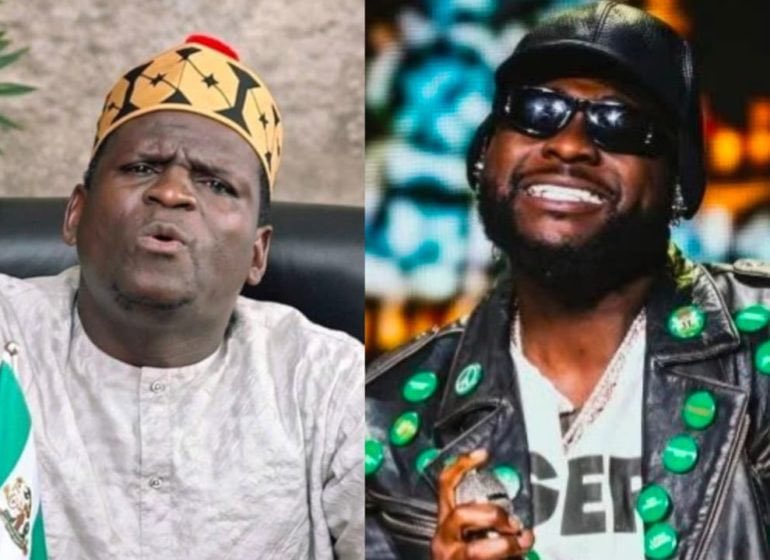
A public disagreement has erupted between popular Kano-based singer Dauda Kahutu Rarara and Afrobeats superstar Davido following the latter’s appearance at the 2026 FIFA World Cup Countdown Concert in Los Angeles, where he used his outfit to draw attention to the kidnapping of schoolchildren and teachers in Oyo State.
Davido’s performance at the globally televised FIFA event attracted widespread attention, not only for his music but also for the message emblazoned on his custom-made black jacket. The outfit featured 46 green badges bearing the names of 39 abducted pupils and seven teachers who were kidnapped during a deadly attack on schools in Oriire Local Government Area of Oyo State. Across the back of the jacket was the inscription: “Bring Them Home.”
The singer’s gesture was intended as an appeal for the safe release of the victims and to spotlight Nigeria’s ongoing insecurity challenges before a global audience. During the FIFA countdown event at the Crypto.com Arena, Davido also publicly called for prayers and urgent action to secure the release of those still in captivity.
However, the symbolic protest has drawn criticism from Rarara, a prominent northern musician known for his political affiliations. According to reports circulating on social media and entertainment platforms, Rarara accused Davido of portraying Nigeria negatively before the international community, arguing that such a platform should have been used to celebrate the country rather than highlight its security failures.
Davido’s supporters have strongly defended the singer’s actions, insisting that speaking out about the plight of abducted children and educators is a patriotic duty rather than an act of national embarrassment. Many argued that drawing international attention to the tragedy could increase pressure on authorities and help sustain public awareness about the victims.
The controversy has reignited debate over the role of celebrities in addressing national issues. While some believe public figures should avoid exposing the country’s challenges on international stages, others maintain that influential personalities have a responsibility to use their platforms to advocate for vulnerable citizens and demand accountability.
The kidnapping that inspired Davido’s message occurred in May 2026 when armed attackers stormed schools in Oriire Local Government Area, abducting dozens of pupils and teachers. The incident triggered nationwide outrage and renewed concerns about insecurity and attacks on educational institutions across Nigeria.
As reactions continue to trail the exchange between Rarara and Davido, the central issue remains the fate of the abducted pupils and teachers, whose families continue to await their safe return. For many observers, the debate has underscored a larger question confronting the nation: whether silence or advocacy is the more effective response to Nigeria’s security challenges.
- Tottenham Stun Chelsea at Stamford Bridge as Palmer Sees Red and Maddison Suffers Fresh Injury Blow
 Tottenham Hotspur delivered a statement victory over London rivals Chelsea…
- AFCOM-HS: New Military Medical College Listed on JAMB Portal for 2026/2027 Admission
 The Armed Forces College of Medicine and Health Sciences (AFCOM-HS),…
Read More “AFCOM-HS: New Military Medical College Listed on JAMB Portal for 2026/2027 Admission” »