


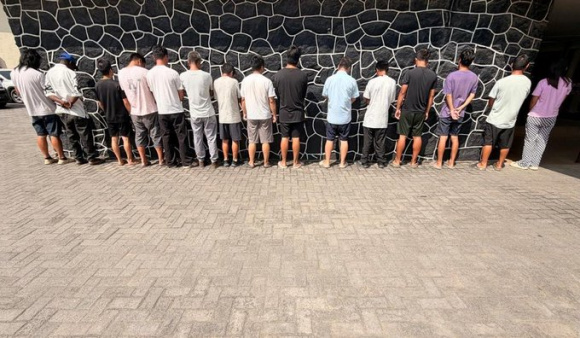
The Economic and Financial Crimes Commission (EFCC) has arrested 15 suspects, comprising 14 Chinese nationals and one Nigerian, over alleged illegal lithium processing activities at four facilities in Ogere, Ogun State, in a fresh enforcement operation targeting suspected unlawful activities in Nigeria’s solid minerals sector.
The arrests were carried out on Friday, October 23, 2026, by operatives of the commission’s Lagos Zonal Directorate 2 following intelligence gathering and surveillance. The EFCC announced the development on Monday, October 26, as details of the operation emerged.
According to the anti-graft agency, the suspects were apprehended at four lithium processing plants allegedly operating illegally in the Ogere area. However, the commission has yet to disclose the identities of the individuals arrested or provide detailed information about the ownership and management of the facilities.
During the operation, EFCC operatives recovered several items believed to be relevant to the investigation. These included bags containing lithium-bearing rocks, 18 mobile devices, four laptop computers, two decoders, a television remote control and a trailer truck.
The recovered materials and equipment are expected to form part of the ongoing investigation as authorities seek to establish the circumstances surrounding the alleged operations. The commission, however, has not disclosed the quantity of lithium recovered or explained the specific regulatory breaches suspected at the facilities.
The EFCC said the investigation would continue, adding that the suspects would be charged before a court of competent jurisdiction upon its conclusion. The agency has not announced any court appearance or prosecution of the individuals as of the time of reporting.
Lithium is an increasingly valuable mineral used in manufacturing rechargeable batteries for mobile phones, laptops, electric vehicles and large-scale energy storage systems. Its growing importance in the global energy transition has heightened interest in lithium-bearing deposits and processing opportunities in Nigeria and other mineral-rich countries.
Nigeria has been pursuing the development of its solid minerals industry as part of broader efforts to diversify the economy beyond crude oil. However, unauthorised mineral extraction and processing can undermine regulatory oversight, potentially deprive the government of lawful revenue and create unfair competition for operators complying with applicable requirements.
The latest arrests also draw attention to the need for effective monitoring of mineral processing facilities, particularly as investment interest in strategic minerals increases. Establishing the source of the recovered lithium, the operational status of the four facilities and the authorisations held by their operators could prove important to determining the full scope of the alleged violations.
Although the EFCC has described the facilities as illegal, the specific offences allegedly committed by the suspects have not been publicly detailed. The case therefore remains under investigation, and the allegations against those arrested have yet to be determined by a court. The commission has reiterated that prosecution will follow the conclusion of its inquiries.
- FG Approves N70,000 Monthly Transport Allowance for Workers for Six Months, Begins November
 The Federal Government has approved a monthly transport allowance of…
- Fleetwood Town Stun Arsenal in Historic Carabao Cup Upset, Win 5-3 on Penalties
 Fourth-Tier Side Dump Reigning Premier League Champions Out After Dramatic…
Read More “Fleetwood Town Stun Arsenal in Historic Carabao Cup Upset, Win 5-3 on Penalties” »