



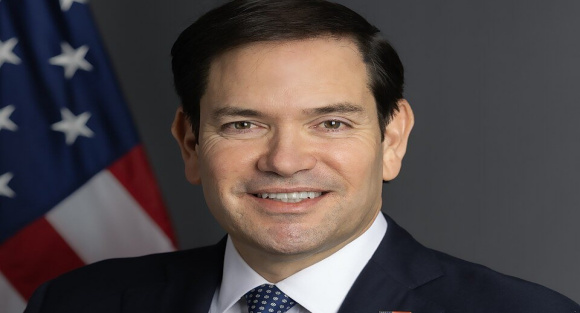
US Secretary of State Marco Rubio has declared that Washington sees no immediate need to launch further major military operations against Iran, arguing that the American economic pressure campaign is inflicting devastating damage on Tehran and achieving objectives that would otherwise require military action.
Rubio made the position known on Tuesday, November 10, while addressing journalists in Paris after two days of meetings with foreign ministers of the Group of Seven (G7) industrialised nations. He said he had communicated the Trump administration’s assessment to its international allies, stressing that the effectiveness of economic restrictions had significantly reduced the necessity for renewed military strikes.
“The economic campaign against Iran is so devastating that right now there is no need for major combat operations,” Rubio said, explaining that the economic hardship being inflicted on the country was intensifying rather than diminishing. He maintained that Washington could achieve its strategic objectives through economic measures without necessarily returning to large-scale military confrontation.
According to the US Secretary of State, the combination of economic sanctions and restrictions on Iran’s ability to export energy was exerting unprecedented pressure on the country’s economy. He argued that Tehran was experiencing an exceptional challenge in accessing international energy markets, describing its current difficulties in selling energy as unlike anything it had previously encountered.
Rubio’s remarks followed President Donald Trump’s announcement on Monday that he was holding back from ordering fresh military strikes against Iran after consultations with regional allies, including Qatar’s Prime Minister, Sheikh Mohammed bin Abdulrahman Al Thani. Trump subsequently indicated that diplomatic efforts were gaining momentum, although he maintained that the United States remained prepared to respond if circumstances changed.
The American administration’s strategy includes a naval blockade of Iranian ports and an intensified sanctions campaign designed to restrict Tehran’s oil revenue, weapons procurement and financial networks associated with the Islamic Revolutionary Guard Corps. The United States has also expanded efforts to disrupt Iran’s access to resources and commercial networks that could sustain its military and government operations.
The latest diplomatic developments come amid growing international concern over the economic consequences of the prolonged conflict, particularly the disruption of shipping activities through the Strait of Hormuz, one of the world’s most strategically important routes for international oil and gas supplies. Iran’s blockade efforts in the waterway have contributed to rising energy prices and heightened concerns among countries dependent on Gulf oil shipments.
Britain’s Foreign Secretary, Ed Miliband, used the G7 discussions to call for an intensified diplomatic initiative to bring the conflict to an end. He warned that the prevailing situation, which he characterised as neither war nor peace, was inflicting considerable economic damage on participating countries. Miliband also stressed the importance of preventing Iran from acquiring nuclear weapons and ensuring the full reopening of the Strait of Hormuz.
Meanwhile, Iran has maintained that any meaningful resolution must address its own conditions, including an end to hostilities on all fronts, the unfreezing of its assets abroad, the lifting of oil sanctions and the termination of the American naval blockade. Iranian Foreign Minister Abbas Araghchi insisted that the crisis could not be resolved through military action or additional sanctions, urging Washington to pursue negotiations based on mutual respect and consideration of Tehran’s demands.
Qatar and Pakistan have emerged as important intermediaries in the diplomatic efforts, with Doha confirming progress in attempts to narrow the differences between Washington and Tehran. However, the situation remains fragile, as reports of attacks on commercial vessels around the Strait of Hormuz underscore the continuing security risks. The United Arab Emirates’ state oil company, ADNOC, also reported that one of its vessels sustained damage following an attack in UAE territorial waters.
The shift towards economic pressure and renewed diplomacy also comes against the backdrop of political setbacks for Trump’s Republican Party in the recent US midterm elections. Trump acknowledged that the Iran conflict contributed to the party’s electoral losses, while Vice President JD Vance reportedly attributed the defeat directly to the war. Nevertheless, Rubio’s position suggests that Washington intends to maintain its pressure on Tehran while avoiding another major military offensive for now, although the possibility of renewed American military action has not been completely ruled out.
- Seyi Tinubu Leads City Boy Delegation to Sultan of Sokoto in Fresh Push for National Reach
 Seyi Tinubu, son of President Bola Ahmed Tinubu and Patron…
- IGP Disu Gives Police Commissioners 72 Hours to Submit Security Threat Reports, Orders Urgent Reinforcement of Banditry-Hit Communities
 Inspector-General of Police, Olatunji Disu, has given Commissioners of Police…