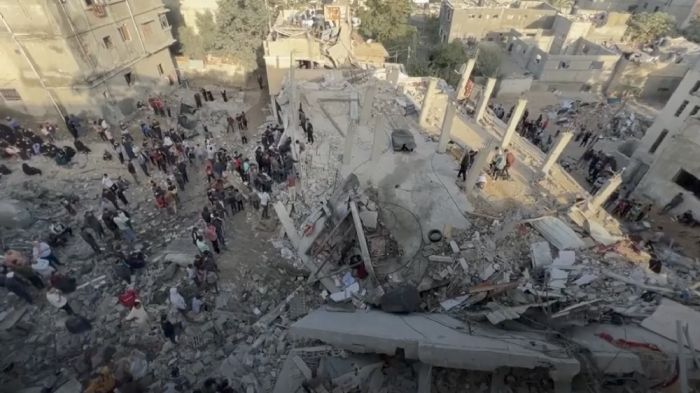








The United Nations Security Council on Monday passed a resolution calling for an immediate cease-fire in Gaza for the month of Ramadan.
This would be breaking a five-month impasse during which the U.S. vetoed several calls for ending the war, even as the humanitarian toll climbed higher.
The resolution passed with 14 votes in favor. The U.S. abstained, allowing the resolution to pass. The chamber broke into applause after the vote.
“Finally, finally, the Security Council is shouldering its responsibility,” said Algeria’s ambassador to the U.N., Amar Bendjama, the only Arab member of the Council. “It is finally responding to the calls of the international community.”
- Nigeria’s First Ebola Patient Identified as Wife of Swiss Diplomat as Authorities Probe Source of Infection
 Nigeria’s latest Ebola case has been traced to a 42-year-old…
- MURIC Seeks Police Probe into Alleged Killing of Man Inside Oyo Mosque
 The Muslim Rights Concern (MURIC) has petitioned the police over…
Read More “MURIC Seeks Police Probe into Alleged Killing of Man Inside Oyo Mosque” »
The breakthrough resolution, which is legally binding and was put forth by the 10 nonpermanent members of the Council, was being negotiated intensely until the last minute.
The U.S. asked for a change in the text that removed “permanent cease-fire” and replaced it with a “lasting cease-fire,” according to diplomats, and called for both sides to create conditions where the halt in fighting could be sustained.
Since the start of the war in October, pressure has been building on the Security Council to call for a cease-fire. Its members, particularly the United States, have been criticized sharply for failing to uphold peace and stability in the world.
Security Council resolutions are legally binding and are considered to be international law, and while the Council has no means of enforcing the resolution, it can impose additional punitive measures on Israel.
The U.S. ambassador, Linda Thomas-Greenfield, said the adopted resolution fell in line with diplomatic efforts by the United States, Qatar and Egypt to broker a cease-fire in exchange for hostage release. She said the U.S. abstained because it did not agree with everything in the resolution, including a decision not to condemn Hamas’s Oct. 7 attacks to the text.
“A cease-fire of any duration must come with the release of hostages, this is the only path,” Ms. Thomas-Greenfield said.