





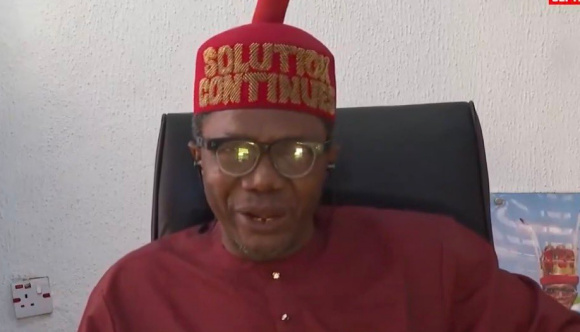
The Anambra State Government says it is still servicing eight external loans associated with the administration of former Governor Peter Obi, with the state’s Commissioner for Information and Value Reorientation, Dr Law Mefor, saying deductions continue to be made from the state’s federal allocations to repay the facilities.
Mefor made the disclosure amid a growing dispute between the state government and Obi over the financial position of Anambra when the former governor left office in March 2014. The commissioner said the loans were genuine financial obligations and had not become grants simply because some were guaranteed by the Federal Government.
According to figures released by the Anambra government, the eight external facilities had an original combined value of about $123.77 million. The government said the outstanding balance stood at approximately $92.35 million, equivalent to about N127.37 billion, as of June 30, 2026, based on the official exchange rate used in its statement.
The facilities were linked to development programmes covering areas such as malaria control, erosion and watershed management, healthcare, education, community development, agricultural development and value-chain development. The government said the loans were contracted between 2007 and 2013.
Mefor said the current administration of Governor Chukwuma Soludo continues to bear the repayment obligations. He explained that deductions from Anambra’s Federation Account Allocation Committee, or FAAC, revenue are made regularly to service the loans. The commissioner maintained that the fact that the facilities were federally guaranteed did not eliminate the state’s obligation to repay them.
The issue was initially brought into wider public attention by Anambra Commissioner for Finance, Izuchukwu Okafor, who said the state was still making substantial deductions from its monthly federal allocation to service loans obtained by previous administrations, including those of Peter Obi and Willie Obiano. Okafor also said the Soludo administration had not borrowed from any commercial bank since assuming office in 2022.
Obi, however, has rejected the government’s characterization of his financial record. The former governor has maintained that he left office without outstanding salaries, pensions or gratuities owed by the state and without unpaid obligations to contractors whose projects had been properly executed and certified. He has also disputed claims concerning the state’s alleged inherited debt.
The former governor subsequently released a handover document from the end of his tenure, with his camp saying it showed that Anambra had a positive financial position when he handed over to his successor, Willie Obiano, in March 2014. His supporters have cited the document as evidence of the financial position they say his administration left behind.
The controversy has also extended to claims concerning an alleged ecological fund of about N2.13 billion. The Soludo administration disputes the claim that such a balance existed in the cited First Bank account, while Obi’s representatives have produced documents which they say demonstrate that the funds were in the account at the time of handover. Public reports indicate that the two sides remain at odds over the interpretation of the banking records.
The debt controversy comes at a politically significant period, with Obi now a presidential candidate for the 2027 election. The competing accounts have therefore generated renewed public debate about the financial records of his tenure as Anambra governor and the obligations inherited by successive administrations. Independent reporting has also noted that Debt Management Office data showed Anambra had both external and domestic debt around the end of 2013, although the precise composition and responsibility for individual liabilities remain part of the dispute.
For now, the central disagreement remains over what constitutes debt attributable to Obi’s administration and what financial obligations were inherited from earlier administrations. While the Soludo government says the eight external facilities remain liabilities being serviced through deductions from state revenues, Obi maintains that he left Anambra in a financially sound position. The competing claims and supporting documents are likely to remain subjects of public scrutiny as the debate over the state’s fiscal history continues.
- Dangote Refinery’s N2.15 Trillion IPO Closes Today as Investors Make Final Push
 LAGOS, Nigeria — The highly anticipated initial public offering (IPO)…
Read More “Dangote Refinery’s N2.15 Trillion IPO Closes Today as Investors Make Final Push” »
- NCAA to Probe Airline After Passenger Reportedly Bleeds Amid Extreme Heat on Abuja–Calabar Flight
 The Nigeria Civil Aviation Authority (NCAA) is set to investigate…