


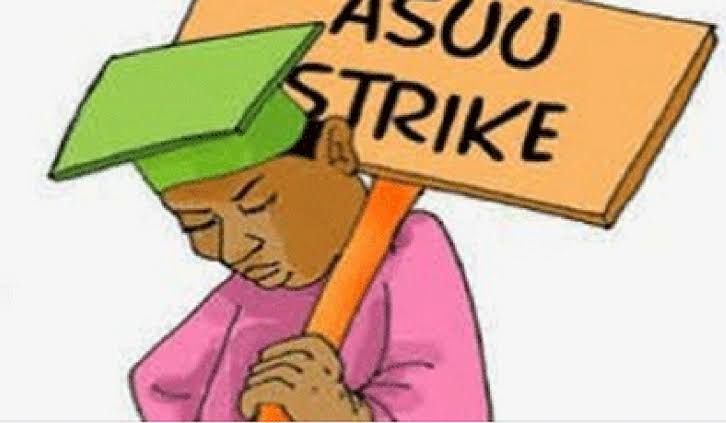
Lecturers under the Academic Staff Union of Universities (ASUU) have resumed academic activities across federal universities in Nigeria following the payment of their June 2025 salaries by the Federal Government. This development comes after days of nationwide tension triggered by delayed salaries, which led several ASUU branches to withdraw from academic duties in line with the union’s “No Pay, No Work” policy.
Earlier this month, ASUU branches across the country, including the University of Jos, University of Abuja, and Abubakar Tafawa Balewa University, Kashere, suspended lectures after it became evident that June salaries had not been paid by the first week of July.

The union attributed the delay to ongoing challenges in Nigeria’s payment system transition—from the Integrated Personnel and Payroll Information System (IPPIS) to the Government Integrated Financial Management Information System (GIFMIS)—which reportedly caused administrative bottlenecks in salary disbursement.
ASUU President, Dr. Chris Piwuna, had warned that the union would not hesitate to escalate industrial action if the Federal Government failed to address salary delays and other outstanding entitlements. Among the lingering issues is the ₦10 billion balance of the ₦50 billion Earned Academic Allowances (EAA) promised to lecturers, which ASUU insists must be settled without further delays.
Following mounting pressure and media scrutiny, the Federal Government began releasing June salary payments to universities on July 8. By the morning of July 9, multiple ASUU branches confirmed receipt of salaries and announced an official return to lecture halls. The University of Abuja, which had issued a July 7 deadline before full withdrawal of service, rescinded its position after payment was confirmed.
- Bournemouth Humiliate Manchester United 3-0 at Old Trafford as Carrick Faces Mounting Pressure
 Bournemouth delivered another painful blow to Manchester United on Sunday,…
- Tragedy in Kogi: Police Corporal Allegedly Kills Female Colleague, Takes Own Life After Reported Relationship Crisis
 A tragic shooting incident involving two serving police officers has…
Other institutions, including the University of Jos and ATBU Kashere, also circulated internal memos informing staff and students of the resumption of normal academic activities.
In a statement to the press, the Minister of State for Education, Dr. Tunji Alausa, clarified that there was no formal nationwide strike declared by ASUU, but rather a temporary work stoppage by some branches in response to the salary delays. He reaffirmed the Federal Government’s commitment to dialogue with the union and assured that measures were being put in place to prevent a recurrence of payment delays.
As of July 9, lectures have resumed across most federal universities, and there is no ongoing nationwide strike. However, the union has warned that it remains watchful of the government’s handling of salary payments in subsequent months. Should there be further delays, ASUU may once again activate its “No Pay, No Work” policy.
While the immediate crisis appears to have been resolved, tensions remain as ASUU continues to demand the full settlement of the outstanding Earned Academic Allowances and a permanent solution to the systemic challenges affecting university lecturers’ welfare. The next few weeks will be crucial in determining whether the resumed peace between the Federal Government and ASUU will hold.