


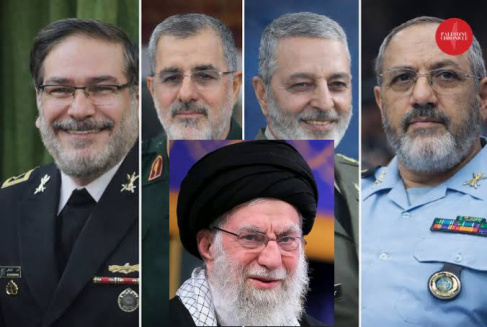
Following the massive attack on various sites which included the Iranian leader’s Lodge in Terhan, the capital city of Iran on Saturday, the list below reflects the most widely reported officials, who have been confirmed or strongly indicated as killed during the joint U.S.–Israeli strikes:
Ayatollah Ali Khamenei — Supreme Leader of Iran (died 28 Feb 2026)
Ali Shamkhani — Secretary of Iran’s Defense Council and senior security adviser
Aziz Nasirzadeh — Minister of Defense and Armed Forces Logistics
Mohammad Pakpour — Commander of the Islamic Revolutionary Guard Corps (IRGC) Ground Forces
Abdolrahim Mousavi — Chief of Staff of the Iranian Armed Forces
Saleh Asadi — Senior intelligence official
Mohammad Shirazi — Head of the Supreme Leader’s Military Office
Hossein Jabal Amelian — Official linked to Iran’s Organization of Defensive Innovation and Research
Reza Mozaffari-Nia — Former chairman, SPND (defense research organization)
Gholamreza Rezaian — Chief of National Police Intelligence (reported killed by Iranian local media)
These casualties represent the core of Iran’s defense, intelligence, and security leadership, with many of them known for their strategic roles in shaping Tehran’s regional policies and military doctrine. While Iranian authorities have not released a comprehensive official list into the public domain, multiple international and regional media outlets have confirmed these deaths based on statements from military officials and state reporting.
The loss of so many top officials has already triggered a leadership vacuum in key institutions. Iran has declared a period of national mourning and announced an interim leadership council to manage the succession process. However, the broader implications for Iran’s internal political stability and its regional posture remain deeply uncertain.
The strikes have also sparked immediate retaliation from Tehran, with missile attacks reported against U.S. bases and allied territories across the Gulf region. International efforts to prevent a further escalation into a wider regional conflict are underway, but the situation continues to evolve rapidly, with global leaders urging restraint amid fears of a prolonged confrontation.