


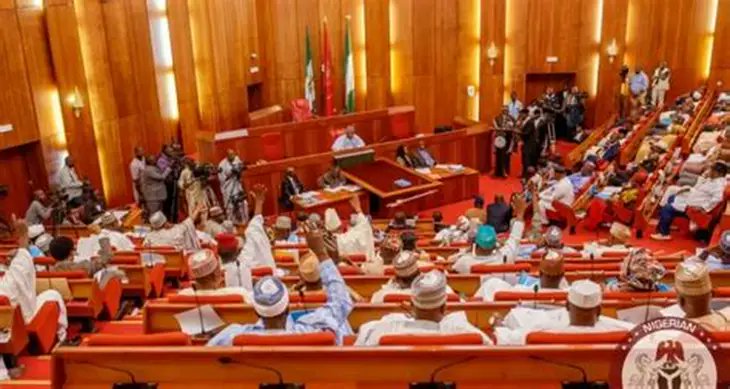
The Nigerian Senate has reaffirmed its resolve to conclude the long-awaited constitutional amendment that will pave the way for the establishment of state police in Nigeria before the end of the year, signalling renewed momentum around one of the country’s most debated security reforms.
Senate leaders said the commitment reflects growing concern over persistent insecurity across several states and the increasing pressure on the centrally controlled Nigeria Police Force, which has struggled to effectively police a large and diverse federation with limited manpower and logistics.
According to the Senate, work on the constitutional amendment has already advanced beyond preliminary discussions, with previous public hearings, memoranda from stakeholders, and reports from constitutional review committees forming a foundation for the final legislative push expected in the coming months.
The proposed reform seeks to amend relevant sections of the 1999 Constitution to allow states to establish and control their own police services, while still operating within a nationally defined legal and operational framework to preserve unity and standardisation in policing.
Lawmakers noted that the issue of state police is no longer divisive within the National Assembly, as rising cases of banditry, kidnapping, communal violence, and terrorism have shifted public and political opinion toward decentralised security solutions.
The renewed push has also been bolstered by support from the executive arm of government, with Bola Tinubu previously urging the legislature to fast-track the amendment, arguing that states are better positioned to understand and respond swiftly to local security threats.
- Nigeria’s First Ebola Patient Identified as Wife of Swiss Diplomat as Authorities Probe Source of Infection
 Nigeria’s latest Ebola case has been traced to a 42-year-old…
- MURIC Seeks Police Probe into Alleged Killing of Man Inside Oyo Mosque
 The Muslim Rights Concern (MURIC) has petitioned the police over…
Read More “MURIC Seeks Police Probe into Alleged Killing of Man Inside Oyo Mosque” »
Beyond passage at the National Assembly, the Senate acknowledged that the process will require approval by at least two-thirds of the 36 state Houses of Assembly, a constitutional hurdle lawmakers say is achievable given the broad support already expressed by many governors.
However, senators admitted that concerns remain among civil society groups and some political actors over potential abuse of state police by state governments, especially during elections or political disputes, underscoring the need for strong safeguards.
In response, the Senate said the proposed framework will include checks and balances such as independent oversight mechanisms, clear rules on recruitment and deployment, and provisions to prevent political interference in police operations.
If successfully concluded by year end, the reform would mark one of the most significant changes to Nigeria’s security architecture since the return to democratic rule in 1999, reshaping how law enforcement is organised and potentially redefining the balance of power between the federal and state governments.