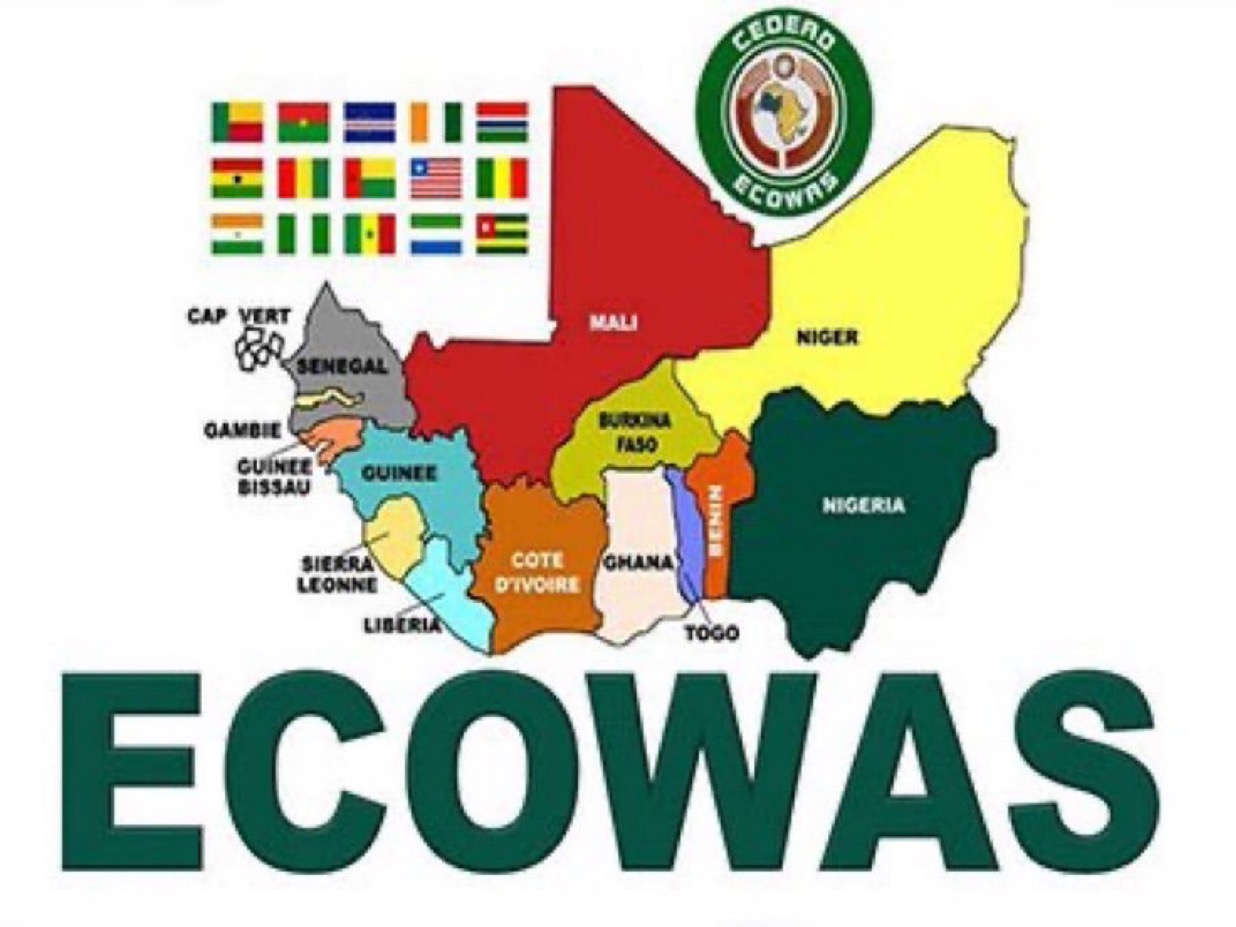
The Economic Community of West African States (ECOWAS) has declared a state of emergency across the West African sub-region, responding to a rising wave of coups, attempted coups and mutinies that have unsettled political stability in recent months. The announcement was made during the 55th session of the bloc’s Mediation and Security Council held in Abuja, where leaders agreed that the growing threats to democratic governance required an immediate and coordinated response.
ECOWAS said the emergency declaration became necessary after the December 7 coup attempt in Benin Republic, where a faction of soldiers briefly seized the state-owned broadcaster and announced the dissolution of the government under the banner of a so-called “Military Committee for Refoundation.” The mutiny was swiftly crushed by loyalist troops, and President Patrice Talon’s administration confirmed that all attackers had been neutralised or arrested.
By God’s grace🙏, the event was a success. We’re now at 50% of our target and hope to complete🫠funds before Dec 24, 2025.
If you’d like to give, please use:
ToyinOlomo Int’l Foundation – FCMB 7616705014
This is a broadcast message,✍️
Following the failed coup in Benin, ECOWAS authorised the rapid deployment of a regional standby force, drawing personnel from Nigeria, Ghana, Côte d’Ivoire and Sierra Leone. The mission’s mandate is to support constitutional order, prevent further instability and help Benin investigate the network of actors behind the attempted power grab.
At the Abuja meeting, ECOWAS leaders expressed deep concern over what they described as a spreading pattern of unconstitutional power seizures, which they say threatens the region’s security architecture. They noted that recent incidents—ranging from successful coups in some countries to mutinies in others—represent dangerous signals requiring firm and unified action.
- Tottenham Stun Chelsea at Stamford Bridge as Palmer Sees Red and Maddison Suffers Fresh Injury Blow
 Tottenham Hotspur delivered a statement victory over London rivals Chelsea…
- AFCOM-HS: New Military Medical College Listed on JAMB Portal for 2026/2027 Admission
 The Armed Forces College of Medicine and Health Sciences (AFCOM-HS),…
Read More “AFCOM-HS: New Military Medical College Listed on JAMB Portal for 2026/2027 Admission” »
In a formal communiqué, ECOWAS stressed that the political crises confronting the sub-region demand “serious introspection on the future of our democracy” and urgent investment in regional security systems. The bloc stated that instability in one member country inevitably undermines peace across the entire region, hence the need for a collective security response.
The regional body invoked the provisions of its 1999 Mechanism for Conflict Prevention and Peacekeeping, giving it legal authority to intervene militarily where constitutional order is under threat. Officials also reiterated that ECOWAS remains committed to discouraging coups through a mix of diplomacy, sanctions and, when necessary, the deployment of force.
Security analysts say the declaration marks a shift in ECOWAS’s approach—from reactive condemnation of coups to proactive military and diplomatic engagement. This could lead to increased ECOWAS presence in member states where intelligence suggests brewing mutinies or political instability.
However, the move may complicate relations with the Alliance of Sahel States (AES)—Burkina Faso, Mali and Niger—which withdrew from ECOWAS earlier this year after accusing the bloc of bias. Observers fear that the new emergency regime may deepen the divide between ECOWAS and the military-led Sahel governments, especially if regional operations approach their borders.
For West African citizens, the state of emergency may translate into heightened border security, increased military patrols, and stricter enforcement of constitutional procedures in political transitions. ECOWAS says these measures are temporary and designed solely to safeguard the region against the rising tide of unconstitutional rule.
With the emergency now in effect, attention will shift to how ECOWAS applies its expanded authority, whether more standby force deployments will follow, and how effectively the bloc can curb anti-democratic uprisings. The coming weeks are expected to be critical for the region as ECOWAS moves from declarations to action in its renewed fight against coups.