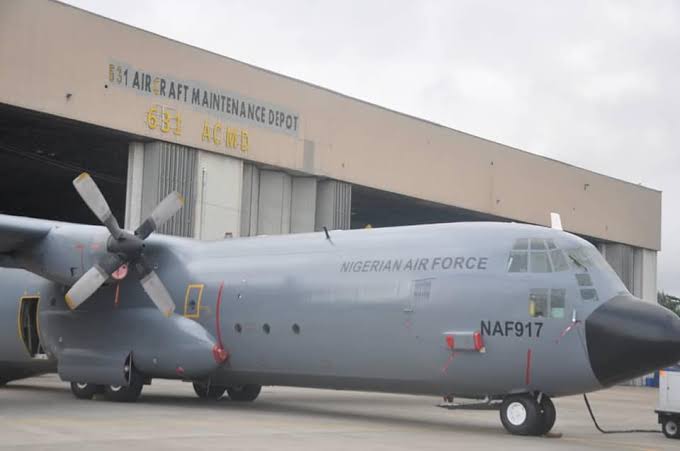





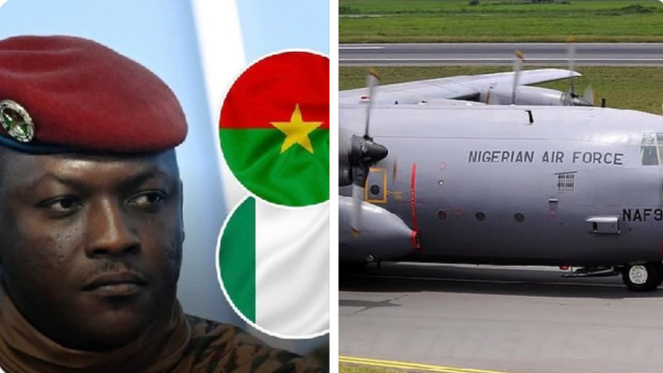
The Federal Government of Nigeria has intervened in a tense diplomatic standoff after Burkina Faso continued to hold a Nigerian Air Force (NAF) C‑130 military transport aircraft along with 11 Nigerian military personnel. The development comes after the aircraft made an unscheduled landing in Bobo‑Dioulasso earlier this week, reportedly due to a technical issue detected mid-flight. Nigerian authorities have described the landing as a precautionary safety measure in line with international aviation protocols.
The aircraft, en route to Portugal, was diverted to Burkina Faso on December 8, 2025, after the crew reported potential mechanical concerns. While Nigeria maintains that the landing was purely for safety reasons, Burkinabe authorities allege that the plane entered their airspace without prior authorisation, framing the incident as a violation of national sovereignty. Consequently, the aircraft was grounded and the 11 Nigerian personnel, including crew members and passengers, were detained.
The detained personnel reportedly include two crew members and nine military personnel on board the C‑130 transport. Initial reports of their release were dismissed by the Nigerian Ministry of Foreign Affairs, which confirmed that both the aircraft and the soldiers remain in Burkina Faso’s custody. The ministry has since activated diplomatic channels in an effort to secure the release of the aircraft and personnel, emphasizing the government’s commitment to peaceful resolution.
Ministry spokesperson Kimiebi Ebienfa confirmed that high-level diplomatic engagement is ongoing, with Nigerian officials pressing for the safe return of the plane and soldiers. While Nigeria stresses adherence to international aviation law and safety standards, Burkina Faso insists on the importance of protecting its sovereign airspace, highlighting the sensitive balance between operational safety and national security.
- Nigeria’s First Ebola Patient Identified as Wife of Swiss Diplomat as Authorities Probe Source of Infection
 Nigeria’s latest Ebola case has been traced to a 42-year-old…
- MURIC Seeks Police Probe into Alleged Killing of Man Inside Oyo Mosque
 The Muslim Rights Concern (MURIC) has petitioned the police over…
Read More “MURIC Seeks Police Probe into Alleged Killing of Man Inside Oyo Mosque” »
The incident has inflamed regional sensitivities in West Africa, particularly within the Sahel region, where Burkina Faso is a key member of the Alliance of Sahel States (AES). The alliance, which includes Mali and Niger, formally distanced itself from the Economic Community of West African States (ECOWAS) earlier this year following criticism of ECOWAS’ interventions in regional military affairs. AES officials have labelled Nigeria’s landing as “unfriendly” and warned of potential consequences for future violations of their airspace.
Nigeria’s diplomatic efforts are occurring against this backdrop of heightened Sahel tensions. The Federal Government is navigating a complex situation that involves ensuring the safety and rights of its military personnel while respecting Burkina Faso’s territorial sovereignty. Observers note that the standoff could have implications for Nigeria’s broader diplomatic relations in West Africa, particularly with countries sensitive to perceived infringements on national airspace.
Burkina Faso’s refusal to release the aircraft and soldiers has prompted urgent discussions within Nigeria’s Ministry of Foreign Affairs and the Defence Headquarters. Officials are reportedly considering multiple avenues for resolution, including direct engagement with Burkinabe military authorities and mediation through regional partners, to avoid escalation that could affect bilateral and regional stability.
Analysts have pointed out that the incident underscores the broader challenges of military aviation in regions with overlapping jurisdictions and heightened security concerns. The C‑130 aircraft, a staple in Nigerian military logistics and transport, plays a critical role in troop movement and humanitarian support missions. Its detention highlights the operational risks and diplomatic sensitivities inherent in cross-border military flights in the Sahel.
While the situation remains unresolved, the Federal Government continues to reassure Nigerians that every effort is being made to bring the detained personnel and aircraft home safely. Emphasis has been placed on dialogue and adherence to international conventions governing military aviation and airspace rights, with hopes that diplomatic engagement will prevent further deterioration of relations.
As the world watches, both Nigeria and Burkina Faso remain under pressure to de-escalate tensions. The outcome of this standoff will not only affect the immediate fate of the aircraft and soldiers but may also influence regional cooperation, military protocol, and the rules governing emergency landings and airspace violations in West Africa.