



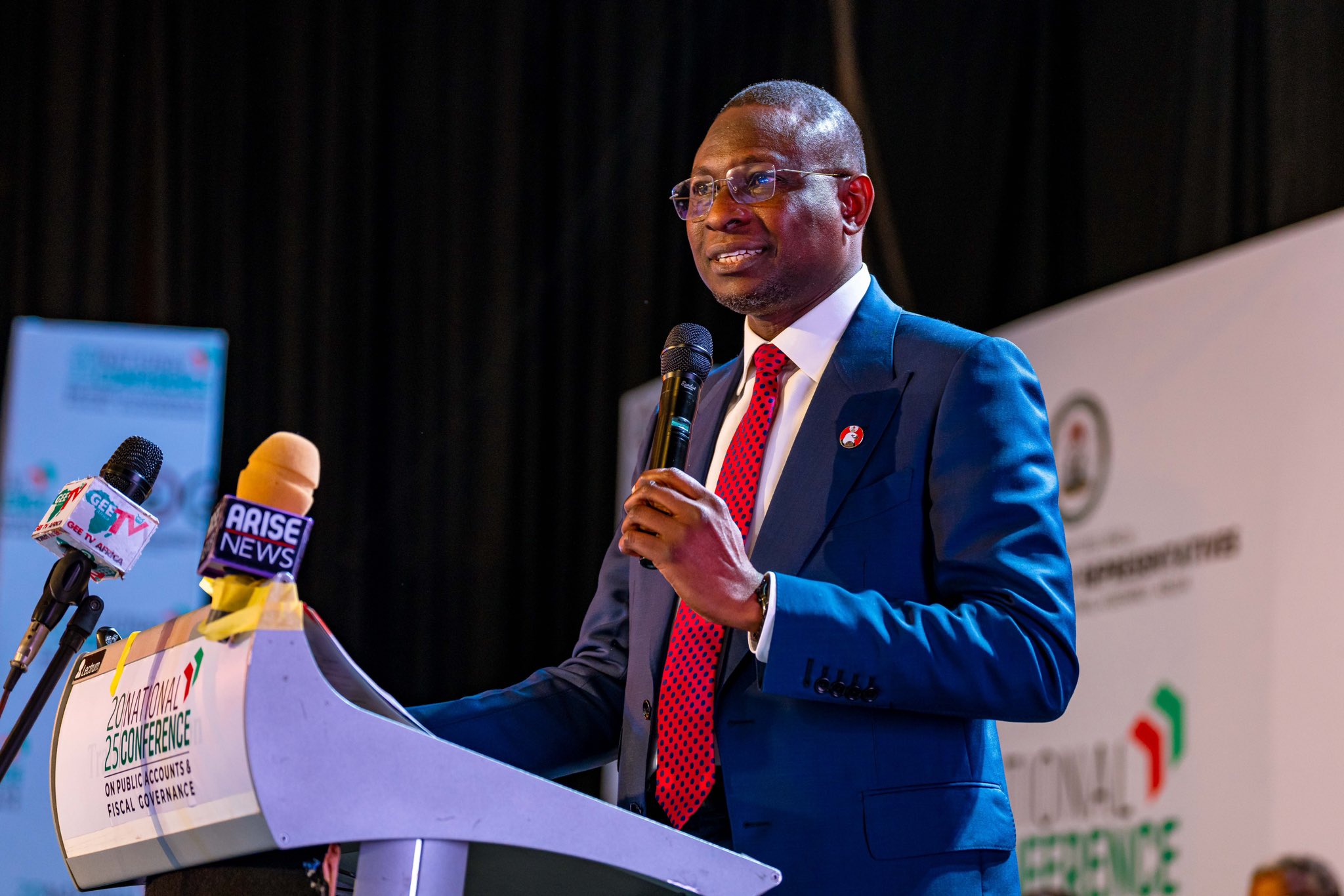
Economic and Financial Crimes Commission (EFCC) Chairman, Ola Olukoyede, today implored members of Nigeria’s 10th National Assembly to enact legislation that criminalises unexplained wealth, arguing that such a law would bolster efforts to combat economic crimes and corruption.
Speaking at the National Conference on Public Accounts and Fiscal Governance—jointly organised by the Senate and House of Representatives Public Accounts Committees—Olukoyede emphasised that insufficient legal frameworks currently hinder investigations into public officers whose assets far exceed their legitimate earnings.

He lamented that the EFCC remains bound by outdated laws requiring proof of a “predicate offence” before seizing assets. “Help me pass the Unexplained Wealth Bill. I’ve been begging for the past year. This same bill was thrown out in the last Assembly,” he said, adding that prosecuting individuals simply for living beyond their means would close significant legal loopholes .
Drawing from initial revelations in ongoing investigations into the oil and gas sector, he described the findings as “mind‑boggling” and cautioned that these discoveries represent only the tip of a much deeper corruption iceberg . He warned of a strong link between fiscal mismanagement and insecurity, noting that kidnappings, banditry, and terrorism often stem from diverted public funds — a reality he says the new law would help address .
- Nigeria’s First Ebola Patient Identified as Wife of Swiss Diplomat as Authorities Probe Source of Infection
 Nigeria’s latest Ebola case has been traced to a 42-year-old…
- MURIC Seeks Police Probe into Alleged Killing of Man Inside Oyo Mosque
 The Muslim Rights Concern (MURIC) has petitioned the police over…
Read More “MURIC Seeks Police Probe into Alleged Killing of Man Inside Oyo Mosque” »
Olukoyede urged Nigerians to look beyond creed, ethnicity, and politics in supporting the bill, framing it as an essential tool to curb revenue loss and reclaim economic stability. He stressed that no single country can recover looted assets on its own, highlighting the need for both domestic prevention and international cooperation to counteract the reluctance of foreign custodians to repatriate stolen wealth.
Reinforcing his appeal, Olukoyede referenced global precedents—such as Unexplained Wealth Orders in the U.K., Australia, Kenya, and others—all implemented since 2018. He argued that Nigeria’s failure to adopt similar legislation places it at a disadvantage in asset recovery efforts, forcing the EFCC to rely on Section 7 of its Establishment Act.