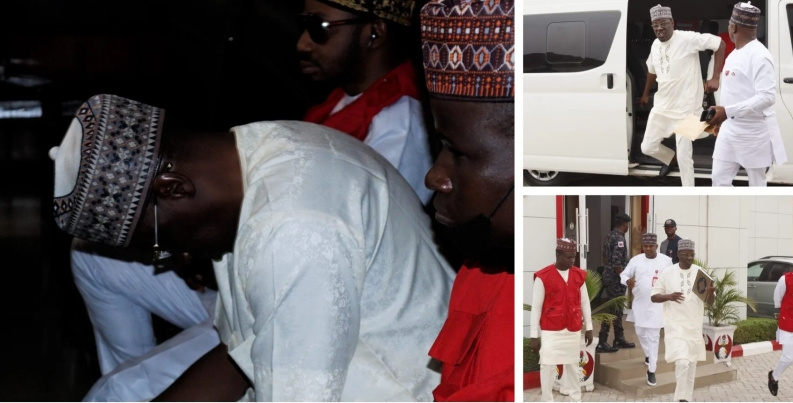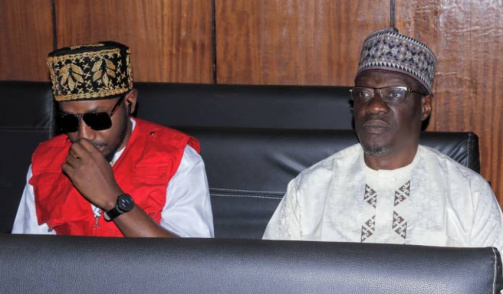




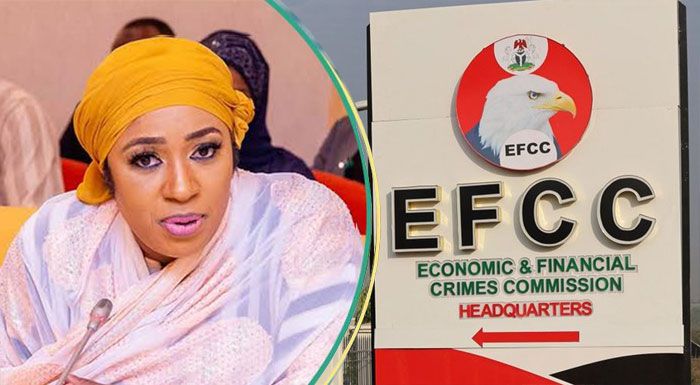


An operative of the Economic and Financial Crimes Commission (EFCC) has told a Federal High Court in Abuja how a total sum of ₦10.27 billion, allegedly belonging to Kogi State, was traced to transactions linked to Ali Bello, intensifying the corruption case against the senior government official.
The witness, an EFCC investigator, testified that detailed financial analysis conducted during the investigation revealed multiple fund transfers, cash payments, and property transactions allegedly connected to Bello, who is standing trial alongside another defendant over accusations of money laundering and misappropriation of public funds.
According to the prosecution, Bello was allegedly at the centre of a scheme through which government funds were diverted using proxies and third-party accounts, with records showing inflows and outflows running into billions of naira over a period of time.
The EFCC witness told the court that some of the transactions were explicitly tagged with identifiers pointing to Bello, including entries allegedly labelled “Oga Ali,” which investigators said referred directly to him during the forensic review of bank statements and payment records.
He further explained that the commission traced several high-value payments to property acquisitions in Abuja, including large sums allegedly paid to real estate and construction firms for land and building projects, which investigators believe were funded with misappropriated state resources.
- Tragedy in Kogi: Police Corporal Allegedly Kills Female Colleague, Takes Own Life After Reported Relationship Crisis
 A tragic shooting incident involving two serving police officers has…
- Tottenham Stun Chelsea at Stamford Bridge as Palmer Sees Red and Maddison Suffers Fresh Injury Blow
 Tottenham Hotspur delivered a statement victory over London rivals Chelsea…
Among the documents tendered in evidence were bank statements, payment vouchers, property agreements, and powers of attorney, which the EFCC said collectively established a financial trail linking Bello to the movement and use of the disputed ₦10.27 billion.
During cross-examination, defence lawyers challenged the credibility of the evidence and objected to the admissibility of statements made by the defendants, prompting the court to order a trial-within-a-trial to determine whether those statements were made voluntarily.
The EFCC witness, however, maintained under oath that the statements were obtained in line with legal procedures, insisting that the defendants were neither coerced nor denied access to legal representation during interrogation.
Following arguments from both sides, the trial judge admitted the disputed statements into evidence, ruling that the prosecution had met the required legal threshold at that stage of the proceedings.
The court subsequently adjourned the case to a later date for continuation of trial, as the EFCC moves to further establish its claim that Bello personally benefited from and exercised control over funds allegedly siphoned from Kogi State coffers.