





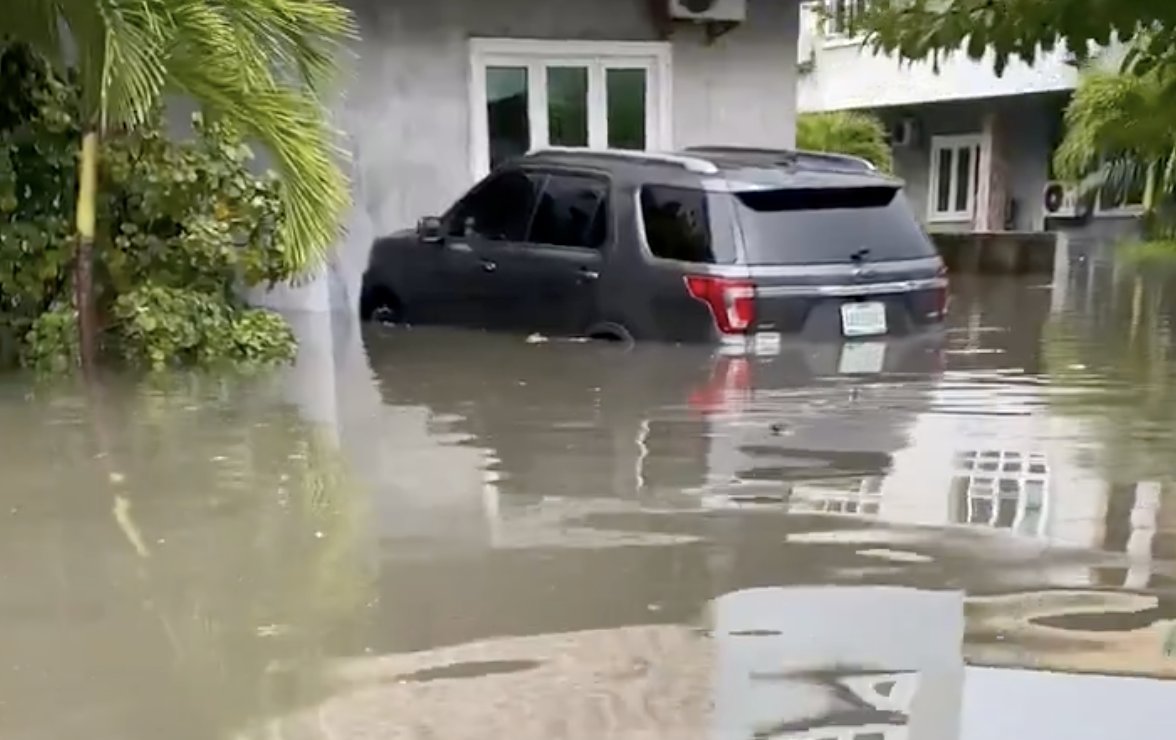
Lagos, Nigeria — Relentless rainfall has plunged many parts of Lagos into chaos, leaving houses underwater, vehicles stranded, and residents scrambling for safety.
From Lekki and Ikorodu to Maryland, Ogba, Alimosho and stretches of the Lekki-Epe Expressway, once-busy streets turned into brown rivers as the downpour overwhelmed drainage systems and cut off access roads.
Videos shared online showed residents wading through waist-deep water while cars sat immobile, their engines drowned by the rising flood.
A commuter caught in traffic on the 3rd Mainland Bridge described the scene as terrifying, saying their bus nearly lost balance as waves slapped against the side.
In Ikate, a resident, Victor Obinna, confessed that he sometimes sleeps in his office rather than risk the perilous journey home, explaining that he often arrives drenched despite careful planning. Many motorists abandoned vehicles altogether, choosing to walk through flooded corridors while shop owners and families fought to salvage belongings from inundated homes and businesses.
The Lagos State Government has apologized for the disruption and assured residents that relief efforts are underway. Commissioner for Environment and Water Resources Tokunbo Wahab said the city’s coastal geography, combined with tidal lock and heavy rainfall, made flooding inevitable in some areas, while illegal construction on floodplains and indiscriminate dumping of refuse into drains worsened the impact.
- Bournemouth Humiliate Manchester United 3-0 at Old Trafford as Carrick Faces Mounting Pressure
 Bournemouth delivered another painful blow to Manchester United on Sunday,…
- Tragedy in Kogi: Police Corporal Allegedly Kills Female Colleague, Takes Own Life After Reported Relationship Crisis
 A tragic shooting incident involving two serving police officers has…
He revealed that a pumping station and other drainage projects are being expedited in problem zones such as Kusenla, where water levels remain significantly higher than the drainage invert.
Authorities are urging residents to remain calm, keep children away from stagnant waters, and avoid throwing waste into drains to allow free flow of rainwater.
This latest flood follows a worrying pattern across Nigeria in 2025, a year that has already displaced over 121,000 people nationwide and left countless homes and businesses damaged. In Lagos, early estimates place the economic toll in billions of naira as property, vehicles and working hours are lost.
Health experts warn that stagnant water could spark outbreaks of waterborne diseases and worsen mosquito infestations. Meanwhile, urbanization, clogged drainage networks and poor waste management continue to heighten the city’s vulnerability to extreme weather events, raising fresh calls for stricter land-use regulation, improved drainage infrastructure and more effective early-warning systems.
For now, rescue teams and local agencies are battling to reach trapped residents as more rains are forecasted, and Lagosians brace for what could be a prolonged wet season.