




The unfolding controversy over alleged fictitious government agencies has taken another dramatic turn, with President Bola Ahmed Tinubu ordering the arrest of George Buchi Nwabueze and directing the immediate suspension of three permanent secretaries. The latest development emerged from an ongoing investigation by the Independent Corrupt Practices and Other Related Offences Commission (ICPC) into alleged unauthorised entities operating within government structures.
At the centre of the latest episode is an organisation known as the National Brands Development and Made-in-Nigeria Special Project Office. According to ICPC Chairman, Dr Musa Adamu Aliyu, the purported office had allegedly secured accommodation within the premises of the Office of the Secretary to the Government of the Federation (OSGF) without presidential authorisation.
The significance of the discovery goes beyond the existence of another questionable organisation. The fact that the office was allegedly operating from government premises raises questions about the internal checks that should ordinarily prevent an unauthorised body from obtaining official accommodation and presenting itself as a government institution.
ICPC said the discovery was made while investigating the previously exposed Presidential Foreign Intervention Promotion Council (PFIPC). That earlier case had already triggered serious concerns about how individuals could allegedly establish and operate organisations purporting to have government authority, while gaining access to official structures and engaging with public officials.
The commission identified Prince George Buchi Nwabueze as the alleged promoter of the newly uncovered office. Investigators also reportedly found that he used several variations of his name, including George Nathan, George Nathan Nwabueze, Honourable George Buchi Nwabueze and George Nwabueze. ICPC further alleged the presence of suspected collaborators within the OSGF, although the investigation is still ongoing.
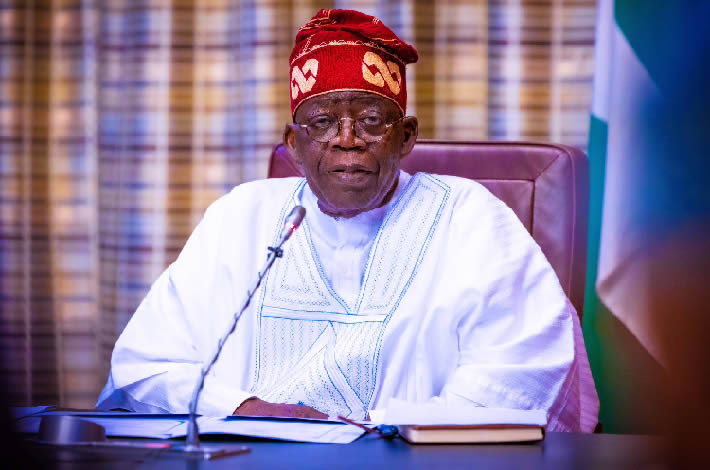
After receiving a briefing from the ICPC chairman, President Tinubu ordered Nwabueze’s immediate arrest. The President also directed the immediate suspension of three permanent secretaries identified as M.S. Danjuma, Nadungu Gagare and Richard P. Pheelangwah.
The presidential action is particularly notable because it places the focus not only on the person allegedly behind the purported agency but also on the administrative environment that allowed the organisation to operate from within a sensitive government complex. The suspension of the three senior officials is therefore likely to form part of the effort to establish how the alleged arrangement came about and whether official procedures were bypassed.
The latest case also gives greater context to the broader ICPC investigation. An interim report submitted to President Tinubu earlier in August reportedly identified other fictitious bodies, including the FCT Investment Promotion Agency and the Foreign Investment Promotion Agency and Public-Private Partnership, following the investigation into the PFIPC affair.
From a governance perspective, the emerging pattern is troubling because government agencies ordinarily derive their legitimacy from formal legal and administrative processes. If unauthorised bodies can obtain government office space or operate with the appearance of official recognition, it exposes potential weaknesses in institutional verification, allocation of public facilities and oversight of government operations.
ICPC has said its investigation remains active and that it is engaging officials of the OSGF to obtain further information about the alleged office and determine the full circumstances surrounding its activities. The commission’s findings will be crucial in establishing whether public resources were misused, who authorised the occupation of the premises and whether other officials or individuals were involved.
For now, the allegations against Nwabueze and any other persons potentially connected to the matter remain subject to investigation. But the sequence of discoveries has already placed renewed attention on the integrity of Nigeria’s public-service structures. Tinubu’s latest directives indicate that the administration is treating the alleged creation and operation of fictitious government entities as a serious institutional threat, while the continuing ICPC probe is expected to determine the extent of the problem and the accountability that may follow.
- Dangote Refinery’s N2.15 Trillion IPO Closes Today as Investors Make Final Push
 LAGOS, Nigeria — The highly anticipated initial public offering (IPO)…
Read More “Dangote Refinery’s N2.15 Trillion IPO Closes Today as Investors Make Final Push” »
- NCAA to Probe Airline After Passenger Reportedly Bleeds Amid Extreme Heat on Abuja–Calabar Flight
 The Nigeria Civil Aviation Authority (NCAA) is set to investigate…