





The Independent National Electoral Commission (INEC) has removed more than 1.6 million invalid, duplicated and deceased persons’ records from Nigeria’s supplementary voters’ register, bringing the country’s verified National Register of Voters down from approximately 103 million to just over 100 million.
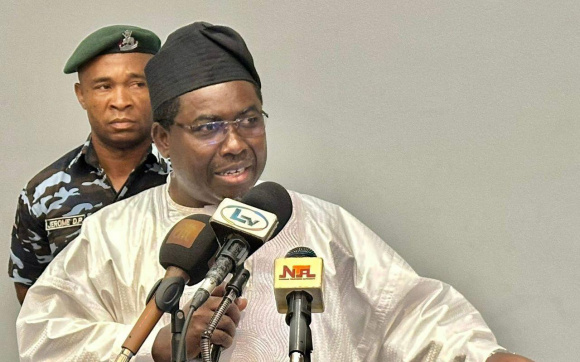
INEC Chairman, Professor Joash Amupitan, disclosed this on Wednesday, November 25, 2026, during a meeting with Resident Electoral Commissioners (RECs) from the 36 states and the Federal Capital Territory (FCT) in Abuja. He explained that the exercise was part of the commission’s intensified efforts to sanitise the electoral register ahead of the 2027 general elections.
According to Amupitan, the clean-up followed the deployment of the Automated Biometric Identification System (ABIS), alongside a statutory claims-and-objections process that enabled the commission to identify questionable registrations and eliminate records that failed established verification standards.
The commission’s intervention comes after concerns emerged over the integrity of the preliminary voters’ register, with Nigerians drawing attention to suspicious entries, multiple registrations, unusual personal details and photographs suspected to have been artificially generated. These concerns prompted a more comprehensive examination of the records to establish their authenticity and eligibility.
Amupitan disclosed that INEC received approximately 311,000 complaints following the display of the preliminary register at registration areas and its subsequent online publication. After examining the submissions, the commission established that about 232,000 complaints were genuine and subsequently addressed the identified irregularities. The chairman also revealed that further investigations uncovered additional questionable records requiring corrective action.
The INEC chairman explained that the verification exercise extended beyond recently registered voters to cover historical entries accumulated over successive registration exercises between 2011 and 2023. He noted that the older register contained serious inconsistencies, including incomplete personal details and multiple registrations featuring identical names and photographs. Some individuals, he observed, had appeared on the register several times despite being the same person.
He further explained that although the commission had earlier suspended its broader nationwide voter revalidation exercise until after the 2027 elections, it considered it necessary to address obvious and serious irregularities immediately. Consequently, its Information and Communications Technology department worked with the Voter Registry to validate questionable entries, eliminate confirmed duplicates and remove incomplete records that could undermine the credibility of the register.
The clean-up exercise also brings renewed attention to the need for transparency and accountability within the electoral administration. INEC had previously disclosed that 54 individuals across 10 states were identified for allegedly circumventing established registration procedures during the 2025/2026 Continuous Voter Registration exercise. The commission indicated that disciplinary measures, including possible prosecution, would be pursued against those found culpable.
Despite the substantial reduction in the register, INEC maintained that its verification process was designed to protect eligible voters rather than arbitrarily eliminate legitimate registrations. The chairman also disclosed that the verified register includes 232,658 persons with disabilities, stressing the importance of accessible polling arrangements and appropriate assistive materials to guarantee their participation in the electoral process.
Meanwhile, the commission is intensifying preparations for the forthcoming elections. Amupitan disclosed that 17,676 polling units had been selected for a mock accreditation and result-upload exercise using the Bimodal Voter Accreditation System (BVAS), scheduled for Saturday, November 28. He also announced the deployment of 57,000 newly procured BVAS devices and the coordination of more than 1.41 million ad hoc election personnel to support electoral operations across the country.
The removal of more than 1.6 million questionable records represents a significant development in INEC’s preparations for the 2027 general elections, particularly against the backdrop of persistent public concerns about electoral credibility. With the verified register now standing at over 100 million, the commission faces the critical responsibility of ensuring that every eligible Nigerian retains the opportunity to vote while preventing multiple registrations, impersonation and other irregularities. Ultimately, the credibility of the forthcoming elections will depend not only on the size of the voters’ register but also on the transparency, accuracy and integrity with which it is maintained and deployed.
- INEC Purges Over 1.6 Million Invalid Voter Records, National Register Drops to 100 Million
 The Independent National Electoral Commission (INEC) has removed more than…
- El-Rufai Makes U-Turn in Ribadu Phone-Tapping Saga, Admits Exaggerating Claim to Unsettle Tinubu Government
 Former Kaduna State Governor, Nasir El-Rufai, has made a dramatic…