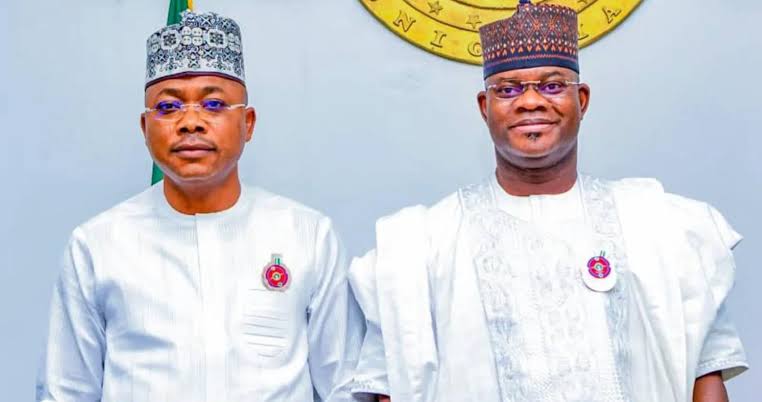


Kogi State Governor Ahmed Usman Ododo has openly confirmed that he operates a “working cabal” within his administration, describing it as a driving force behind effective policy implementation and project delivery across the state. The governor made the remarks during a recent project inauguration event, drawing widespread attention to his unconventional term for a trusted inner circle.
According to Ododo, the cabal in his administration is significantly more productive than a similar group he was previously part of under former Governor Yahaya Bello. He said the earlier cabal “produced little results,” suggesting that his current team has learned from past shortcomings.
“I was a member of cabal, but our own cabal could not perform the way these present cabals are working,” Ododo told the audience, emphasizing that effective governance depends on collaboration among key officials.
Governor Ododo identified members of his inner circle, highlighting their roles in advancing his administration’s agenda. Among the key figures he mentioned is Hajia Dr. Habibat Tijani Aliyu, the Accountant‑General of Kogi State, whose appointment was approved during Yahaya Bello’s tenure. Other notable members include the Auditor‑General, the State Party Chairman, the Special Adviser on Protocol, and the Commissioner for Local Government and Chieftaincy Affairs.
- Nigeria’s First Ebola Patient Identified as Wife of Swiss Diplomat as Authorities Probe Source of Infection
 Nigeria’s latest Ebola case has been traced to a 42-year-old…
- MURIC Seeks Police Probe into Alleged Killing of Man Inside Oyo Mosque
 The Muslim Rights Concern (MURIC) has petitioned the police over…
Read More “MURIC Seeks Police Probe into Alleged Killing of Man Inside Oyo Mosque” »
The governor credited this cabal with ensuring smooth implementation of government programs and successful commissioning of several projects across Kogi State. He described the group as instrumental in achieving visible results, which he believes distinguish his administration from previous ones.
Ododo’s political career began in the civil service as the Auditor‑General for Local Governments in Kogi State during Yahaya Bello’s administration. He later transitioned to politics, becoming governor in January 2024, following Bello’s eight-year tenure, which had mixed public reviews on governance and project delivery.
Bello remains a prominent political figure in Kogi State, though he is currently facing legal challenges, including a 19-count charge of alleged money laundering totaling about ₦80.2 billion. Ododo’s public remarks have therefore sparked interest in how his administration is carving its own identity while maintaining links to his predecessor’s political legacy.
Public reactions to Ododo’s statement have been mixed. Supporters argue that his candid acknowledgment reflects transparency and a results-oriented approach to governance, while critics caution that the use of the term “cabal” carries controversial connotations in Nigeria’s political discourse.
Political analysts note that Ododo’s cabal reflects broader trends in Nigerian state politics, where inner circles or trusted groups are often used to streamline decision-making and maintain cohesion within government. They argue that the effectiveness of such groups depends on accountability, skill, and alignment with public service goals.
Despite debates, Governor Ododo remains confident in the structure he leads, asserting that functional and focused leadership teams are essential for achieving tangible outcomes. He added that if other states adopted a similar model, governance and project implementation across Nigeria could see significant improvements.