








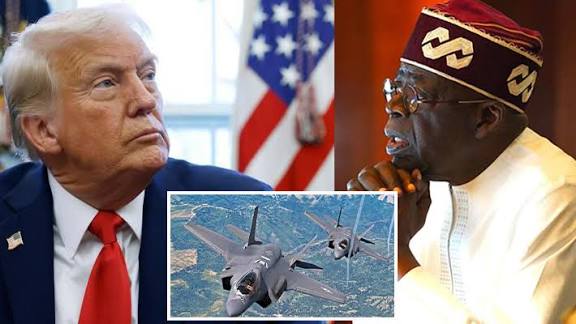
The United States has begun conducting aerial surveillance flights over Nigeria as part of renewed security cooperation aimed at tackling the country’s worsening insecurity, according to multiple international reports and flight-tracking data.
The intelligence-gathering missions, which reportedly started in late November 2025, involve U.S.-linked contractor aircraft flying repeatedly across Nigerian airspace. Data from flight trackers show the planes often depart from Accra, Ghana, fly over various parts of Nigeria, and return to Ghana, suggesting a sustained and coordinated operation rather than isolated overflights.
At the centre of the missions is a Gulfstream V aircraft, a jet commonly adapted for intelligence, surveillance and reconnaissance (ISR) purposes. The aircraft is associated with Tenax Aerospace, a U.S. defence contractor known for supporting American intelligence and security operations.
Why the Flights Are Happening
Security analysts say the surveillance flights are connected to Nigeria’s long-running battle with terrorism, armed banditry and mass kidnappings, especially in the North-East, North-West and parts of North-Central Nigeria. Insurgent groups such as Boko Haram and the Islamic State West Africa Province (ISWAP) remain active despite years of military operations, while banditry has continued to spread across rural communities.
- Arsenal Sink Everton as Aston Villa Shock Man City in Dramatic Premier League Saturday
 Arsenal strengthened their challenge for the English Premier League title…
Read More “Arsenal Sink Everton as Aston Villa Shock Man City in Dramatic Premier League Saturday” »
- Nigeria’s First Ebola Patient Identified as Wife of Swiss Diplomat as Authorities Probe Source of Infection
 Nigeria’s latest Ebola case has been traced to a 42-year-old…
Sources familiar with the matter indicate that the flights are designed to gather real-time intelligence, improve situational awareness and support counter-terrorism efforts in the region. The missions are also reportedly linked to search efforts for a kidnapped U.S. pilot who went missing in neighbouring Niger, making regional intelligence collection more urgent.
Tied to High-Level Security Talks
The surveillance operations come shortly after high-level security discussions between the Nigerian and U.S. governments. In late November, Nigeria’s National Security Adviser, Nuhu Ribadu, held talks with U.S. Defence Secretary Pete Hegseth, where both sides explored ways to deepen cooperation on intelligence sharing and counter-terrorism.
Although neither government has publicly detailed the scope of the surveillance flights, U.S. officials have confirmed that the meetings focused on supporting Nigeria’s fight against violent groups and stabilising a region affected by cross-border security threats.
Diplomatic Sensitivities
Officials on both sides have been cautious in their public comments. The U.S. Pentagon acknowledged productive engagements with Nigerian authorities but declined to confirm operational details of the flights. Similarly, Nigerian military authorities have not issued an official statement on the matter.
Observers note that the operation reflects a strategic shift in U.S. engagement in West Africa, especially after the drawdown of American military presence in Niger earlier in 2025. With fewer boots on the ground, aerial surveillance has become a key tool for maintaining intelligence coverage in the region.
What It Means for Nigeria
For Nigeria, the flights highlight the scale of the security challenge facing the country and the increasing role of international partners in addressing it. While aerial surveillance alone cannot end insecurity, analysts say it can significantly enhance early warning, threat mapping and targeted response when combined with local intelligence and military action.
As Nigeria continues to battle insurgency, kidnappings and organised armed groups, the U.S. surveillance missions signal both international concern and a renewed effort to prevent further deterioration of security across Africa’s most populous nation.


