




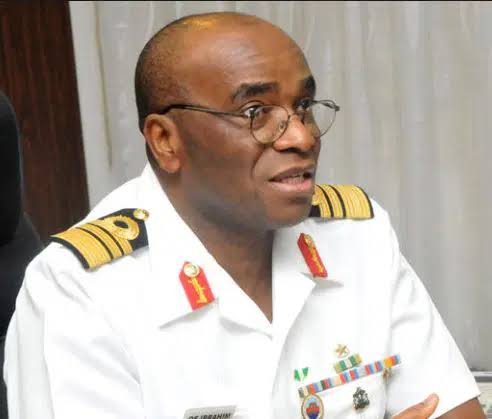
Nigeria’s former Chief of Defence Staff, Admiral Ola Ibrahim (retd.), has cautioned that hidden interests are still actively working to weaken the country and steer it toward fragmentation, warning that the nation’s security challenges are neither random nor accidental.
Speaking at the reunion of the 42nd Regular Course of the Nigerian Defence Academy (NDA) in Abuja, the retired naval chief said Nigeria remains a prime target for both internal and external actors because of its vast resources, strategic importance, porous borders, and unresolved internal fault lines.
According to him, the persistent wave of insecurity confronting the country is the outcome of calculated efforts by forces that see Nigeria’s size and economic potential as an opportunity for exploitation rather than development. He stressed that these actors benefit from instability and disorder.
Admiral Ibrahim noted that while many Nigerians are weighed down by economic hardship and insecurity, outsiders often view the country as a land rich in untapped opportunities, believing they can gain access to its wealth with little resistance or accountability.
He further alleged that some interests, both within and outside the country, are deliberately undermining Nigeria’s national cohesion, working quietly to weaken the idea of Nigeria as a single, united entity.
Reflecting on past global predictions that Nigeria would eventually break apart, the former Defence Chief said those who championed such forecasts have not abandoned their agenda. He described the current security situation as a turbulent phase that demands unity, resilience, and coordinated national response.
- Nigeria’s First Ebola Patient Identified as Wife of Swiss Diplomat as Authorities Probe Source of Infection
 Nigeria’s latest Ebola case has been traced to a 42-year-old…
- MURIC Seeks Police Probe into Alleged Killing of Man Inside Oyo Mosque
 The Muslim Rights Concern (MURIC) has petitioned the police over…
Read More “MURIC Seeks Police Probe into Alleged Killing of Man Inside Oyo Mosque” »
Admiral Ibrahim emphasized that safeguarding Nigeria cannot be the responsibility of isolated individuals or institutions, warning that national security requires strong collaboration among military leadership, security agencies, and the wider society.
Addressing members of the 42nd Regular Course, he reminded them that their training prepared them for challenging and uncertain times, noting that many of them have already served in critical command and operational roles across the country.
He also reflected on his tenure as Chief of Defence Staff from 2012 to 2014, highlighting the restructuring of military operations in conflict-prone areas as one of the major milestones of that period. According to him, the scale and persistence of insecurity at the time made it necessary to establish permanent military formations rather than rely on temporary task forces.
In his remarks, President of the 42nd Regular Course, Major General Folusho Oyinlola, described the reunion as a moment for deep reflection, renewed purpose, and recommitment to national service.
Major General Oyinlola said members of the course share a lifelong bond forged through sacrifice, discipline, and common values instilled during their years at the NDA. He urged them to preserve unity despite differences in rank, posting, or personal paths.
He further called on his colleagues to continue supporting one another professionally and personally, stressing that their collective strength remains vital to the stability and security of the nation.