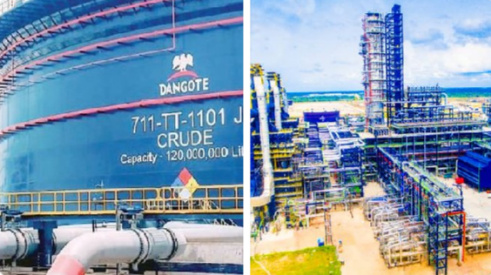






The Nigerian National Petroleum Company Limited (NNPC Ltd.) has rejected claims that it withheld crude oil cargoes from the Dangote Petroleum Refinery under the Federal Government’s naira-for-crude arrangement.
The national oil company said it had allocated all available crude cargoes under the initiative to the refinery in 2026, stressing that any difference between the expected supply volume and the refinery’s actual crude intake was not the result of deliberate withholding by NNPC.
The clarification followed reports that the Dangote refinery had been receiving significantly fewer crude cargoes than the volume initially envisaged under the policy introduced by the Federal Government to support domestic refining and reduce pressure on foreign exchange.
According to NNPC spokesperson Andy Odeh, the company has fulfilled its obligations under the naira-denominated crude supply arrangement.
Odeh explained that the quantity of crude actually lifted by the refinery could vary depending on several operational factors, including crude availability, the timing of nominations and the refinery’s own production schedule.
He also pointed to NNPC’s ownership stake in the Dangote Petroleum Refinery, noting that the national oil company, which holds a 7.25 per cent equity interest in the facility, has a direct interest in ensuring that the refinery operates at full capacity.
The latest statement comes amid renewed concerns over the supply of domestic crude to the 700,000-barrel-per-day refinery. Recent reports have indicated that the facility has had to supplement its domestic crude supply with imports, even as the naira-for-crude initiative was designed to strengthen local refining and promote energy security.
The dispute centres largely on the difference between crude cargoes allocated by NNPC and the volume ultimately received or lifted by the refinery. NNPC maintains that it has made all available naira-denominated cargoes accessible to Dangote, while factors affecting actual off-take include supply availability, nomination schedules and operational considerations.
The development is likely to keep attention focused on the implementation of Nigeria’s domestic crude supply policy and the relationship between the country’s upstream producers and its expanding refining sector.
The naira-for-crude arrangement was introduced as part of efforts to ensure a steady supply of crude to domestic refineries, strengthen local refining capacity and reduce the foreign-exchange burden associated with importing petroleum products.
- Bournemouth Humiliate Manchester United 3-0 at Old Trafford as Carrick Faces Mounting Pressure
 Bournemouth delivered another painful blow to Manchester United on Sunday,…
- Tragedy in Kogi: Police Corporal Allegedly Kills Female Colleague, Takes Own Life After Reported Relationship Crisis
 A tragic shooting incident involving two serving police officers has…