


Guinea-Bissau plunged into a fresh wave of political uncertainty on Wednesday after senior military officers announced they had seized control of the country and detained President Umaro Sissoco Embaló. The dramatic development follows hours of heavy gunfire around key government installations in Bissau, raising fears of yet another full-scale political breakdown in the West African nation.
The crisis erupted shortly after midday when residents reported sustained shooting near the presidential palace, the national electoral commission headquarters, and the interior ministry. Security forces loyal to the president attempted to hold their positions, but the military faction eventually overpowered them before making their move on state television.

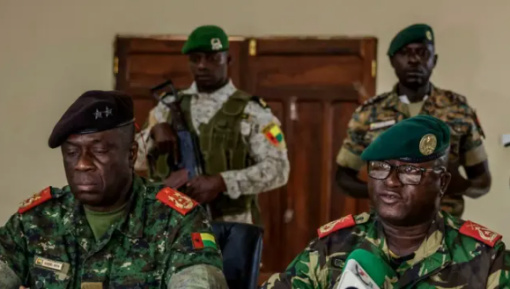
In a televised broadcast, officers identifying themselves as the High Military Command for the Restoration of Order (ACMRO) declared they had taken “total control” of Guinea-Bissau. They accused the embattled president of destabilising the country through electoral manipulation and alleged plots involving political actors, foreign nationals, and criminal networks.
The military junta announced the immediate suspension of the ongoing electoral process, which had already sparked tension after both Embaló and opposition candidate Fernando Dias da Costa claimed victory in the November 23 elections. No official results had been released before the coup, deepening suspicion among voters and political observers.
- Tragedy in Kogi: Police Corporal Allegedly Kills Female Colleague, Takes Own Life After Reported Relationship Crisis
 A tragic shooting incident involving two serving police officers has…
- Tottenham Stun Chelsea at Stamford Bridge as Palmer Sees Red and Maddison Suffers Fresh Injury Blow
 Tottenham Hotspur delivered a statement victory over London rivals Chelsea…
As part of their takeover directives, the officers ordered the closure of all land, air, and sea borders. They also suspended media operations, halted government activities, and imposed a strict curfew across the country. The headquarters of the national electoral commission was sealed off to prevent what they described as “compromised vote tampering.”
The junta named Brigadier Denis N’Canha as the new head of state under an interim military administration. According to the officers, the transitional government will oversee what they termed a “complete restoration of order” before any discussions on a return to civilian rule.
The coup marks a severe setback for Guinea-Bissau’s fragile democracy, which has struggled to stabilise since independence in 1974. The country has faced repeated coups and attempted coups, with political infighting, drug-fuelled criminal networks, and institutional weakness often at the centre of its instability.
President Embaló, who came into office in 2020, had previously survived a major coup attempt in December 2023. His rule has been mired in controversy, including frequent clashes with parliament and allegations of executive overreach. The disqualification of the main opposition party ahead of the 2025 election further eroded public trust.
International reactions are already mounting, with neighbouring countries and regional blocs expected to apply pressure for the restoration of constitutional order. Early calls from foreign governments emphasise the need for calm, dialogue, and the resumption of the suspended electoral process.
For ordinary citizens of Guinea-Bissau, the unfolding crisis signals another chapter of uncertainty. With borders sealed, media blacked out, and security forces deployed across the capital, residents face an unpredictable period as the military consolidates its grip and the political future of the nation hangs in the balance.