

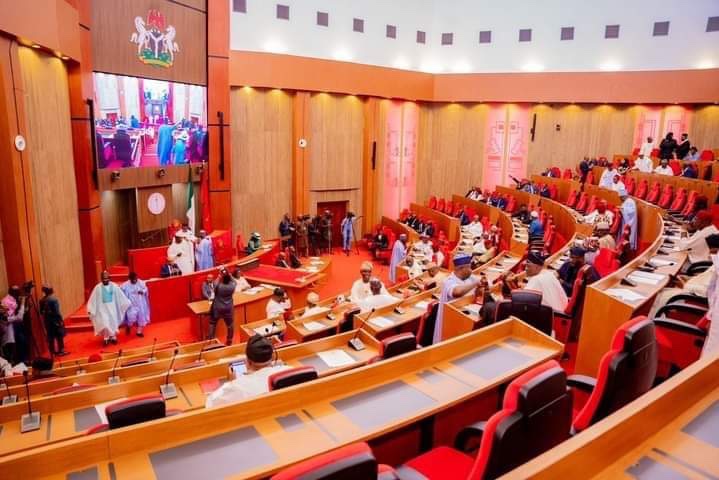
Nigeria’s Senate Committee on Oil Theft has raised alarm over the alleged disappearance of more than $300 billion in crude oil revenue, uncovering what it described as years of unaccounted earnings, faulty measurement practices, and systemic mismanagement in the nation’s oil sector. The committee, chaired by Senator Ned Nwoko, presented its interim report to the Senate, revealing shocking discrepancies between what the Nigerian National Petroleum Company Limited (NNPCL) recorded and what the Central Bank of Nigeria (CBN) documented as oil proceeds.
According to the findings, forensic audits and data from key stakeholders exposed multiple layers of financial leakages. About $22 billion in oil sales were found to have been unaccounted for, while another $81 billion in declared crude revenue between 2016 and 2017 could not be reconciled between the NNPCL and the CBN. The committee added that more than $200 billion worth of crude oil proceeds generated since 2015 remain untraced, bringing the total unaccounted sum to over $300 billion — a figure experts say rivals Nigeria’s entire national budget for several years combined.
Senator Nwoko explained that the findings expose long-standing failures in Nigeria’s crude export measurement systems. He said the country continues to rely on outdated technology and weak enforcement mechanisms, allowing massive revenue losses through underreporting, theft, and manipulation at export terminals. The committee’s investigation also highlighted a lack of coordination among regulatory bodies such as the Nigerian Upstream Petroleum Regulatory Commission (NUPRC), the Nigerian Maritime Administration and Safety Agency (NIMASA), and the NNPCL.
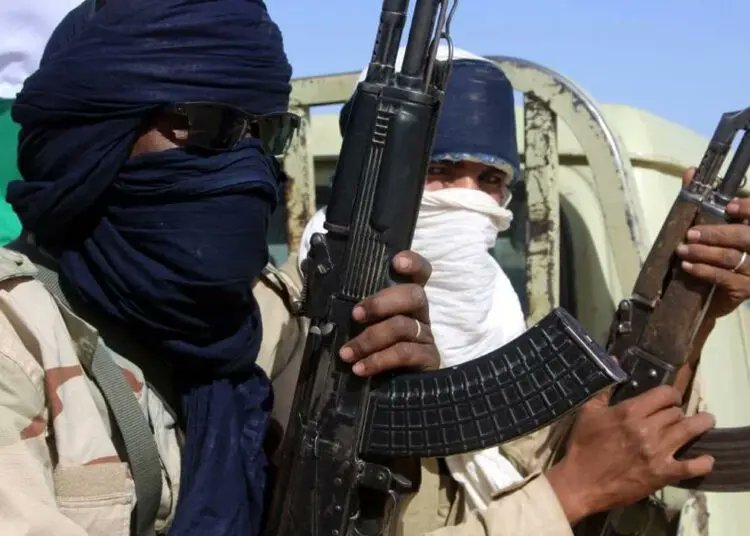
The report further identified crude theft, pipeline vandalism, and illegal refining in the Niger Delta as major contributors to the losses. It noted that despite government efforts to curb these crimes, sabotage and collusion by industry insiders remain widespread. In many cases, faulty metering and export documentation enabled criminal syndicates to exploit loopholes without detection. The committee described the situation as a national emergency requiring immediate corrective measures.
- Tottenham Stun Chelsea at Stamford Bridge as Palmer Sees Red and Maddison Suffers Fresh Injury Blow
 Tottenham Hotspur delivered a statement victory over London rivals Chelsea…
- AFCOM-HS: New Military Medical College Listed on JAMB Portal for 2026/2027 Admission
 The Armed Forces College of Medicine and Health Sciences (AFCOM-HS),…
Read More “AFCOM-HS: New Military Medical College Listed on JAMB Portal for 2026/2027 Admission” »
Among its recommendations, the Senate panel urged the NUPRC to deploy modern technology for accurate crude measurement and monitoring or restore such oversight to the Weights and Measures Department under the Ministry of Industry, Trade and Investment. It also called for the use of drones and other advanced surveillance systems to monitor oil fields, pipelines, and export points in real time, as well as the establishment of a Maritime Trust Fund to strengthen Nigeria’s maritime security capacity.
To tackle the human element of oil theft, the committee advised the creation of special courts to speed up the prosecution of offenders and enablers within the industry. It also proposed full implementation of the Host Communities Development Trust Fund (HCDTF) as provided under the Petroleum Industry Act (PIA) 2021, arguing that giving host communities a tangible stake in oil revenues would reduce vandalism and sabotage. Additionally, the panel recommended the transfer of abandoned or idle oil wells to the NUPRC for use by modular refineries, thereby boosting domestic production and discouraging illegal refining.
Senate President Godswill Akpabio commended the committee for its detailed work, describing the revelations as a wake-up call for Nigeria’s leadership. He, however, clarified that while the Senate could investigate and expose irregularities, the actual recovery of lost funds would fall under the responsibility of executive agencies such as the Economic and Financial Crimes Commission (EFCC) and the Office of the Accountant General of the Federation.
Other lawmakers cautioned that the committee should remain within its constitutional oversight limits. Senator Abdul Ningi (Bauchi Central) emphasized that while the legislature can trace discrepancies, recovering stolen assets and prosecuting offenders are executive duties. Nonetheless, the Senate resolved that the investigation must continue until all responsible entities and individuals are held accountable, with a final report expected to include names of implicated companies, wells, and export terminals.
Economic analysts have described the revelation as one of the most significant in recent years, noting that the alleged $300 billion gap represents not just lost revenue but a severe blow to national development. The losses, they argued, could have financed major infrastructure projects, reduced debt burdens, and revitalized critical sectors like education, healthcare, and power. The finding also underscores global concerns about transparency and governance within Nigeria’s oil industry.
As the Senate awaits the committee’s final report, attention now turns to how swiftly the federal government will act on the recommendations. Observers say implementing technological reforms, tightening regulatory oversight, and improving community engagement could restore confidence in the management of Nigeria’s most important revenue source. Until then, the question of how over $300 billion in crude oil wealth went unaccounted for remains a painful reminder of how mismanagement and corruption continue to drain Africa’s largest oil producer.