





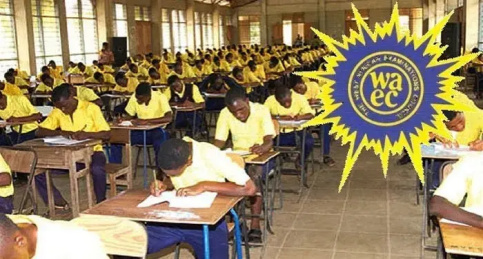
The West African Examinations Council (WAEC) has withheld the results of 167,486 candidates who sat for the 2026 Computer-Based West African Senior School Certificate Examination (CB-WASSCE) for School Candidates over suspected examination malpractice.
The development came as WAEC announced the release of the 2026 school-candidate examination results, bringing relief to millions of students awaiting their performance records while leaving a significant number facing further scrutiny over alleged irregularities.
The 2026 CB-WASSCE for School Candidates had 1,959,636 candidates from 24,207 schools registered for the examination. Of the registered candidates, 958,564 were male, representing 48.92 per cent, while 1,001,072, or 51.08 per cent, were female.
The examination commenced with practical papers on April 21 and concluded on June 19, 2026. Candidates were examined in 37 subjects covering 97 papers, with about 29,000 senior secondary school teachers participating as supervisors.
The withholding of the results reflects WAEC’s continued effort to protect the credibility of the examination and investigate cases in which candidates, examination centres or officials are suspected of violating established examination regulations. The council had warned before the examination that malpractice would attract sanctions approved by the Nigeria Examinations Committee (NEC).
The large-scale withholding also places renewed attention on the effectiveness of the council’s transition to computer-based testing. WAEC had introduced additional safeguards for the 2026 examination, including enhanced question-paper serialisation designed to ensure that candidates did not receive the same sequence of questions.
WAEC’s Head of the Nigeria National Office, Dr Amos Dangut, had earlier said the council was determined to deliver a credible examination and warned candidates, schools and supervisors against involvement in malpractice. He also cautioned parents against patronising websites and individuals claiming they could manipulate or upgrade examination results.
For candidates whose results have been withheld, the action does not necessarily constitute a final cancellation. WAEC has an established process through which cases involving alleged examination irregularities are investigated before the appropriate committee reaches a final decision. The council’s official website also provides a complaint channel for candidates whose results have been withheld or held.
The 2026 examination represents another major step in WAEC’s gradual adoption of computer-based assessment for school candidates. The council had reported that more schools embraced the CBT option this year following the maiden school-candidate computer-based examination conducted in 2025 and recommendations from the Federal Ministry of Education.
While the release of the results will allow successful candidates to proceed with admission and other post-secondary plans, those affected by the withholding of results will have to await the outcome of the investigations. WAEC has repeatedly maintained that examination integrity is essential to preserving the value of its certificates across Nigeria and the wider West African region.
One statistical clarification is necessary: the reported figure of 167,486 is widely described as representing 8.59 per cent of candidates. However, WAEC’s previously published registration figure of 1,959,636 means 167,486 represents approximately 8.55 per cent when calculated directly. The discrepancy is small but is worth noting for accuracy.
- Nigeria’s First Ebola Patient Identified as Wife of Swiss Diplomat as Authorities Probe Source of Infection
 Nigeria’s latest Ebola case has been traced to a 42-year-old…
- MURIC Seeks Police Probe into Alleged Killing of Man Inside Oyo Mosque
 The Muslim Rights Concern (MURIC) has petitioned the police over…
Read More “MURIC Seeks Police Probe into Alleged Killing of Man Inside Oyo Mosque” »