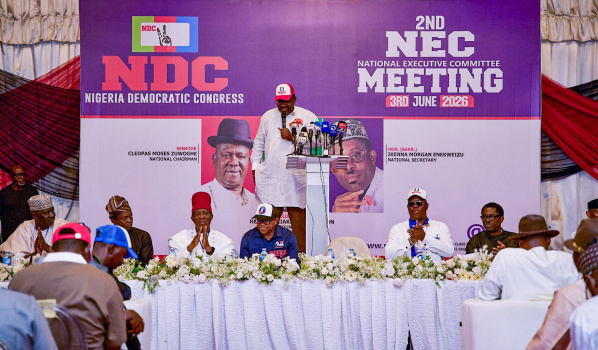





Nigeria’s apex court, the Supreme Court of Nigeria, has delivered a significant ruling in the protracted leadership crisis within the African Democratic Congress (ADC), offering judicial clarity on the tussle between the faction aligned with former Senate President, David Mark, and the group led by Nafiu Bala Gombe.
The dispute, which has lingered for months, centers on the legitimacy of party leadership and control of its national structure. Both factions had laid claim to the party’s leadership, triggering parallel activities, conflicting directives, and deepening internal divisions within the ADC.
In its pronouncement, the Supreme Court addressed the legal standing of the competing leadership claims, emphasizing the primacy of due process and adherence to the party’s constitution. The court reaffirmed that leadership disputes within political parties must be resolved in line with established internal mechanisms, except where clear violations of the law necessitate judicial intervention.
While the full implications of the ruling continue to unfold, legal analysts note that the judgment effectively strengthens institutional authority within the party and discourages parallel structures that lack constitutional backing. The decision is also seen as reinforcing the judiciary’s long-standing position on non-interference in intra-party affairs unless fundamental legal breaches are evident.
The crisis had earlier escalated with both camps organizing separate meetings and issuing contradictory statements, creating uncertainty among party members and stakeholders. The intervention of the apex court was therefore widely anticipated as a decisive step toward restoring order.
- Tinubu Flags Off $100m Southeast Gas Pipeline Project to Boost Industrial Growth
 President Bola Tinubu has flagged off a $100 million gas…
Read More “Tinubu Flags Off $100m Southeast Gas Pipeline Project to Boost Industrial Growth” »
- NCC Raises Alarm Over AI-Powered Cyberattacks, Warns of Threats to Telecoms, Banks and National Security
 The Nigerian Communications Commission (NCC) has warned that the growing…
Political observers believe the ruling could compel reconciliation efforts or, at the very least, force a realignment within the party ahead of future electoral activities. However, reactions from both factions are expected to shape the next phase of the crisis, including whether either side will pursue further legal or political options.
As the ADC navigates the aftermath of the judgment, attention now shifts to how the party leadership will consolidate authority, rebuild cohesion, and reposition itself within Nigeria’s competitive political landscape.