


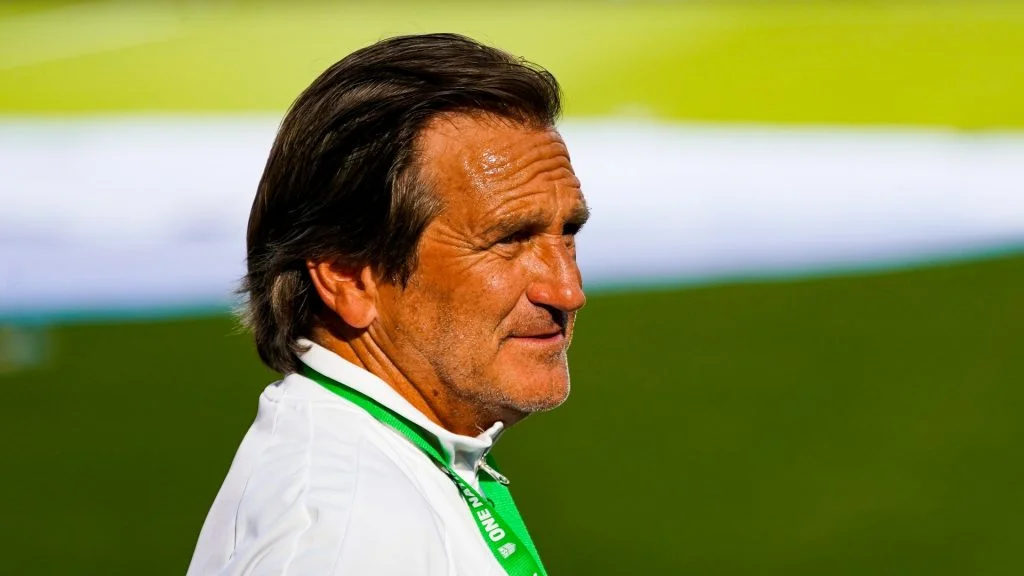
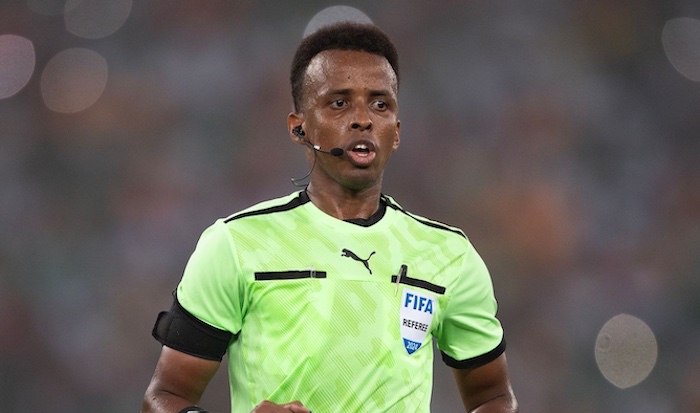
A United States administration official has alleged that Somali referee Omar Abdulkadir Artan was denied entry into the country ahead of the 2026 FIFA World Cup because of alleged associations with individuals suspected of belonging to terrorist organizations.
Artan, who was set to make history as the first Somali referee to officiate at a FIFA World Cup, was stopped by U.S. authorities upon his arrival at Miami International Airport after traveling from Istanbul. Following additional screening, U.S. Customs and Border Protection (CBP) denied him entry, initially citing unspecified “vetting concerns.”
On Wednesday, a Trump administration official told media outlets that Artan’s admission was refused after vetting checks allegedly uncovered “derogatory information,” including what the official described as associations with suspected members of terrorist organizations. The official did not publicly provide evidence to support the allegation, and no criminal charges have been announced against Artan.
The decision ended Artan’s hopes of participating in the tournament, despite his selection by FIFA as one of the match officials for the expanded World Cup being hosted by the United States, Canada and Mexico. FIFA later confirmed that the Somali official would not be able to train or officiate at the competition because of the immigration ruling.
Artan, who was named the Confederation of African Football’s Referee of the Year in 2025, has not been publicly accused of any crime. Speaking after returning to Mogadishu, he said he accepted the situation and encouraged Somali youth not to lose faith in their country or their ambitions.
The development has sparked disappointment among Somali sports officials and football supporters, who viewed Artan’s World Cup appointment as a landmark achievement for Somali football. His exclusion has also renewed debate over how immigration and national security policies can affect international sporting events hosted by the United States.
While U.S. authorities maintain that entry decisions are based on national security assessments, questions remain over the specific evidence behind the allegations and whether further details will be made public.
- Tinubu Flags Off $100m Southeast Gas Pipeline Project to Boost Industrial Growth
 President Bola Tinubu has flagged off a $100 million gas…
Read More “Tinubu Flags Off $100m Southeast Gas Pipeline Project to Boost Industrial Growth” »
- NCC Raises Alarm Over AI-Powered Cyberattacks, Warns of Threats to Telecoms, Banks and National Security
 The Nigerian Communications Commission (NCC) has warned that the growing…