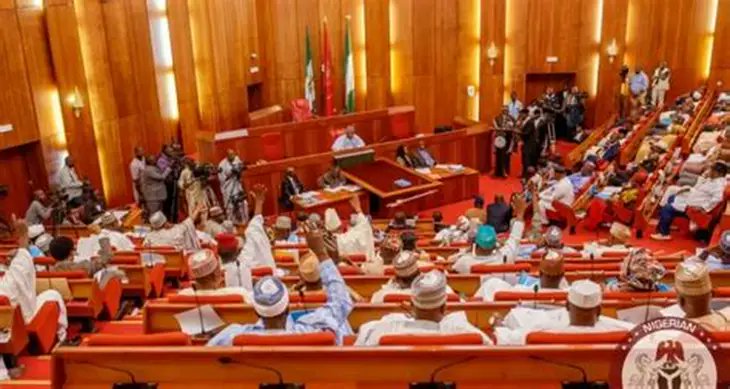



In a spirited response on the floor of the Upper Chamber today, the Nigerian Senate dismissed recent accusations from the House of Representatives that it has been ignoring or discarding bills passed by the lower chamber.
Senate President Godswill Akpabio and Senate Leader Opeyemi Bamidele firmly rejected these claims, insisting that the Senate has been diligently considering bills forwarded to it and remains committed to legislative cooperation in the national interest.
“For the record, we have been doing what we are supposed to do. Only last week, this Senate concurred to six bills from the House of Representatives,” stated Bamidele during plenary.
He emphasized that while both chambers are meant to complement each other in lawmaking, the Senate is not a rubber stamp. “Yes, while we have the principle of chamber reciprocity … the principle does not necessarily mean for us garbage in, garbage out.
We will continue to consider concurrent bills, to ensure every bill is given attention in overriding public interest.”
- Nigeria’s First Ebola Patient Identified as Wife of Swiss Diplomat as Authorities Probe Source of Infection
 Nigeria’s latest Ebola case has been traced to a 42-year-old…
- MURIC Seeks Police Probe into Alleged Killing of Man Inside Oyo Mosque
 The Muslim Rights Concern (MURIC) has petitioned the police over…
Read More “MURIC Seeks Police Probe into Alleged Killing of Man Inside Oyo Mosque” »
Echoing this message, Senate President Akpabio added, “We cannot joke with anything that comes from the House. It takes two hands to clap. Last week, we attended to about six of those bills, and this week, we are going to do two today.”
These clarifications came in response to public frustration and earlier reports that over 140 bills passed by the House of Representatives were left unattended by the Senate.
A specific flashpoint was the bill to establish a Federal Orthopaedic Hospital in Osun State, which was stood down by the Senate during its second reading, an action some interpreted as political disregard.
But Senate leaders say the delay had nothing to do with politics or snubbing; it was simply a matter of legislative due diligence.
This revelation paints a broader picture of how the Nigerian legislative process truly works. Contrary to the narrative of legislative rivalry, the Senate insists its approach is about responsible lawmaking, not automatic approvals. Every bill, they say, must be evaluated on its merits, quality of drafting, and national relevance before it is passed.
In summary, the Senate’s position is clear: there is no institutional snubbing going on, just serious legislative scrutiny. They assert that the public deserves not just laws, but good laws and that’s what they’re committed to delivering.