


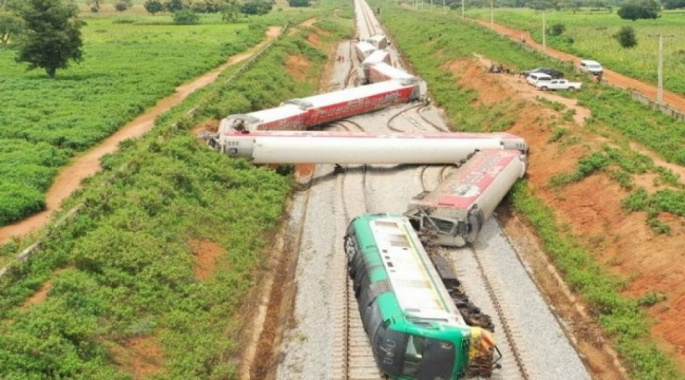
The Nigerian Senate has launched a comprehensive investigation into the country’s rail transportation network following a disturbing rise in train derailments across multiple corridors. The move comes amid growing public concern over passenger safety, infrastructure decay, and questions surrounding the billions invested in railway modernization projects in recent years.
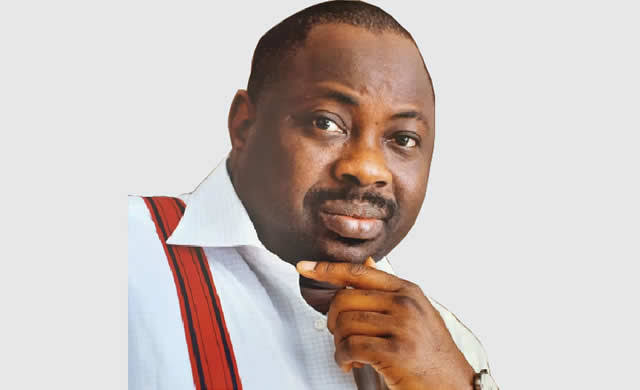
During Tuesday’s plenary, lawmakers resolved to set up an ad-hoc committee to probe the root causes of recurring derailments, assess the condition of the nation’s rail infrastructure, and evaluate the quality of materials used in ongoing railway construction. The committee, chaired by Senator Adams Oshiomhole, was given six weeks to submit its findings and recommendations to the upper chamber for further legislative action.
The motion leading to the investigation was sponsored by Senator Ede Dafinone, who drew attention to the recent derailment of a Warri-Itakpe passenger train that left several coaches off the tracks near Agbor, Delta State. While no lives were lost, the incident highlighted the growing safety risks confronting rail commuters. Dafinone emphasized that Nigeria’s railway system, once celebrated as a sign of national progress, is now plagued by neglect, vandalism, and poor technical oversight.
Senators from across party lines supported the motion, lamenting the alarming frequency of train accidents. They expressed deep concern that billions of naira had been spent on rail projects without commensurate improvements in safety and performance. Lawmakers noted that the repeated derailments on major routes like Abuja–Kaduna, Lagos–Ibadan, and Warri–Itakpe not only disrupt transportation but also erode public confidence in the government’s infrastructure drive.
- Nigeria’s First Ebola Patient Identified as Wife of Swiss Diplomat as Authorities Probe Source of Infection
 Nigeria’s latest Ebola case has been traced to a 42-year-old…
- MURIC Seeks Police Probe into Alleged Killing of Man Inside Oyo Mosque
 The Muslim Rights Concern (MURIC) has petitioned the police over…
Read More “MURIC Seeks Police Probe into Alleged Killing of Man Inside Oyo Mosque” »
Preliminary findings by the Nigerian Safety Investigation Bureau (NSIB) have already linked some of the accidents to faulty track-switch mechanisms, poorly maintained sleepers, and inadequate servicing of track infrastructure. In other cases, vandalism of railway materials, including rail clips, cables, and signal wires, has been cited as a major cause of operational failures. In October 2025, two suspects in Kaduna reportedly confessed to cutting and selling railway cables for ₦90,000, revealing the extent of sabotage undermining the system.
The Senate’s probe will also cover the use of foreign loans, particularly those obtained from China, in financing Nigeria’s railway projects. Lawmakers plan to scrutinize procurement processes, the quality of imported materials, and the transparency of contracts awarded under the Ministry of Transportation and the Nigerian Railway Corporation (NRC). This, they said, would ensure that future rail investments deliver real value for money and sustainable safety standards.
In the meantime, the Senate directed the NRC to immediately address all technical faults identified in previous derailments and to submit a detailed maintenance and safety plan for its ongoing operations. The corporation was also urged to work closely with the police and civil defense authorities to enhance security surveillance along rail corridors, especially in areas prone to vandalism.
Nigeria’s railway system has long been viewed as a key pillar of national development, with the potential to ease road congestion, boost trade, and stimulate industrial growth. However, the surge in derailments has raised serious questions about the quality of project execution and maintenance culture in the sector. Analysts warn that if urgent steps are not taken, the country risks losing public trust in one of its most promising infrastructure sectors.
The Senate’s action signals a growing recognition that the current state of Nigeria’s rail transport system poses not just operational challenges but also economic and safety threats. The committee’s findings are expected to shape future policy directions, including budgetary allocations, monitoring frameworks, and possible reforms within the NRC.
As the six-week countdown begins, Nigerians will be watching closely to see whether the legislative probe delivers meaningful results or becomes another bureaucratic exercise. For many commuters who depend on the railways daily, the Senate’s intervention represents a crucial opportunity to restore safety, accountability, and confidence in a transport system that should be driving national progress not derailment headlines.