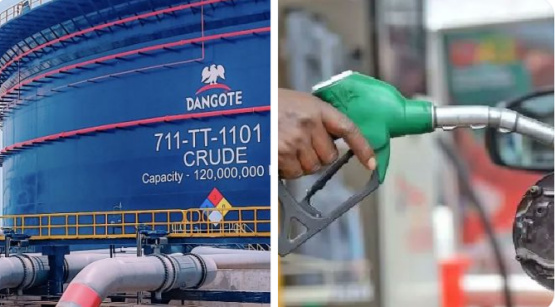








The cost of cooking gas in Nigeria has surged again, with the average retail price for a 5kg cylinder now standing at ₦7,655, according to the latest data released by the National Bureau of Statistics (NBS).
The new figure represents a year-on-year increase of about 4.55 percent compared to ₦7,322 recorded in the same period of 2025, reinforcing a persistent upward trend in household energy costs.
The rise in price is part of a broader surge in Liquefied Petroleum Gas (LPG) costs across the country, driven largely by global market pressures. Industry data and market reports show that cooking gas now sells for as much as ₦1,400 to ₦1,500 per kilogram in several locations nationwide, reflecting sharp increases at both depot and retail levels.
Energy analysts attribute the spike to escalating global crude oil prices, which directly impact LPG supply chains. Tensions in key oil-producing regions and disruptions in international supply routes have further intensified price volatility, pushing costs higher for import-dependent markets like Nigeria.
For many Nigerian households, the impact is immediate and severe. Cooking gas remains a primary source of energy for domestic use, and the sustained increase is compounding existing economic pressures, including rising food and transportation costs.
Market operators say the situation is also affecting demand. Gas dealers report declining sales volumes as consumers increasingly struggle with affordability, with some households resorting to alternative fuels such as charcoal and firewood.
- Tinubu Flags Off $100m Southeast Gas Pipeline Project to Boost Industrial Growth
 President Bola Tinubu has flagged off a $100 million gas…
Read More “Tinubu Flags Off $100m Southeast Gas Pipeline Project to Boost Industrial Growth” »
- NCC Raises Alarm Over AI-Powered Cyberattacks, Warns of Threats to Telecoms, Banks and National Security
 The Nigerian Communications Commission (NCC) has warned that the growing…
The latest development marks a reversal from late 2025, when prices briefly dipped to around ₦5,360 for a 5kg cylinder before resuming an upward trajectory in 2026.
Experts warn that unless global oil prices stabilize or local production capacity improves, Nigerians may continue to face fluctuations—and possibly further increases—in cooking gas prices in the near term.