

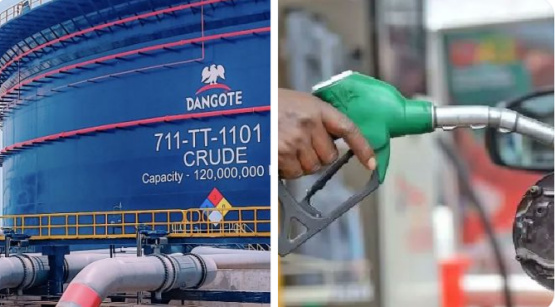
The management of the Dangote Petroleum Refinery has disclosed that the refinery purchases crude oil from Nigeria at international market prices, despite the introduction of a crude-for-naira arrangement by the federal government.
The Managing Director and Chief Executive Officer of the refinery, David Bird, made the clarification during a media chat, explaining that the refinery operates within the global commodities market and is therefore exposed to international pricing structures.
According to Bird, the refinery buys Nigerian crude based on international benchmark-linked prices rather than receiving it at a discounted rate. He noted that even under the crude-for-naira framework, the pricing of the commodity remains tied to global oil benchmarks.
He explained that the refinery is “fully exposed to the international commodity market,” adding that the company also pays global freight and insurance costs to transport crude from export terminals to the refinery.
Bird further revealed that Nigerian crude currently accounts for about 30 to 35 percent of the refinery’s total crude supply, while the remainder is sourced from the international market, often through traders and priced in U.S. dollars.
He said this procurement structure contributes to the cost of refined petroleum products, stressing that global oil market volatility continues to affect fuel pricing. According to him, fluctuations in international crude prices, freight rates, insurance charges, and financing costs all influence the refinery’s operations.
- Nigeria’s First Ebola Patient Identified as Wife of Swiss Diplomat as Authorities Probe Source of Infection
 Nigeria’s latest Ebola case has been traced to a 42-year-old…
- MURIC Seeks Police Probe into Alleged Killing of Man Inside Oyo Mosque
 The Muslim Rights Concern (MURIC) has petitioned the police over…
Read More “MURIC Seeks Police Probe into Alleged Killing of Man Inside Oyo Mosque” »
The CEO acknowledged the pressure high fuel prices place on consumers but said the refinery is working to minimise costs across its supply chain while maintaining stable supply to the domestic market.
The refinery, located in the Lekki Free Trade Zone in Lagos and owned by billionaire industrialist Aliko Dangote, is designed to process up to 650,000 barrels of crude oil per day, making it the largest single-train refinery in the world.
Industry analysts say the refinery is expected to play a major role in strengthening Nigeria’s fuel supply security and reducing the country’s dependence on imported petroleum products.