







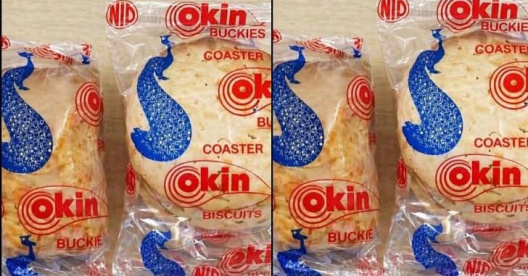
After nearly two decades away from the production floor, the iconic Okin Biscuits brand has recorded a major breakthrough, with one of its production lines in Offa, Kwara State, reportedly coming back to life after 17 years.
The development, which occurred on August 25, 2026, has generated excitement among residents of Offa and Nigerians who remember Okin as one of the country’s notable indigenous biscuit brands. A social media update announcing the milestone described the restart as a significant step in efforts to revive the company.
The return of the production line represents more than the restart of industrial equipment. For many Nigerians, Okin Biscuits carries strong memories of childhood, having been a familiar brand in schools, homes and retail outlets during its years of active production.
Okin Biscuits was founded by the late Chief Emmanuel Olatunji Adesoye, a prominent Offa-born industrialist who also established Adesoye College. Available biographical records identify Adesoye as the founder of Okin Biscuits Limited and credit him with building several business interests in Offa.
The company’s revival has been the subject of growing public interest in recent months, following reports that new ownership and rehabilitation efforts were underway. Earlier reports and social-media discussions had indicated that the factory was being prepared for a return to production after years of inactivity.
The latest development suggests that the rehabilitation programme has progressed from preparation to actual testing or operation of production equipment. A separate update published on August 25 stated that, for the first time in 17 years, the biscuit production line had run again.
The revival is particularly significant for Offa, where Okin became closely associated with the town’s industrial identity. The factory’s return to activity could potentially create opportunities for employment, local supply chains and commercial activity, although the full scale of any planned workforce or investment has not yet been publicly established.
The development also comes at a time when renewed investment in domestic manufacturing is attracting considerable attention across Nigeria. The revival of a dormant indigenous brand such as Okin could contribute to efforts to strengthen local production and reduce dependence on imported consumer goods.
For former consumers, however, the story has an additional emotional dimension. Social-media reactions to reports of Okin’s return have been dominated by nostalgia, with Nigerians recalling the biscuits they enjoyed during their school years and expressing enthusiasm about the possibility of seeing the familiar brand back on shop shelves.
While the restart of the production line is an important milestone, it remains to be seen when full-scale commercial production and nationwide distribution will commence. Details concerning production capacity, product varieties, employment numbers, investment value and the official launch timetable have not been fully disclosed in the publicly available reports reviewed for this story.
Nevertheless, the return of the Okin production line marks a remarkable chapter in the history of one of Offa’s best-known industrial legacies. After 17 years of silence, the machinery is running again—and for a generation of Nigerians who grew up with Okin Biscuits, the development could signal the long-awaited return of a familiar taste and a cherished piece of Nigeria’s industrial heritage.
- Tinubu Flags Off $100m Southeast Gas Pipeline Project to Boost Industrial Growth
 President Bola Tinubu has flagged off a $100 million gas…
Read More “Tinubu Flags Off $100m Southeast Gas Pipeline Project to Boost Industrial Growth” »
- NCC Raises Alarm Over AI-Powered Cyberattacks, Warns of Threats to Telecoms, Banks and National Security
 The Nigerian Communications Commission (NCC) has warned that the growing…


