




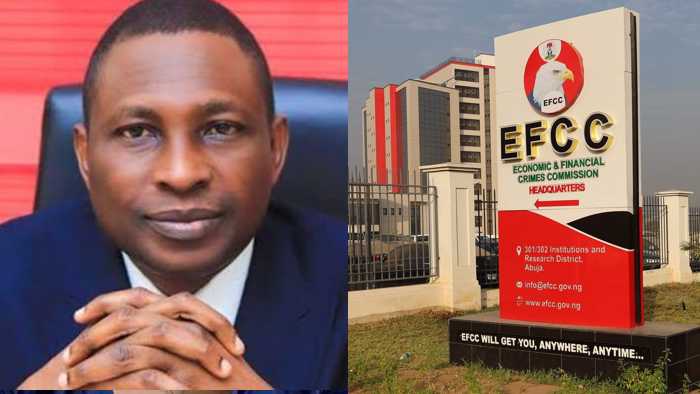
The Economic and Financial Crimes Commission (EFCC) has urged Nigerians, particularly young people, to provide credible information that can help trace and recover Nigerian assets suspected to have been stolen and concealed within the country or overseas.
EFCC Chairman, Ola Olukoyede, made the appeal on Wednesday, August 26, 2026, while delivering a lecture at the 43rd Cambridge International Symposium on Economic Crime at Jesus College, University of Cambridge, United Kingdom.
Olukoyede disclosed that the commission is prepared to reward whistleblowers with between 2.5 per cent and five per cent of assets recovered as a direct result of information supplied by them. He said the incentive was designed to encourage citizens to support the fight against corruption and illicit financial flows.
According to the EFCC chairman, Nigerians who know the whereabouts of suspected stolen national assets should not hesitate to pass the information to the commission, especially where such assets have been moved across international borders. He stressed that credible intelligence from members of the public remains crucial to successful asset tracing.
Olukoyede said the financial incentive could become substantial where information leads to the recovery of high-value assets. He told his audience that a whistleblower who provides actionable information could potentially earn millions of dollars from the reward attached to a successful recovery.
The EFCC chairman also revealed that the commission had secured the forfeiture of cash and assets worth more than $500 million to the Federal Government during the three years of his tenure. He attributed the progress to Nigeria’s legal framework on asset forfeiture, investigative capacity, judicial cooperation and credible intelligence.
Olukoyede explained that Nigeria’s non-conviction-based forfeiture framework enables the EFCC to approach the courts for the recovery of assets suspected to be proceeds of crime without necessarily waiting for the conclusion of a criminal trial. He said the mechanism has strengthened the agency’s ability to pursue assets believed to have been acquired through illicit means.
Among the cases highlighted was the investigation involving former Attorney-General of the Federation and Minister of Justice, Abubakar Malami. Olukoyede said investigators traced 57 properties to Malami and had secured final forfeiture of 48 of them, while the commission is considering an appeal concerning nine properties for which its forfeiture application was dismissed.
The EFCC boss also pointed to other major asset-recovery efforts, including properties linked to former Central Bank of Nigeria governor Godwin Emefiele. He said the commission’s recent successes demonstrate the importance of combining financial intelligence, effective investigations, international cooperation and legal action in pursuing suspected proceeds of crime.
The whistleblower appeal comes as the EFCC intensifies efforts to track illicit wealth moved through increasingly complex financial arrangements and jurisdictions outside Nigeria. Olukoyede maintained that members of the public can play a significant role by supplying reliable information that investigators may use to identify, trace and recover suspected stolen national assets.
The commission’s message is therefore not simply an invitation to make allegations against politicians or other public officials, but a call for credible, actionable intelligence capable of supporting lawful investigations and asset recovery. Under the incentive announced by the EFCC, successful whistleblowers could receive between 2.5 per cent and five per cent of recovered assets, subject to the applicable process and conditions.
- Dangote Refinery’s N2.15 Trillion IPO Closes Today as Investors Make Final Push
 LAGOS, Nigeria — The highly anticipated initial public offering (IPO)…
Read More “Dangote Refinery’s N2.15 Trillion IPO Closes Today as Investors Make Final Push” »
- NCAA to Probe Airline After Passenger Reportedly Bleeds Amid Extreme Heat on Abuja–Calabar Flight
 The Nigeria Civil Aviation Authority (NCAA) is set to investigate…