






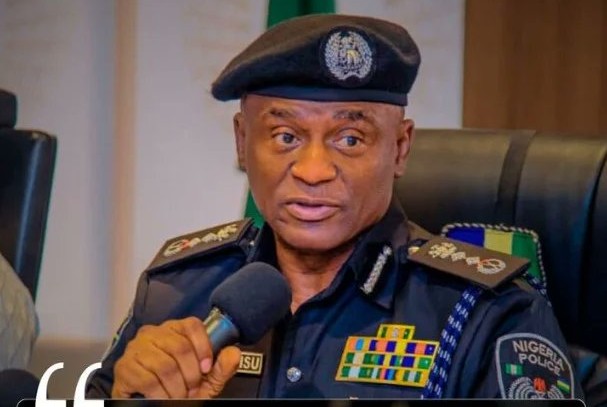
Inspector-General of Police, Olatunji Disu, has given Commissioners of Police in states grappling with persistent security challenges 72 hours to submit updated threat assessments and detailed operational requirements to the Force Headquarters as part of fresh measures to strengthen the fight against banditry and other violent crimes across the country.
Disu issued the directive on Wednesday, November 11, 2026, during a monthly strategic conference with senior officers of the Nigeria Police Force at the Goodluck Ebele Jonathan Peacekeeping Centre, Force Headquarters, Abuja. The meeting reviewed the country’s security situation, operational performance and preparations for the forthcoming electoral period.
The police chief acknowledged that despite significant operational achievements recorded by the Force, bandit attacks were still occurring in some parts of the country, leaving residents of affected communities exposed to persistent threats to their lives, property and livelihoods. He warned against allowing impressive arrest statistics to obscure the realities confronting vulnerable communities.
Presenting the operational scorecard since the last strategic conference, Disu disclosed that police operatives had arrested 611 suspected criminals across the federation. The figure comprised 218 suspected bandits and terrorism suspects, 85 suspected armed robbers, 129 suspects linked to murder and culpable homicide, 59 suspected kidnappers and 120 suspected cultists.
He further revealed that police operations during the period resulted in the rescue of 95 kidnapped victims and the recovery of 306 assorted firearms, 630 rounds of ammunition of various calibres and 116 stolen vehicles. He commended police personnel for their courage, professionalism and commitment, acknowledging their contributions to the operational successes recorded.
However, Disu insisted that the achievements did not represent the full picture of the country’s security situation, particularly in communities still experiencing attacks by armed groups. He said the continuing violence demanded more decisive interventions, stressing that the police leadership would not ignore the difficulties faced by residents in affected states.
Consequently, he directed all Commissioners of Police in affected commands to submit updated security threat assessments and operational requirements to the Force Headquarters within 72 hours. He emphasised that the reports must contain specific information about prevailing threats and the personnel, equipment and other resources required to address them, insisting that he expected concrete details rather than general statements.
As part of the immediate response, the Inspector-General tasked the Deputy Inspector-General of Police in charge of Operations with coordinating the deployment of additional personnel, operational mobility assets and air support to the worst-affected areas in consultation with the relevant state commands. He also ordered police formations to sustain and intensify intelligence-led operations while maintaining standing operational plans for identified high-risk locations.
The IGP equally called for stronger community participation in security management, directing police commanders to deepen intelligence gathering through engagement with traditional rulers, village heads, hunters’ associations and local vigilante groups in affected areas. According to him, residents possess valuable information about criminal activities in their communities, and security agencies must build sufficient public confidence to encourage the sharing of such intelligence.
Beyond the immediate security concerns, Disu reaffirmed the Nigeria Police Force’s commitment to political neutrality ahead of the 2027 general elections. He warned officers against collaborating with political actors, facilitating thuggery, compromising electoral integrity or interfering with voters’ rights, declaring that personnel found engaging in such misconduct would face disciplinary action in accordance with the law. He maintained that every candidate, political party, supporter and eligible voter deserved equal protection, irrespective of political affiliation.
The police chief’s latest directives underscore the urgency of strengthening security operations in vulnerable communities while improving intelligence gathering, resource deployment and police-community cooperation. With the 72-hour deadline now in force, affected police commands are expected to provide the Force Headquarters with actionable assessments that will guide targeted interventions against banditry and other security threats across the country.
- Seyi Tinubu Leads City Boy Delegation to Sultan of Sokoto in Fresh Push for National Reach
 Seyi Tinubu, son of President Bola Ahmed Tinubu and Patron…
- IGP Disu Gives Police Commissioners 72 Hours to Submit Security Threat Reports, Orders Urgent Reinforcement of Banditry-Hit Communities
 Inspector-General of Police, Olatunji Disu, has given Commissioners of Police…