


by Oyez Olatunde Rex
The controversy surrounding the murders of Sheriff Ishola Salami and Prince Kazeem Ademola Akinloye has evolved from a criminal investigation into a wider debate about police accountability, due process and the integrity of Nigeria’s justice system.
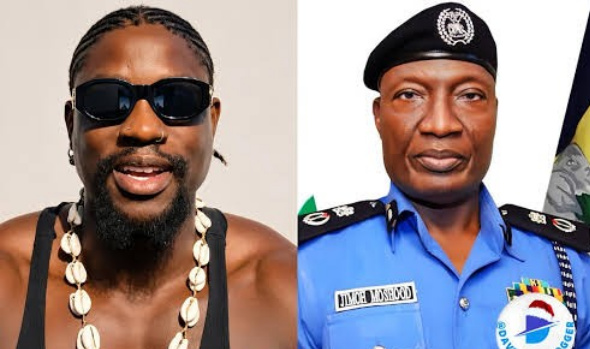
At the centre of the controversy are Ahmed Tajudeen Akanbi, who has been accused by the police of involvement in the killings; Safiu Fatai, also known as Fabo, and Yusuf Ismaila, alias Bariga, whose alleged confessional statements reportedly formed part of the police case; Assistant Inspector-General of Police Olohundare Moshood Jimoh, who was Lagos Commissioner of Police when the investigation was reopened; and social media activist VeryDarkMan (VDM), who has questioned the integrity of the investigation and accused Jimoh of corruption.
The allegations remain contested, and the courts—not social media, the police or campaign groups—are ultimately responsible for determining criminal culpability.
The killings
The first murder occurred on April 18, 2023, when Sheriff Ishola Salami, described in reports as a youth leader in the Ojomu community, was killed in the Moba area of Ajah, Lagos.
On August 26, 2024, Prince Kazeem Ademola Akinloye, son of the Ojomu of Ajiran Land, was also killed in the Ajiran area.
The two killings remained unresolved until renewed investigative efforts in 2026. Following a petition from the Ojomu Chieftaincy Family dated January 7, 2026, the Inspector-General of Police directed a comprehensive review of the cases the following day. The directive was transmitted to Jimoh, then Lagos Commissioner of Police.
This chronology is significant because Jimoh’s defenders contend that his involvement arose from an official police directive and not from any personal interest in the case.
The arrests of Fabo and Bariga
The renewed investigation reportedly led to the arrest of Safiu Fatai, known as Fabo, on January 24, 2026, and Yusuf Ismaila, alias Bariga, on February 6.
According to the police narrative, the two suspects made confessional statements which implicated Akanbi as the alleged person who ordered or financed the killings. The police subsequently declared Akanbi wanted on February 19.
However, this is one of the principal areas of dispute.
VDM has questioned the authenticity and interpretation of the evidence, particularly the relationship between the suspects’ initial statements and the later police account. His position is that the original statements or recordings should be produced publicly so that Nigerians can determine whether Akanbi was actually implicated from the outset.
The police and groups supporting the investigation reject this account, insisting that official records contain confessional statements by Fabo and Bariga implicating Akanbi.
The critical point is that the public has not independently examined the complete evidentiary record. Consequently, neither side’s interpretation should be treated as a judicially established fact.
Akanbi’s arrest in Benin Republic
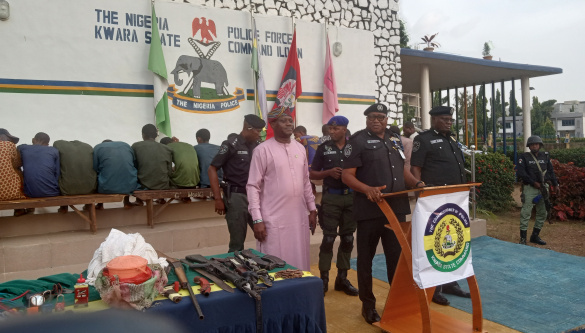
After being declared wanted, Akanbi was arrested by INTERPOL in Cotonou, Benin Republic, on April 15, 2026, following an intelligence-led search. He was returned to Nigeria on April 17.
The police said the arrest was supported by legal processes, including a Federal High Court warrant, while also displaying items reportedly recovered from him.
Akanbi’s arrest and subsequent prosecution have therefore moved the matter beyond a police investigation into the judicial sphere, where the evidence against him must now be tested according to law.
Where VDM’s allegations fit in
VDM’s intervention has introduced another dimension to the case.
He has accused AIG Jimoh of corruption and alleged that the investigation may have been compromised. His concerns centre principally on the evidence allegedly linking Akanbi to the killings and on questions surrounding the statements of Fabo and Bariga.
VDM’s argument, in essence, is that the public should not simply accept the police narrative without seeing the underlying evidence. He has challenged Jimoh to disprove his allegations and has questioned whether Akanbi may have been wrongly implicated.
These are serious allegations. But they remain allegations. No court has, to the best of the publicly available information, established that Jimoh is corrupt or that Akanbi was framed.
At the same time, the absence of a judicial finding against Jimoh does not mean that legitimate questions about the investigation should be dismissed. The credibility of a criminal investigation is strengthened, not weakened, when difficult questions are answered transparently.
Jimoh’s position
Jimoh has rejected allegations of corruption and abuse of office.
The police account maintains that the investigation was conducted pursuant to an IGP directive and that evidence gathered—including witness accounts and alleged confessional statements—provided grounds for pursuing Akanbi.
Police documents cited in recent reports also indicate that the investigation involved several witnesses and that the authorities obtained legal orders connected with Akanbi’s arrest. Supporters of Jimoh argue that these records contradict the suggestion that he personally engineered the case against Akanbi.
Jimoh has also maintained that the matter is now before the courts and that justice should prevail.
The bigger question: What does the evidence actually show?
This is where the controversy should ultimately be resolved.
There are now competing narratives:
The police narrative is that the murders were investigated, suspects were arrested, confessional statements were obtained, further evidence emerged, and Akanbi was identified as a person allegedly connected to the killings.
VDM’s narrative is that there are unanswered questions about the original statements of the suspects, the subsequent evidence against Akanbi and the conduct of the investigation, raising the possibility of a miscarriage of justice.
The position of groups supporting Jimoh is that the allegations against the police officer are unsupported and that the investigation should be allowed to proceed without public pressure or misinformation.
The truth may ultimately be established only by examining the complete case file, original witness statements, confessional statements, forensic evidence, telephone records and other documentary materials relied upon by the prosecution.
The law must be the winner
The Ajiran case deserves more than competing narratives on social media.
The families of Sheriff Salami and Prince Akinloye deserve justice. If Akanbi and any other suspects are guilty, they should be convicted on credible evidence and punished according to law. If the evidence does not establish their guilt, they must not be convicted merely because public opinion has already reached a conclusion.
Equally, if allegations of police misconduct, evidence manipulation, coercion or abuse of office are substantiated, those responsible must also face the law—regardless of their rank or institutional position.
The appropriate response to the controversy, therefore, is neither to dismiss VDM’s allegations outright nor to accept them as established facts. A transparent and independent review of the disputed aspects of the investigation would serve both sides.
Such a review should establish, among other things, the precise contents and chronology of Fabo and Bariga’s statements; how Akanbi was first linked to the killings; whether the evidence was obtained lawfully; whether all relevant evidence was preserved; and whether every procedural requirement was followed.
The objective should not be to vindicate VDM, defend Jimoh, or protect Akanbi.
The objective should be justice.
In the final analysis, the Ajiran murders should be resolved by evidence, due process and the rule of law. The victims deserve justice, the accused deserve a fair trial, the police deserve to have their evidence properly tested, and any officer accused of wrongdoing deserves the opportunity to answer the allegations through a credible process.
When the investigation is transparent, the trial is fair and the evidence is independently tested, there is only one legitimate winner: the law.
- Bournemouth Humiliate Manchester United 3-0 at Old Trafford as Carrick Faces Mounting Pressure
 Bournemouth delivered another painful blow to Manchester United on Sunday,…
- Tragedy in Kogi: Police Corporal Allegedly Kills Female Colleague, Takes Own Life After Reported Relationship Crisis
 A tragic shooting incident involving two serving police officers has…