







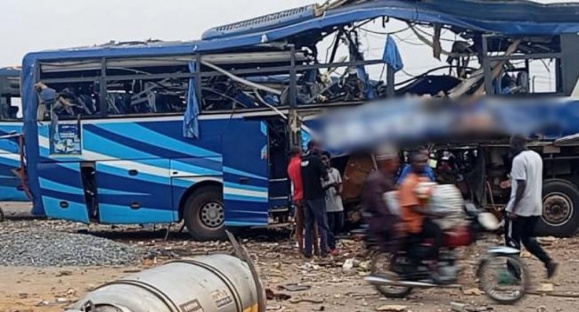
A compressed natural gas (CNG)-powered bus explosion has caused significant destruction at a busy transport terminal in Kaduna, raising urgent questions about safety standards in Nigeria’s rapidly expanding gas-powered transport sector.
The incident occurred at a motor park in the Mando area of the city, where a CNG-fueled luxury bus reportedly exploded, triggering a fire that engulfed multiple vehicles and sent thick plumes of smoke into the air. Eyewitnesses described scenes of panic as commuters, traders, and transport workers fled for safety amid the chaos.
Emergency responders were quickly deployed to the scene to contain the inferno and prevent further spread. Several buses were destroyed in the blaze, underscoring the intensity of the explosion at what is typically a bustling transport hub.
Preliminary information from local authorities indicates that the explosion was linked to a gas-related failure involving the CNG system of the vehicle. Early assessments suggest that factors such as improper handling, cylinder malfunction, or possible overfilling may have contributed to the blast, though a full investigation is ongoing.
As of the time of reporting, officials have not confirmed the number of casualties, if any, but the scale of property damage has heightened concern among residents and transport operators alike.
- NCAA to Probe Airline After Passenger Reportedly Bleeds Amid Extreme Heat on Abuja–Calabar Flight
 The Nigeria Civil Aviation Authority (NCAA) is set to investigate…
- DSS Files Three-Count Charge Against Man Over Alleged Fake Tinubu Letter to US President
 The Department of State Services (DSS) has initiated a three-count…
Importantly, security agencies have ruled out any connection to terrorism or criminal activity, reinforcing that the explosion appears to be accidental and technical in nature.
The incident comes at a time when Nigeria is witnessing increased adoption of CNG-powered vehicles, driven largely by the push for cheaper and more sustainable fuel alternatives following the removal of petrol subsidies. While the transition has been widely welcomed for its economic benefits, the Kaduna explosion has intensified scrutiny of safety compliance, maintenance protocols, and regulatory oversight within the emerging CNG ecosystem.
Industry stakeholders and safety experts are now calling for stricter enforcement of standards, routine inspection of gas-powered vehicles, and better training for operators to prevent similar incidents.
Further updates are expected as authorities conclude investigations and release comprehensive findings on the cause of the explosion and measures to avert future occurrences.