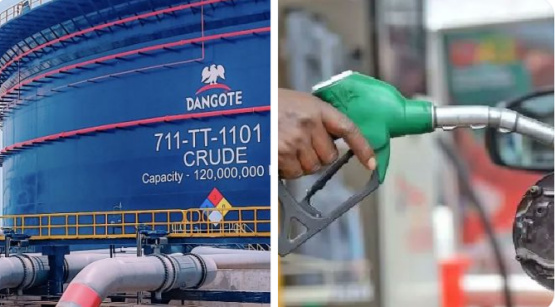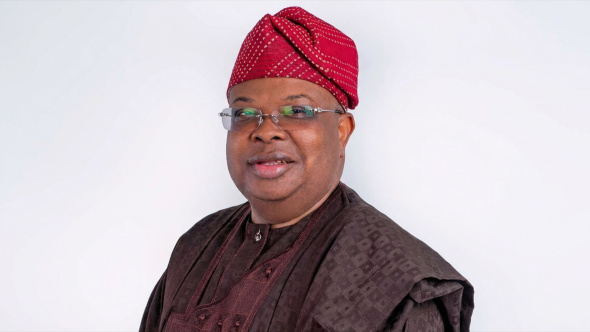





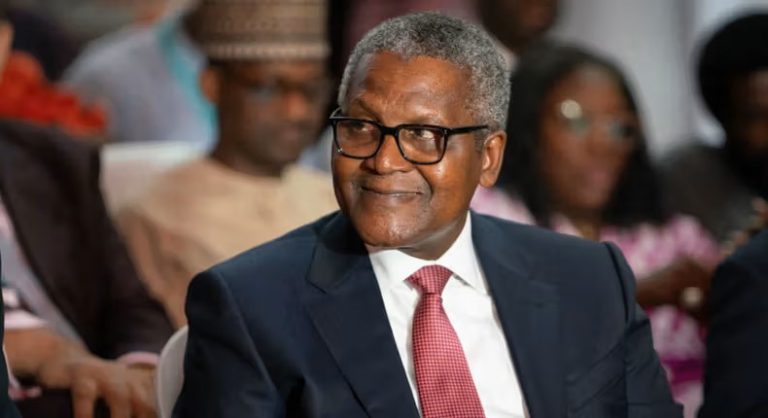
President of Dangote Group, Aliko Dangote, has accused the Nigeria Union of Petroleum and Natural Gas Workers (NUPENG) of imposing heavy loading charges on fuel trucks at his multi-billion-dollar refinery, warning that the levies are driving up fuel pump prices across the country.
Dangote speaking to journalists in Lagos alleged that NUPENG collects between ₦48,000 and ₦50,000 per truck each time a vehicle loads refined products at the refinery.
“By the time everybody collects their own, you are talking about ₦80,000 to ₦84,000 in extra costs,” Dangote said. “Who pays for that cost? The consumer actually pays.”
Rent-Seeking and Fuel Price Pressures
Dangote described the charges as “rent-seeking” that discourages efficiency and directly inflates the retail cost of petrol and diesel, which are already under pressure from foreign exchange volatility and high logistics expenses.
“These charges are unsustainable,” he warned, adding that his company’s past experience as a fuel importer had taught hard lessons about dependency on third-party transporters.
To avoid a repeat of what he called “being held by the neck,” Dangote revealed that 4,000 Compressed Natural Gas (CNG)-powered trucks have been deployed for nationwide distribution of petroleum products. The in-house fleet is designed to bypass third-party transport unions and reduce costs while supporting Nigeria’s energy transition.
- Tinubu Flags Off $100m Southeast Gas Pipeline Project to Boost Industrial Growth
 President Bola Tinubu has flagged off a $100 million gas…
Read More “Tinubu Flags Off $100m Southeast Gas Pipeline Project to Boost Industrial Growth” »
- NCC Raises Alarm Over AI-Powered Cyberattacks, Warns of Threats to Telecoms, Banks and National Security
 The Nigerian Communications Commission (NCC) has warned that the growing…
Union Membership Must Be Voluntary
Responding to NUPENG’s claim that Dangote Group is preventing drivers from joining the union, Dangote insisted that membership is voluntary under Nigeria’s constitution and labour laws.
“If anybody wants to join the union, even our own workers, we say, ‘Fine, go and join.’ But it must be voluntary. Even religion is voluntary, you cannot force anyone to convert,” he said.
NUPENG Reacts Cautiously
When Contacted for comments, NUPENG President Williams Akporeha neither confirmed nor denied the allegation.
“₦50k now? No more ₦1 per litre?” he responded cryptically, referencing earlier viral claims that the union imposed a ₦1-per-litre fee.
When previously asked about those claims, Akporeha maintained: “One can’t stop people from having their opinion. Ask who alleges to provide proof.”
The controversy follows recent disputes in which NUPENG briefly shut down depots and blockaded the Dangote refinery over drivers’ unionisation. Federal Government mediation produced a memorandum of understanding and an Abuja industrial court order barring further blockades, but tensions remain high.
Legal and Economic Concerns
Energy law expert, Professor Dayo Ayoade questioned the legality of the alleged levies.
“The job of a union is to assist its members and protect their jobs, but it doesn’t have a right to tax or collect fees for fuel loading. Is NUPENG now a tax-collecting agency? That is the question,” he said.
Analysts warn that if confirmed, such hidden charges function as an informal tax on energy consumers, undermining government efforts to stabilise pump prices and encourage cleaner alternatives such as CNG.
Call for Government Action
Industry stakeholders are however urging the Federal Government to investigate the allegations and establish clear regulatory guidelines for truck-loading fees.
“Consumers are already burdened by high fuel prices. Any unregulated levies will worsen the cost of living and discourage investment in domestic refining,” an oil marketing executive said.