



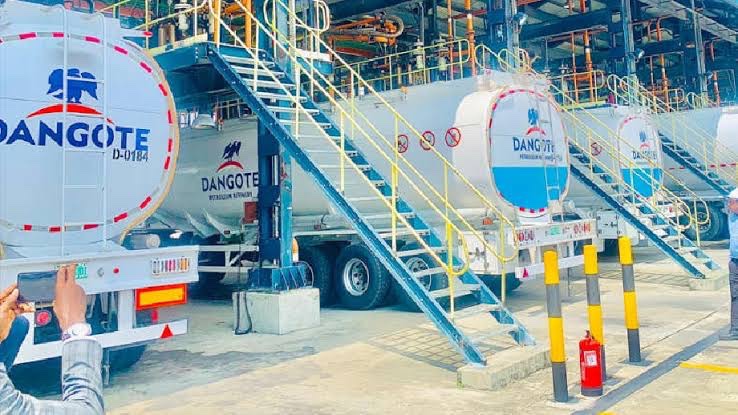
Nigeria’s fuel supply landscape is witnessing a major shift as the Dangote Petroleum Refinery has announced that more than 1,000 trucks now load petrol daily from its facility. The development signals a sharp rise in local fuel distribution and highlights the growing operational capacity of Africa’s largest single-train refinery.
The refinery confirmed that the surge in daily truck loading reflects increased demand from petroleum marketers across the country, following recent policy and pricing adjustments aimed at improving access to locally refined fuel. Industry analysts say the milestone underscores the refinery’s expanding role in stabilising Nigeria’s downstream petroleum sector.
According to the company, a key driver of the increased truck traffic is the reduction in the ex-depot price of Premium Motor Spirit (PMS), which made products from the refinery more competitive compared to imported fuel. The pricing review has encouraged both major and independent marketers to source petrol directly from the Lekki-based facility.
Another factor contributing to the spike in daily loadings is the reduction in minimum purchase volume, a move that opened the refinery’s doors to smaller marketers who were previously unable to meet higher volume requirements. By lowering entry barriers, the refinery has widened participation and boosted overall distribution activity.
- Nigeria’s First Ebola Patient Identified as Wife of Swiss Diplomat as Authorities Probe Source of Infection
 Nigeria’s latest Ebola case has been traced to a 42-year-old…
- MURIC Seeks Police Probe into Alleged Killing of Man Inside Oyo Mosque
 The Muslim Rights Concern (MURIC) has petitioned the police over…
Read More “MURIC Seeks Police Probe into Alleged Killing of Man Inside Oyo Mosque” »
The Dangote Refinery also introduced a bank-backed credit support system, allowing marketers to lift products with payment guarantees spread over a short period. This initiative, according to industry sources, has strengthened confidence among buyers and ensured smoother, uninterrupted fuel supply.
With over 1,000 trucks loading petrol daily, the refinery is increasingly serving as a central hub for nationwide fuel distribution. Tankers from different regions now lift products regularly, helping to reduce dependence on imports and easing pressure on Nigeria’s foreign exchange reserves.
Experts note that the development could have a positive ripple effect on fuel availability, particularly in major cities and high-demand corridors. Increased local loading capacity is expected to shorten supply chains, reduce logistics delays, and improve turnaround time for petrol delivery to filling stations.
The milestone also reinforces the Federal Government’s push for domestic refining as a long-term solution to Nigeria’s recurring fuel supply challenges. As local refining scales up, stakeholders anticipate more predictable supply patterns and gradual price stability in the retail fuel market.
Dangote Group has repeatedly stated that the refinery is designed not only to meet Nigeria’s domestic fuel needs but also to serve regional markets. The current volume of daily truck loadings is seen as an early indication of the refinery’s potential to reshape fuel distribution within and beyond Nigeria.
While challenges remain in transportation infrastructure and logistics coordination, industry observers believe sustained high-volume loading at the refinery could significantly reduce fuel scarcity and hoarding practices. The focus, they say, will now shift to maintaining consistency and efficiency.
As the Dangote Refinery continues to ramp up operations, the achievement of loading over 1,000 petrol trucks daily marks a significant step in Nigeria’s journey toward energy self-sufficiency, with far-reaching implications for consumers, marketers, and the wider economy.