



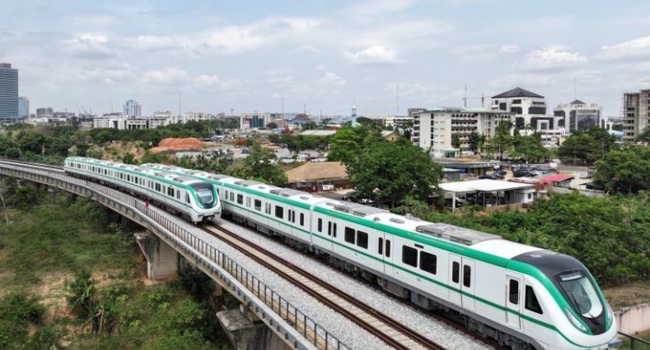
The Federal Government has taken a decisive step toward overhauling Nigeria’s freight and logistics architecture with the constitution of a high-level committee tasked with accelerating port-to-railway connectivity across the country.
The initiative, announced by the Managing Director of the Nigerian Railway Corporation (NRC), Dr. Kayode Opeifa, is designed to bridge longstanding gaps between the nation’s seaports and its rail infrastructure—an integration widely seen as critical to improving cargo movement efficiency and reducing logistics costs.
According to Opeifa, the committee was constituted by the Office of the Secretary to the Government of the Federation as part of broader efforts to strengthen Nigeria’s transport ecosystem and attract private sector participation in rail development.
The announcement was made during a quarterly stakeholders’ engagement session of the Nigerian Ports Consultative Council, where key players in the maritime and rail sectors converged to align strategies for a more coordinated national transport system.
Industry stakeholders have long argued that Nigeria’s significant investments in port infrastructure—particularly deep-sea ports—risk underperforming without efficient rail linkages to move cargo inland. Echoing this concern, the NRC boss warned that ongoing maritime reforms may continue to yield only marginal returns unless integrated with a functional rail freight system.
The Federal Government’s intervention is therefore aimed at eliminating bottlenecks in cargo evacuation, especially in critical commercial hubs such as Lagos and along the eastern port corridors, where congestion and inefficiencies have persisted.
Opeifa highlighted that while collaboration between rail authorities and port managers has improved in recent years, more deliberate and coordinated action is required to optimise freight movement nationwide. He stressed that a shift toward rail-based cargo transport would not only decongest roads but also provide a more reliable and cost-effective logistics framework.
- Tragedy in Kogi: Police Corporal Allegedly Kills Female Colleague, Takes Own Life After Reported Relationship Crisis
 A tragic shooting incident involving two serving police officers has…
- Tottenham Stun Chelsea at Stamford Bridge as Palmer Sees Red and Maddison Suffers Fresh Injury Blow
 Tottenham Hotspur delivered a statement victory over London rivals Chelsea…
The committee is expected to drive actionable solutions, including expanding rail lines to key port locations and strengthening interconnectivity among eastern ports to boost regional trade integration.
The development aligns with the Federal Government’s broader infrastructure agenda, which prioritises multimodal transport integration as a catalyst for economic growth, trade facilitation, and national competitiveness.
With Nigeria positioning itself as a regional logistics hub, the success of the port-rail integration strategy is likely to play a defining role in determining how efficiently goods move from its ports to markets across the country and beyond.