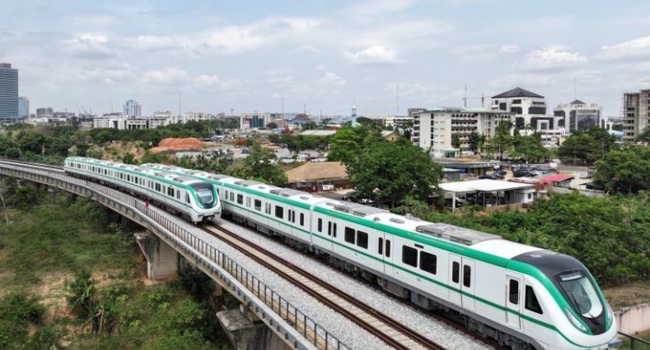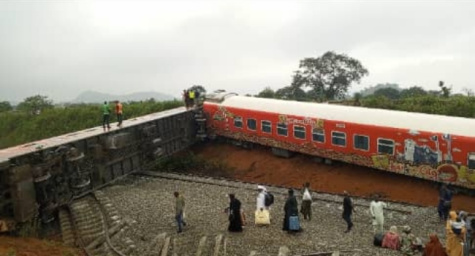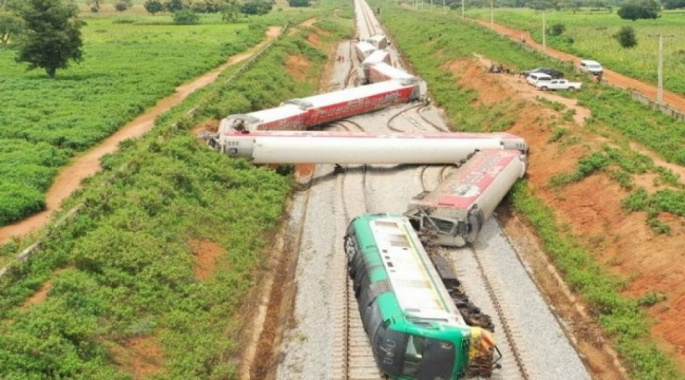



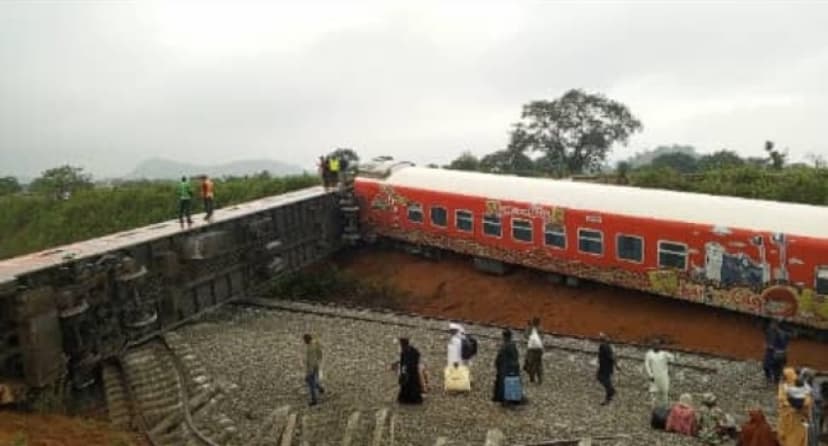
A Kaduna-bound passenger train derailed on Tuesday morning along the busy Abuja–Kaduna rail corridor, leaving six people injured and sparking fresh concerns over the safety of Nigeria’s railway system.
The incident occurred around 11:09 a.m. at kilometer 49, between Kubwa and Asham stations. Passengers described a terrifying moment when several coaches suddenly veered off the tracks.
Emergency teams rushed to the scene, and the Nigerian Safety Investigation Bureau (NSIB) later confirmed that six passengers sustained injuries. Officials stressed that, as of their briefing, no deaths had been recorded, though some eyewitness accounts suggested at least one casualty.

In response, the Nigerian Railway Corporation (NRC) immediately suspended operations on the route, promising to resume only after investigators give safety clearance. Refunds have been processed for affected passengers, and stranded travelers are being urged to seek alternative transportation.
President Bola Tinubu, who is currently on an official visit to Brazil, expressed sadness over the derailment in a post on X (formerly Twitter). He assured Nigerians that the government would address the underlying issues and prevent future mishaps on this crucial corridor.
- Bournemouth Humiliate Manchester United 3-0 at Old Trafford as Carrick Faces Mounting Pressure
 Bournemouth delivered another painful blow to Manchester United on Sunday,…
- Tragedy in Kogi: Police Corporal Allegedly Kills Female Colleague, Takes Own Life After Reported Relationship Crisis
 A tragic shooting incident involving two serving police officers has…
This is not the first time the Abuja–Kaduna rail line has made headlines. In 2024 alone, derailments were recorded at Jere and Asha stations, prompting the House of Representatives to open an inquiry into recurring rail accidents. Analysts say poor maintenance, vandalism, and underfunded infrastructure are at the heart of the problem.
For many Nigerians, the Abuja–Kaduna line is more than just a transport route—it is a lifeline that connects commuters, traders, and families between the Federal Capital Territory and the North. Tuesday’s derailment has therefore renewed calls for urgent rail reforms to restore confidence in a system that has repeatedly failed to guarantee passenger safety.