





Global energy markets recorded a sharp turnaround on Friday as the strategic Strait of Hormuz was declared open to commercial shipping, triggering a steep drop in crude oil prices and raising expectations of relief for petrol consumers in Nigeria.
The reopening followed a fragile ceasefire in the Middle East involving Iran, the United States, and regional actors. Iranian authorities confirmed that the vital oil transit corridor—through which roughly one-fifth of global crude supply flows—would remain accessible for the duration of the truce.
The immediate market reaction was dramatic. International crude oil benchmarks plunged by more than 10 percent within hours of the announcement, reflecting renewed confidence in global supply stability. Analysts say the earlier disruption of shipping through the strait had been a major driver of recent fuel price spikes worldwide.
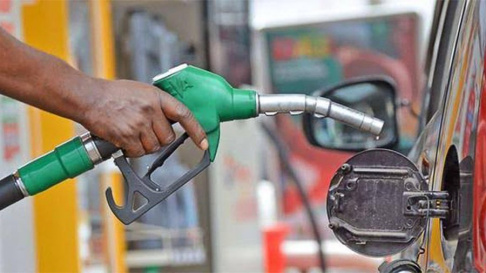
For Nigeria, a country heavily reliant on imported refined petroleum products, the development is significant. Industry experts and petroleum marketers project that the easing of global crude prices could translate into lower petrol pump prices in the coming weeks.
Current projections suggest that petrol, which has hovered above ₦1,200 per litre in parts of the country, could fall below the ₦1,000 mark if the ceasefire holds and supply conditions remain stable. Some estimates even place a potential price band around ₦900 per litre under sustained market normalization.
However, stakeholders caution against expectations of immediate relief at filling stations. Market dynamics such as existing stock purchased at higher prices, distribution costs, and delayed price adjustments by marketers could slow the transmission of global price drops to local consumers.
Economic analysts also warn that the current situation remains fragile. While the strait has been declared “completely open,” the arrangement is tied to a temporary ceasefire, and geopolitical tensions in the region persist. Any breakdown in negotiations could quickly reverse the gains and push oil prices upward again.
- AFCOM-HS: New Military Medical College Listed on JAMB Portal for 2026/2027 Admission
 The Armed Forces College of Medicine and Health Sciences (AFCOM-HS),…
Read More “AFCOM-HS: New Military Medical College Listed on JAMB Portal for 2026/2027 Admission” »
- Arsenal Sink Everton as Aston Villa Shock Man City in Dramatic Premier League Saturday
 Arsenal strengthened their challenge for the English Premier League title…
Read More “Arsenal Sink Everton as Aston Villa Shock Man City in Dramatic Premier League Saturday” »
The Strait of Hormuz has been at the center of one of the most severe global energy disruptions in recent history, with earlier closures sending oil prices soaring above $100 per barrel and rattling supply chains worldwide.
Back home, stakeholders are urging Nigerian authorities and marketers to reflect any cost reductions transparently and promptly. There are also renewed calls for increased domestic refining capacity, particularly with ongoing efforts around local refineries, to shield the economy from external shocks.
For now, Nigerians can expect cautious optimism: the global oil market has cooled, but the pace and extent of petrol price reductions will depend on how long stability holds in one of the world’s most sensitive energy corridors.