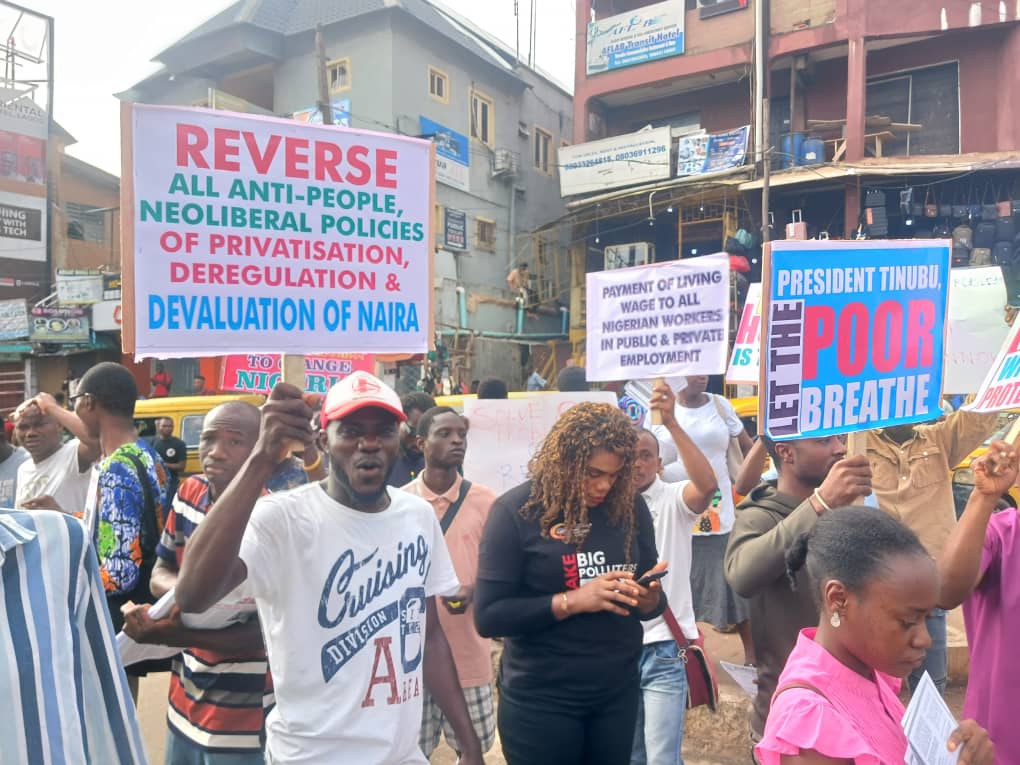





Amid Nigeria’s ongoing economic challenges, the International Monetary Fund has expressed concern that the stagnant per-capita growth, widespread poverty, and severe food insecurity have further intensified the persistent cost-of-living crisis in Nigeria.
The international financial institution communicated this information in a recently published report titled ‘Review of Nigeria’s Post Financing Assessment by the IMF Executive Board.’
In line with the report, the inadequate collection of revenue has impeded the delivery of services and the allocation of resources towards public investment.
- Tragedy in Kogi: Police Corporal Allegedly Kills Female Colleague, Takes Own Life After Reported Relationship Crisis
 A tragic shooting incident involving two serving police officers has…
- Tottenham Stun Chelsea at Stamford Bridge as Palmer Sees Red and Maddison Suffers Fresh Injury Blow
 Tottenham Hotspur delivered a statement victory over London rivals Chelsea…
The report read in part, “Nigeria faces a difficult external environment and wide-ranging domestic challenges. External financing (market and official) is scarce, and global food prices have surged, reflecting the repercussions of conflict and geo-economic fragmentation.

“Per-capita growth in Nigeria has stalled, poverty and food insecurity are high, exacerbating the cost-of-living crisis. Low reserves and very limited fiscal space constrain the authorities’ option space. Against this backdrop, the authorities’ focus on restoring macroeconomic stability and creating conditions for sustained, high and inclusive growth is appropriate.”
..,.The report highlighted that on January 12, 2024, the Executive Board of the International Monetary Fund completed an evaluation of post-financing and approved the Staff Appraisal without delay. Additionally, it emphasized that Nigeria possesses sufficient capability to repay its debts to the IMF.