





AFP
Iran launched around 180 missiles at Israel on Tuesday in response to the killings of Tehran-backed militant leaders, prompting alarm across the region and vows of retaliation.
Most of the missiles were intercepted by Israeli air defences or by allied air forces before they reached Israel.
“Missiles were launched from Iran towards the State of Israel,” the Israeli military said in a statement, as sirens sounded nationwide, announcing after about an hour that the attack was over with a “large number” of missiles intercepted.
Israeli medics reported two people were lightly injured by shrapnel in the country’s centre, while in the occupied West Bank, a Palestinian was killed in Jericho “when pieces of a rocket fell from the sky and hit him”, the city’s governor Hussein Hamayel told AFP.
It was Iran’s second direct attack on Israel after a missile and drone attack in April in response to a deadly Israeli air strike on the Iranian consulate in Damascus.
- Tragedy in Kogi: Police Corporal Allegedly Kills Female Colleague, Takes Own Life After Reported Relationship Crisis
 A tragic shooting incident involving two serving police officers has…
- Tottenham Stun Chelsea at Stamford Bridge as Palmer Sees Red and Maddison Suffers Fresh Injury Blow
 Tottenham Hotspur delivered a statement victory over London rivals Chelsea…
Iran’s Revolutionary Guards said they had launched a missile attack on “three military bases” around Israel’s commercial hub Tel Aviv.
They said the attack was in response to Israel’s killing of Hezbollah leader Hassan Nasrallah last week as well as the death of Hamas leader Ismail Haniyeh in a Tehran bombing widely blamed on Israel.
UN chief Antonio Guterres condemned the “broadening conflict in the Middle East”, saying in a statement: “This must stop. We absolutely need a ceasefire.”
US Secretary of State Antony Blinken said the Iranian attack was “unacceptable” and called on the whole world to condemn it.
Israeli airspace was closed for several hours with all flights diverted, a spokesman for the airport authority said.
Iraq, Lebanon and Jordan, which lie between Iran and Israel, closed their airspace too.
As the missiles made their way to Israel from the east, blasts were heard over the Jordanian capital Amman, as Israel’s allies moved to intercept them, an AFP correspondent said.
Jordan said its air defences responded to missiles and drones.
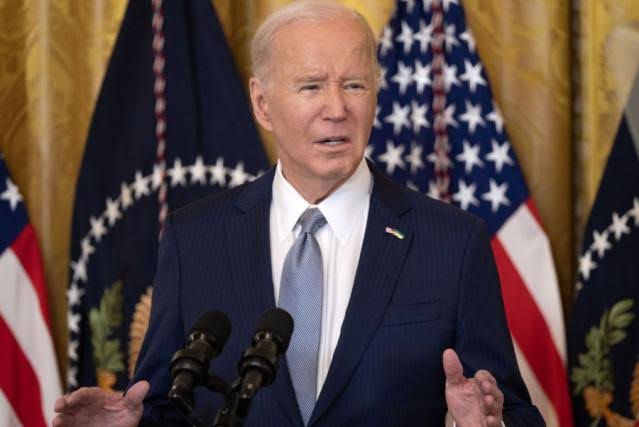
US President Joe Biden ordered the military to “aid Israel’s defence” and shoot down Iranian missiles, the White House said.
While Iran-backed groups across the region had already been drawn into the Gaza war, sparked by Palestinian group Hamas’s October 7 attack on Israel, Tehran had largely refrained from direct attacks on its regional foe.
‘Direct conflict’
Israeli military spokesman Daniel Hagari said the latest Iranian “attack will have consequences. We have plans, and we will operate at the place and time we decide”.
Iran’s Revolutionary Guards said that “If the Zionist regime reacts to Iranian operations, it will face crushing attacks”, according to a statement carried by the Fars news agency.
French Prime Minister Michel Barnier said he was concerned about “a direct conflict that seems to be underway between Iran and Israel”.
Germany’s Foreign Minister Annalena Baerbock said on social media platform X that the attack was “leading the region further towards the abyss”.
Iran-backed group Hamas praised the Iranian attack, saying it was “in revenge for the blood of our heroic martyrs”.
And Tehran-aligned armed factions in Iraq threatened to target “all” US forces in the country if Iran comes under attack.
The escalation came after the Israeli military early Tuesday said troops had started “targeted ground raids” in south Lebanon, across Israel’s northern border.
The Israeli ground offensive came despite growing calls for de-escalation after a week of air strikes that killed hundreds in Lebanon, including Hassan Nasrallah, the powerful leader of Iran-backed militant group Hezbollah.
Iran has said Nasrallah’s killing will bring about Israel’s “destruction”, though the foreign ministry said Monday that Tehran would not deploy any troops to confront Israel.
The Pentagon said the United States was boosting its forces in the Middle East by a “few thousand” troops.
‘Greater suffering’
In Lebanon, the UN peacekeeping mission said the Israeli offensive did not amount to a “ground incursion” and Hezbollah denied any troops had crossed the border.
There was no way to immediately verify the claims, which came as Israel struck south Beirut, Damascus and Gaza, despite international calls for restraint to avoid a regional conflagration.
“We fear a large-scale ground invasion by Israel into Lebanon would only result in greater suffering,” said UN human rights office spokeswoman Liz Throssell.
Israel’s defence minister warned the fight was far from over, even after a massive strike on Beirut killed Nasrallah on Friday.
Israel seeks to dismantle Hezbollah’s military capabilities and restore security to the north, where tens of thousands have been displaced by nearly a year of cross-border fire.
The Iran-backed group, which suffered heavy losses in a spate of attacks last month, said it targeted Israeli army bases on Tuesday.
Separately, a suspected shooting attack in Tel Aviv on Tuesday evening killed at least four people, police said.

Lebanon’s Health Minister Firass Abiad said more than 1,000 people have been killed since September 17.
Lebanese Prime Minister Najib Mikati and the UN humanitarian agency appealed for more than $400 million in aid for the displaced, estimating there could be as many as one million.
Gaza strikes
Hezbollah began low intensity strikes on Israeli troops a day after its Palestinian ally Hamas staged its unprecedented attack on Israel on October 7, which triggered Israel’s devastating assault on Gaza.
In central Beirut, Youssef Amir, displaced from southern Lebanon, said: “I have lost my home and relatives in this war, but all of that is a sacrifice for Lebanon, for Hezbollah”.
Beirut resident Elie Jabour, 27, told AFP that despite opposing Hezbollah “politically… I support them defending the border”.
Later, as Iran launched missiles, celebratory gunfire erupted from Hezbollah’s bastion in Beirut’s southern suburbs.
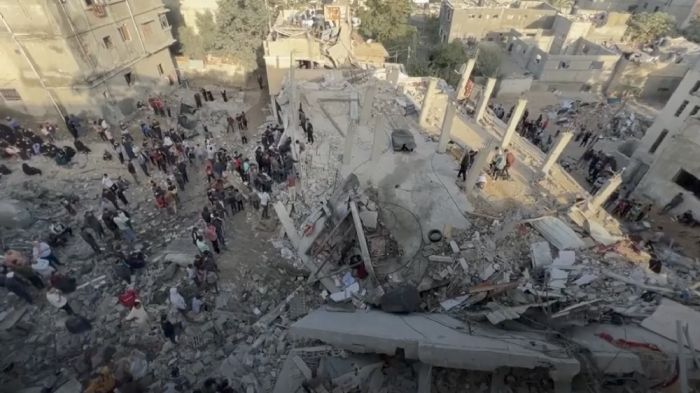
In Gaza, the civil defence agency said Israeli bombing killed 19 people on Tuesday.
Hamas’s October 7 attack on Israel resulted in the deaths of 1,205 people, mostly civilians, according to an AFP tally based on Israeli official figures that include hostages killed in captivity.
Israel’s retaliatory military offensive has killed at least 41,638 people in Gaza, most of them civilians, according to figures provided by the Hamas-run territory’s health ministry. The UN has described the figures as reliable.
AFP