





With Agency reports
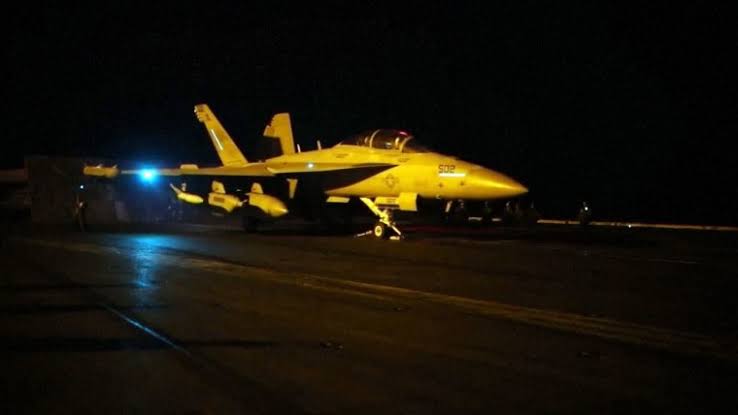
The United States and Britain has carried out large-scale military strikes against eight sites in Yemen controlled by Houthi militants, according to the two countries.

The strikes — the eighth in two weeks — signaled that the Biden administration was intending to wage a sustained campaign against the Iran-backed group, which has disrupted traffic in vital international sea ways.
The strikes, which hit several targets at each site, were bigger than other recent attacks, yet smaller than the first retaliatory salvos on Jan. 11. That middle ground reflects the administration’s attempt to chip away at the Houthis’ military capacity without killing large numbers of fighters and commanders, which could risk unleashing even more mayhem into the region.
- Nigeria’s First Ebola Patient Identified as Wife of Swiss Diplomat as Authorities Probe Source of Infection
 Nigeria’s latest Ebola case has been traced to a 42-year-old…
- MURIC Seeks Police Probe into Alleged Killing of Man Inside Oyo Mosque
 The Muslim Rights Concern (MURIC) has petitioned the police over…
Read More “MURIC Seeks Police Probe into Alleged Killing of Man Inside Oyo Mosque” »
Yet the U.S.-led strikes, in an operation which the military calls Poseidon Archer, have so far failed to deter the Houthis from attacking shipping lanes to and from the Suez Canal that are critical for global trade.

The Iran-backed group said it will keep up its attacks as a protest against Israel’s military campaign in Gaza against Hamas.
Meanwhile, the US has restated its earlier warning to the Houthis.
“Let us reiterate our warning to Houthi leadership: We will not hesitate to defend lives and the free flow of commerce in one of the world’s most critical waterways in the face of continued threat,” the American and British governments said.
The Netherlands, Australia, Canada and Bahrain, as in the Jan. 11 strikes, also participated, providing logistics, intelligence and other support, according to U.S. officials.