




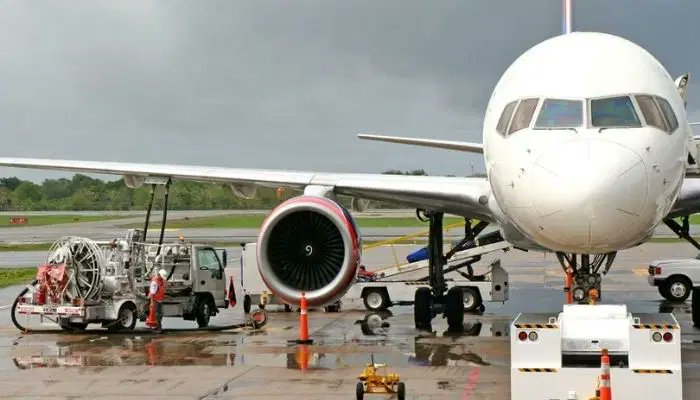
Despite recent regulatory efforts to stabilise Nigeria’s aviation fuel market, oil marketers have continued to sell Jet A1 above recommended limits, intensifying financial strain on domestic airlines and raising fresh concerns about potential disruptions across the sector.
The Nigerian Midstream and Downstream Petroleum Regulatory Authority (NMDPRA) had issued a pricing advisory following emergency consultations with industry stakeholders, recommending that aviation fuel should retail within a defined band to curb volatility. The regulator pegged indicative prices between about ₦1,760 and ₦1,988 per litre in Lagos and up to roughly ₦2,037 per litre in Abuja, based on prevailing global benchmarks and local cost considerations.
However, market realities have diverged sharply from this guidance. Industry reports indicate that marketers are still supplying airlines at ₦2,230 per litre and above, with some operators citing even higher effective costs once logistics and storage are factored in. This persistent gap between advisory prices and actual market rates underscores the limited enforcement power of the directive in a fully deregulated fuel market.
The pricing mismatch comes amid a broader aviation fuel crisis that has seen Jet A1 costs surge dramatically in recent months. Data from industry groups show that prices have climbed to levels approaching ₦3,000–₦3,300 per litre in some instances, nearly tripling earlier figures and pushing airlines to the brink of operational viability.
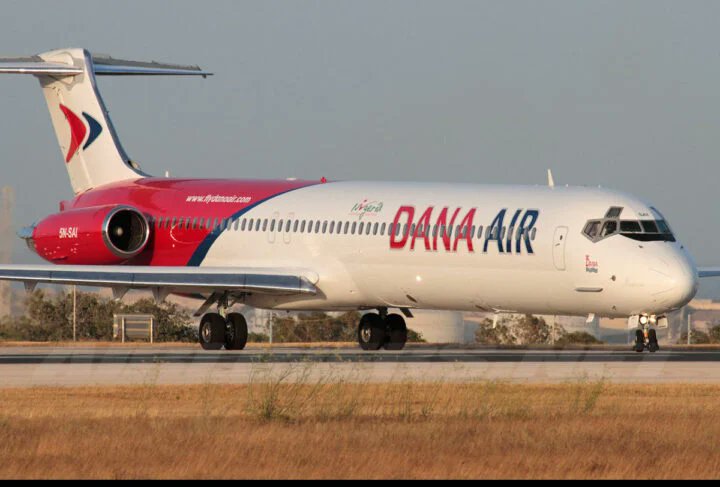
Airlines, under the umbrella of the Airline Operators of Nigeria (AON), have repeatedly warned that the current pricing regime is unsustainable, noting that fuel accounts for up to 30–40 percent of their operating costs—far above global averages.
The situation has already triggered high-level government intervention. President Bola Tinubu recently approved debt relief measures for airlines and directed regulators, marketers, and operators to agree on a fair pricing framework within a short timeline.
As part of its response, the NMDPRA also proposed structural changes, including direct sales of fuel to airlines to eliminate middlemen and a 30-day credit window to ease cash flow pressures.
- Tinubu Flags Off $100m Southeast Gas Pipeline Project to Boost Industrial Growth
 President Bola Tinubu has flagged off a $100 million gas…
Read More “Tinubu Flags Off $100m Southeast Gas Pipeline Project to Boost Industrial Growth” »
- NCC Raises Alarm Over AI-Powered Cyberattacks, Warns of Threats to Telecoms, Banks and National Security
 The Nigerian Communications Commission (NCC) has warned that the growing…
Yet, analysts say continued non-compliance by marketers reflects deeper structural issues, ranging from foreign exchange pressures and global oil market volatility to supply chain inefficiencies and profit-driven pricing dynamics in a deregulated environment.
The crisis has already forced airlines to raise ticket prices, cut capacity, and, at one point, threaten a nationwide shutdown of operations.
With Jet A1 prices still trading above advisory thresholds, stakeholders warn that unless enforcement mechanisms improve or supply-side interventions take effect, Nigeria’s aviation sector could face prolonged instability, higher travel costs, and reduced connectivity in the months ahead.