




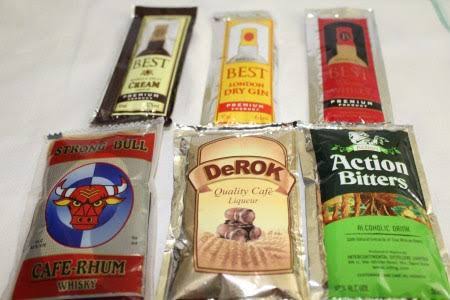
The Nigerian Senate has issued a firm directive to the National Agency for Food and Drug Administration and Control (NAFDAC) to fully enforce the long-awaited ban on the production and sale of high-strength alcoholic drinks in sachets by December 2025. The upper chamber stressed that no further extension will be tolerated, as the consumption of cheap and portable alcoholic sachets continues to fuel addiction, accidents, and social decay across the country.
The resolution followed a motion sponsored by Senator Asuquo Ekpeyong, who drew attention to the dangers posed by the proliferation ofg alcohol packaged in sachets and small plastic bottles. According to him, these products have become easily accessible to minors, commercial drivers, and vulnerable groups due to their affordability and convenience, leading to rising cases of misuse and dependence. The Senate therefore resolved that NAFDAC must ensure total compliance with the ban by the stipulated deadline.
Lawmakers recalled that in 2018, a Memorandum of Understanding (MoU) was signed between NAFDAC, the Federal Competition and Consumer Protection Commission (FCCPC), the Association of Food, Beverage and Tobacco Employers (AFBTE), the Distillers and Blenders Association of Nigeria (DIBAN), and the Federal Ministry of Health. The agreement outlined a five-year roadmap for the gradual phase-out of alcoholic beverages in sachets and small PET bottles of less than 200ml. However, industry lobbying and economic pressures have repeatedly delayed enforcement.
During the debate, several senators lamented that the continued circulation of high-strength sachet alcohol has worsened cases of youth intoxication, reckless driving, domestic violence, and school dropouts. They argued that while such drinks may offer temporary relief to low-income consumers, the long-term health and social costs far outweigh any economic benefit. The chamber urged the Ministry of Health to back NAFDAC with stronger policy support, particularly through the long-awaited National Alcohol Policy.
- Tragedy in Kogi: Police Corporal Allegedly Kills Female Colleague, Takes Own Life After Reported Relationship Crisis
 A tragic shooting incident involving two serving police officers has…
- Tottenham Stun Chelsea at Stamford Bridge as Palmer Sees Red and Maddison Suffers Fresh Injury Blow
 Tottenham Hotspur delivered a statement victory over London rivals Chelsea…
NAFDAC had earlier clarified that the current moratorium on sachet alcohol will end on December 31, 2025, after which all non-compliant products will be seized, and offenders prosecuted. The agency explained that temporary waivers were granted in 2023 to give manufacturers time to transition to safer packaging formats, but insisted that the December 2025 deadline is final and irreversible.
For years, the debate over sachet alcohol has pitted public health advocates against industry players. While manufacturers argue that the ban could lead to job losses and reduced tax revenues, public health experts insist that the social costs of underage drinking and alcohol-related violence are far greater. Several lawmakers also noted that responsible producers who have already switched to compliant packaging are being undermined by others still flouting the directive.
The Senate’s latest position is expected to strengthen NAFDAC’s enforcement power as it prepares for nationwide compliance inspections in 2026. The Federal Ministry of Health has also been directed to fast-track the release of a unified National Alcohol Control Policy that would permanently outlaw sachet packaging of high-strength beverages and establish penalties for violations.
In addition to the ban, the Senate called for increased public sensitisation campaigns to educate Nigerians, particularly youths and commercial transport operators on the health dangers of consuming cheap alcoholic drinks with high ethanol content. Lawmakers stressed that national awareness efforts must be intensified at community and market levels to prevent addiction and curb related crimes.
Industry observers believe that the enforcement of this policy could reshape Nigeria’s beverage market by encouraging responsible alcohol production and consumption. However, they warn that weak enforcement or political interference could undermine the Senate’s directive, as has happened in the past. NAFDAC, on its part, has vowed to collaborate with law enforcement and consumer protection agencies to ensure strict compliance.
With the Senate’s latest pronouncement, the countdown to December 2025 has officially begun. For Nigeria’s alcohol producers, distributors, and consumers, the message is clear, come end of the year, sachet alcohol will be history. Whether this move succeeds in curbing alcohol abuse or merely drives it underground will depend on the consistency and courage of the enforcement that follows.