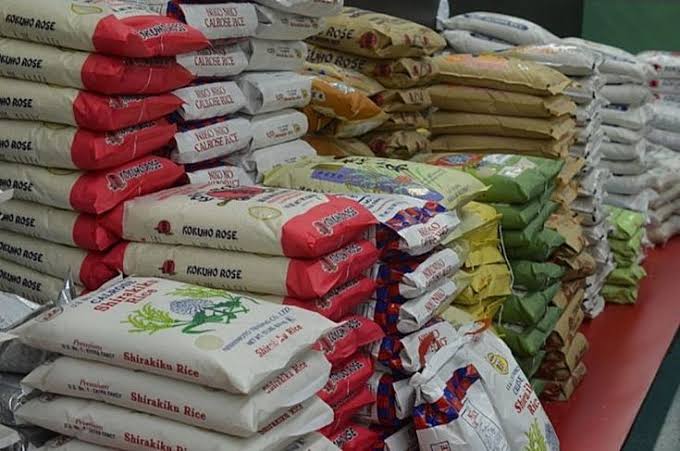






Nigerian farmers are raising alarm over a sharp drop in food prices nationwide.
While consumers celebrate cheaper rice and maize, local producers warn of huge losses, rising costs, and the threat to future food security.
Farmers Count Losses as Market Prices Crash Across States
Across Nigeria’s major farming belts, from Niger to Nasarawa, Kogi, and parts of the North West, farmers are expressing frustration as the prices of key food crops continue to fall sharply.
A bag of maize that sold for about ₦70,000 last year now goes for ₦30,000 to ₦35,000, while a 100 kg bag of locally processed rice that once cost ₦150,000 has dropped to around ₦120,000.
Similarly, a 50 kg bag of rice now sells between ₦55,000 and ₦70,000 in Lagos markets, compared to nearly ₦100,000 earlier in the year, reflecting a price crash that is pleasing to consumers but devastating to producers.
A Paradox of Plenty: Good Harvests, Poor Returns
Farmers say the drop is a paradox, their success in producing more food this season has ironically brought financial pain.
Many attribute the price fall to a surge in harvest supply, import waivers on key staples, and weak local purchasing power that limits demand despite high availability.
According to reports, while inflation remains high nationwide, the government’s push to lower food prices through duty waivers on brown rice, maize, and wheat has allowed cheap imports to flood the market, hurting local growers.
Imports and Policy Decisions Deepen the Crisis
In July 2024, the Federal Government introduced a 180-day duty waiver for selected agricultural imports to tackle food inflation. But stakeholders say this well-intentioned policy is now backfiring.
The Rice Processors Association of Nigeria (RIPAN) and several farmers’ groups have warned that imported grains are now selling below the cost of locally produced ones. Some local mills are reportedly shutting down due to reduced demand for Nigerian paddy.
- Tragedy in Kogi: Police Corporal Allegedly Kills Female Colleague, Takes Own Life After Reported Relationship Crisis
 A tragic shooting incident involving two serving police officers has…
- Tottenham Stun Chelsea at Stamford Bridge as Palmer Sees Red and Maddison Suffers Fresh Injury Blow
 Tottenham Hotspur delivered a statement victory over London rivals Chelsea…
“The market is flooded with imported rice and maize. Farmers are losing money while retailers make all the profit,” lamented a rice cooperative leader in Lafia, Nasarawa State.
Rising Input Costs, Insecurity, and Poor Infrastructure Compound Woes
Even as prices fall, the cost of production remains painfully high. Farmers say fertiliser, seedlings, labour, and transport costs have all increased over the past year.
Coupled with persistent insecurity in rural communities and poor storage and transportation infrastructure, many are being forced to sell their harvests quickly at giveaway prices.
Without cold rooms, silos, or preservation centres, smallholders have little choice but to offload perishable produce immediately, often to middlemen who pay less than half the farm-gate value.
Mixed Reactions from Consumers and Analysts
While farmers lament losses, some urban consumers have welcomed the temporary fall in prices. The drop has brought modest relief to households struggling under inflation, especially in cities like Lagos, Abuja, and Kano.
However, economists warn that the current trend is unsustainable.
“If farmers can’t make a profit, they’ll scale down production next season. That will push prices up again and worsen food insecurity,” said Dr. Abdullahi Musa, an agricultural economist at the University of Ilorin.
What Farmers Want from Government
Agricultural stakeholders are urging urgent interventions to prevent a full-blown rural economic crisis. Their top demands include:
- Reversal of indiscriminate import waivers that undercut local farmers.
- Creation of guaranteed offtake schemes to buy surplus grains at fair prices.
- Investment in storage, processing, and logistics infrastructure.
- Access to affordable credit and subsidized inputs to keep production viable.
- Improved rural security to ensure safe farming and transportation.
Many also advocate for market stabilization mechanisms and state-level grain reserves that can absorb excess produce during bumper harvests.
The Road Ahead: Balancing Prices, Policy, and Productivity
The current crash in food prices may seem like a win for consumers, but it also exposes deep structural weaknesses in Nigeria’s agricultural value chain.
Unless policies strike a balance between affordability for consumers and profitability for farmers, the country risks discouraging food production in future seasons.
Experts suggest that the government should strengthen agro-processing zones, promote local consumption, and improve farm-to-market access so that farmers can earn fairer returns without relying on unstable market cycles.
Conclusion
Nigeria’s food economy sits at a crossroads. Falling prices offer short-term relief for buyers but long-term risk for the nation’s food supply if farmers abandon their fields in frustration.
The challenge now is to build a system that rewards productivity, protects local producers, and ensures stable prices for all.