
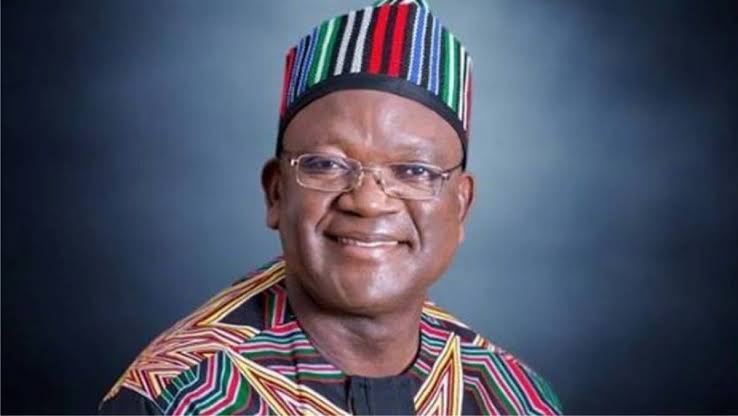





Former Attorney General of the Federation and Minister of Justice, Chief Michael Aondoakaa, SAN, has issued a stark warning over what he described as a dangerous relocation of armed bandits from Sokoto State into parts of Benue State following recent United States airstrikes carried out on Christmas Day.
Speaking on Thursday during an interview on Arise Television, Aondoakaa expressed grave concern that the military pressure in the North-West has triggered a spillover effect, pushing criminal groups southward into vulnerable communities.
According to him, several areas in Benue are already feeling the impact. He disclosed that in Ukum Local Government Area alone, bandits have allegedly taken control of 10 out of the 13 political wards, leaving residents exposed and displaced.
Aondoakaa further raised alarm over the proximity of armed groups to key economic assets in the state. He noted that bandits are reportedly camped less than three kilometres from the Zaki-Biam main market in Nkum, a critical agricultural hub renowned for yam production and food supply across Nigeria.
Describing the situation as “deeply troubling,” the former justice minister warned that allowing such concentrations of armed groups to persist poses a severe national security risk, particularly to food security and rural livelihoods.
He therefore called for decisive and coordinated military action, urging the Federal Government to replicate the intelligence-sharing and operational cooperation that led to the Sokoto airstrikes.
- AFCOM-HS: New Military Medical College Listed on JAMB Portal for 2026/2027 Admission
 The Armed Forces College of Medicine and Health Sciences (AFCOM-HS),…
Read More “AFCOM-HS: New Military Medical College Listed on JAMB Portal for 2026/2027 Admission” »
- Arsenal Sink Everton as Aston Villa Shock Man City in Dramatic Premier League Saturday
 Arsenal strengthened their challenge for the English Premier League title…
Read More “Arsenal Sink Everton as Aston Villa Shock Man City in Dramatic Premier League Saturday” »
Aondoakaa stressed that wherever bandits regroup or establish strongholds, swift intervention is necessary. He argued that the Nigerian Air Force should act promptly, and where capacity constraints exist, international collaboration similar to the recent US-supported operation should be activated to neutralize the threat.
He also linked the development to the broader pattern of insecurity across the country, warning that unchecked movement of bandits could escalate violence in other regions, including the South-West.
The former AGF concluded by emphasizing that proactive, coordinated military responses remain crucial to preventing further attacks, protecting communities, and restoring public confidence in national security efforts.