







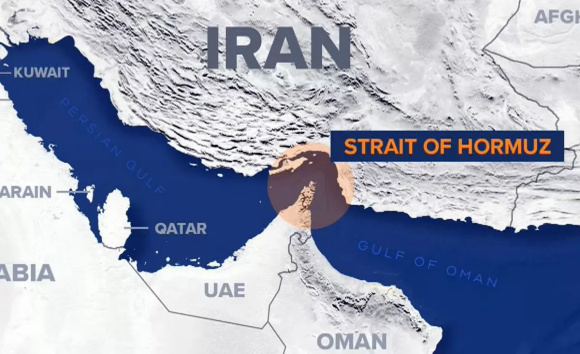
Three commercial vessels, including a crude oil tanker and a liquefied natural gas (LNG) carrier, were struck by unidentified projectiles in the strategically important Strait of Hormuz, according to maritime security reports. The incidents have renewed concerns over the safety of commercial shipping through the waterway.
The attacks were reported around Tuesday, September 29, amid continuing security tensions in and around the Strait of Hormuz. The United Kingdom Maritime Trade Operations (UKMTO), a British military-linked maritime security organisation, issued alerts concerning vessels transiting the area.
One of the vessels identified in reporting was Al Funtas, a very large crude carrier managed by Kuwait Oil Tanker Company. Lloyd’s List reported that the tanker suffered a fire after being hit by a suspected projectile while navigating the Strait.
The attacks were not confined to the Kuwaiti tanker. Maritime security reports indicated that two additional commercial vessels were also hit by unknown projectiles, bringing the number of reported affected vessels to three. The incidents have added to a growing series of security alerts involving commercial shipping in the waterway.
Details surrounding the identity and nature of the projectiles remained unclear in the immediate aftermath. There was also no independently established attribution for the attacks in the reports reviewed, making it important to distinguish confirmed vessel incidents from claims about who may have carried them out.
The latest incidents come against the backdrop of an already deteriorated maritime-security environment in the Gulf. Commercial traffic through the Strait has remained significantly below levels recorded before the wider regional conflict, with shipping operators adopting more cautious routing and operational measures.
The Strait of Hormuz is one of the world’s most important maritime energy corridors, linking the Persian Gulf with the Gulf of Oman and the wider Arabian Sea. Its strategic importance means that attacks or disruptions involving tankers can have implications extending beyond the immediate area.
Recent incidents have already demonstrated the vulnerability of commercial vessels operating in the region. In September, UKMTO reported another tanker being struck by an unidentified projectile while entering the Strait, with two crew members injured. The vessel was able to continue toward its next port under its own power.
The repeated incidents have also raised concerns for shipowners, insurers and energy traders. Disruptions or perceived risks along the route can encourage vessels to delay voyages, alter routes or seek alternative arrangements, potentially increasing transportation costs and complicating global energy supply chains. Recent shipping data has shown the number of visible commercial transits through Hormuz substantially below the pre-conflict norm.
As investigations continue, the latest attacks underscore the continuing uncertainty surrounding commercial navigation through the Strait of Hormuz. For now, the identity of those responsible for the September 29 incidents has not been conclusively established in the available reporting, while international attention remains focused on the safety of crews and the uninterrupted movement of oil and gas through the vital maritime corridor.
- Nigeria Evacuates First Ebola Patient to Switzerland as Health Minister Confirms Medical Flight
 ABUJA, Nigeria — Nigeria’s first confirmed Ebola patient in more…
- EFCC Raids Four Illegal Lithium Plants in Ogun, Arrests 14 Chinese Nationals and Nigerian
 The Economic and Financial Crimes Commission (EFCC) has arrested 15…